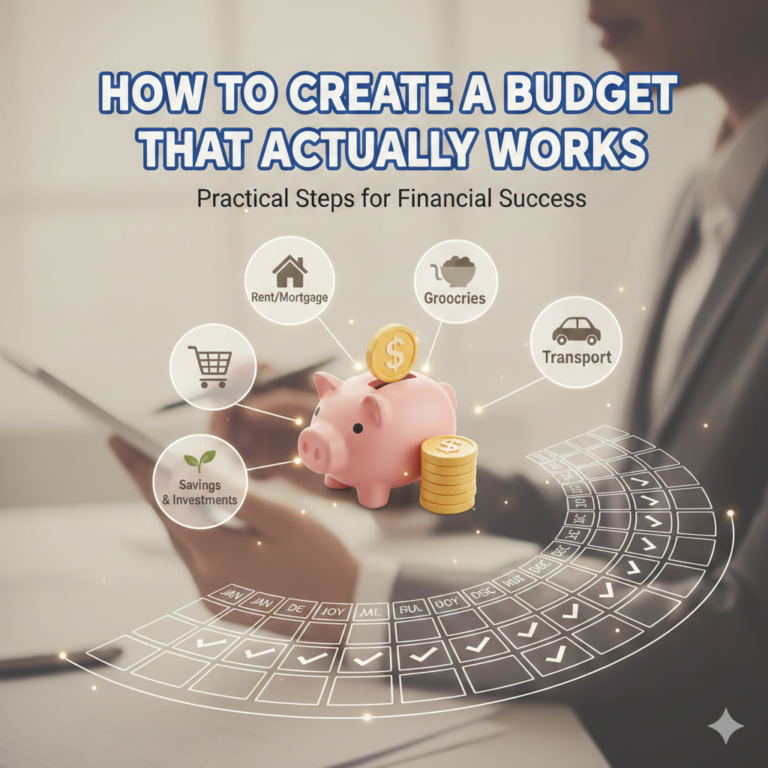

Zero-Based Budgeting for Beginners: Here’s a question nobody asks out loud: where exactly does the money go? You earn it. You spend it. The month ends. And somehow the account balance never quite reflects how hard you worked. Sound familiar?
That’s not a math problem. That’s a direction problem. Your dollars are leaving without instructions and zero-based budgeting fixes exactly that. It’s the budgeting method that gives every single dollar a job before the month even starts, so nothing disappears into the void unaccounted for.
No, it doesn’t mean you spend everything. No, it’s not complicated. And no you don’t need a finance degree or a spreadsheet obsession to make it work. You just need this guide and about 45 minutes.
This Guide Is for You If…
- 💸 You earn decent money but never seem to have any left at the end of the month
- 📊 You’ve tried budgeting before but found it too vague or too complicated to stick with
- 🎯 You have a specific financial goal — debt payoff, emergency fund, savings — and you’re tired of not hitting it
- 🔄 You’re living paycheck to paycheck and want a system that actually changes that
- 🧾 You’re a complete beginner who wants a clear, step-by-step starting point
That first number matters. 45 minutes. That’s less time than a Netflix episode. And the result is a complete monthly financial plan where every dollar has a destination — savings, bills, debt payoff, groceries, and yes, even fun money.

The Foundation
What Is Zero-Based Budgeting — Really?
Zero-based budgeting (ZBB) is a budgeting method where your income minus all expenses equals zero. Every dollar of income gets assigned to a category: housing, food, savings, debt payments, entertainment Until nothing is left unaccounted for.
Here’s what it is not: it doesn’t mean you spend every dollar you earn. It means every dollar has a name. If $200 goes into savings, that $200 is assigned. If $50 goes into an emergency fund, that’s assigned too. The goal is intentionality, not emptying your account.
The Core Formula
Monthly Income − All Assigned Expenses = $0
If your income is $3,000 and your assigned expenses add up to $2,800, you don’t stop there. You assign that remaining $200 somewhere — savings, debt payoff, next month’s buffer until the equation balances.
The philosophy was originally developed for corporate finance but was popularized for personal use by Dave Ramsey’s EveryDollar method and later refined by tools like YNAB (You Need A Budget). Both are built entirely around this single principle: give every dollar a job.
The Comparison
Zero-Based Budgeting vs 50/30/20: Which One Is Right for You?
This is the most common question beginners ask, and the honest answer is that both works, but for different people. Here’s the clearest comparison I can give you:
| Feature | Zero-Based Budgeting | 50/30/20 Rule |
|---|---|---|
| Core concept | Every dollar assigned by category | Income split into 3 broad buckets |
| Setup time | 45–60 min first month | 5–10 minutes |
| Level of control | Very high — category by category | Low — broad percentages only |
| Best for | Specific goals, debt payoff, low income | Stable income, simple lifestyle |
| Irregular income | Works well with adjustments | Harder to apply inconsistently |
| Learning curve | 2–3 months to feel natural | Almost none |
| Overspending visibility | Immediately obvious | Easy to miss within broad buckets |
Bottom line: if you have specific financial goals, variable income, or your money consistently runs out before the month does zero-based budgeting is the stronger tool. If you want simplicity above all else and your finances are already stable, 50/30/20 is fine. But you’re reading this, so let’s assume you want the more powerful option.
The How-To
How to Start a Zero-Based Budget: Step by Step
Zero-based budgeting for beginners starts with one simple idea: build your first budget from a blank page to a complete monthly plan. Here’s exactly how.
Write Down Your Total Monthly Take-Home Income
Start with what actually lands in your account after taxes, after deductions. If your income is irregular (freelance, gig work, tips), use your lowest month from the past three as your baseline. Any extra becomes a bonus you assign when it arrives.
Include every income source: main job, side hustle, child support, freelance, rental income. Add them all up. This is your starting number: everything else flows from here.
List Every Expense Category You Have
Write down every category where money goes — not just the big obvious ones. This is where most beginners underestimate their first budget. Your list should include:
- Housing (rent/mortgage)
- Utilities (electric, water, gas, internet)
- Groceries
- Transportation (car payment, gas, insurance, bus pass)
- Phone bill
- Health insurance / medications
- Subscriptions (every single one)
- Debt minimum payments
- Personal care (haircuts, toiletries)
- Dining out / entertainment
- Clothing
- Savings / emergency fund
- Sinking funds (more on this below)
Assign a Dollar Amount to Every Category
Now give each category a realistic number based on your actual spending: not wishful thinking. Pull up last month’s bank statements. What did you actually spend on groceries? On gas? On random stuff you’re not proud of?
Be honest. An inaccurate budget that feels comfortable is useless. An accurate budget that feels uncomfortable is powerful.
Subtract Expenses from Income Until You Hit Zero
Add up all your assigned amounts and subtract from your income. If you have money left over: great. Assign it somewhere: extra debt payment, savings boost, sinking fund. Don’t let it float. If you’re over budget, something needs to be trimmed until the math balances.
This is the moment the zero-based method actually works. The discomfort of finding cuts is the system doing its job.
Track Spending Throughout the Month
The budget is only the plan. Tracking is how you execute it. Every purchase gets logged against its category. When a category is empty — it’s empty. No borrowing from groceries to cover a night out without a conscious, deliberate decision to do so.
Use an app (YNAB, EveryDollar, PocketGuard) or a simple spreadsheet. The tool matters less than the consistency of checking it.
Review and Adjust at Month End
Your first zero-based budget will not be perfect. That’s completely normal and expected. At the end of month one, review what was over, what was under, and adjust the numbers for month two. The budget improves every single month: by month three, it’ll feel like second nature.
Real Example
Example of Zero-Based Budgeting for Beginners ($2,800/month)
One of the best ways to understand zero-based budgeting for beginners is to see a real monthly plan in action:
Monthly Zero-Based Budget = $2,800 Take-Home
| Category | Amount |
|---|---|
| 🏠 Rent | $900 |
| ⚡ Utilities | $150 |
| 🛒 Groceries | $300 |
| 🚗 Transportation | $250 |
| 📱 Phone | $60 |
| 💳 Debt Minimum Payments | $200 |
| 🍽️ Dining / Entertainment | $150 |
| 🧴 Personal Care | $60 |
| 🔧 Sinking Funds | $80 |
| 🏦 Emergency Fund | $150 |
| 💰 Extra Debt Payoff | $250 |
| 🎯 Personal Allowance | $200 |
| TOTAL ASSIGNED | $2,800 = $0 remaining ✓ |
Every dollar has a job. Nothing floats. Nothing disappears. That’s the whole point.
The Secret Weapon
What Are Sinking Funds and Why Beginners Always Forget Them
Sinking funds are one of the most powerful and most overlooked parts of zero-based budgeting for beginners. A sinking fund is money you save monthly for a predictable future expense: car registration, holiday gifts, annual subscriptions, back-to-school costs.
These are the “stealth costs” that destroy first-time budgets. They don’t appear every month, so beginners forget to plan for them. Then December arrives and suddenly there’s a $400 “unexpected” holiday expense that wrecks the entire budget.
Common Sinking Fund Categories
- Car maintenance / repairs ($30–$60/mo)
- Holiday / gift giving ($30–$80/mo)
- Annual subscriptions ($10–$20/mo)
- Clothing ($20–$40/mo)
- Medical / dental copays ($20–$40/mo)
- Home maintenance ($20–$50/mo)
Small monthly contributions eliminate large “surprise” bills — because nothing is actually a surprise when you planned for it.
Special Situation
Zero-Based Budgeting with Irregular Income: Yes, It Still Works
Freelancers, gig workers, and anyone with variable pay often assume zero-based budgeting won’t work for them. It does — it just requires one adjustment: budget from your lowest expected monthly income, not your average.
The Irregular Income Method
- Find your lowest income month from the past 3–6 months
- Use that number as your budget baseline
- Cover all essential categories first (housing, food, utilities, transport)
- When income exceeds the baseline, assign the extra immediately — debt, savings, sinking funds
- Never spend “extra” income without assigning it first
This approach means your survival is always covered on your worst month, and your good months quietly build wealth instead of quietly disappearing.
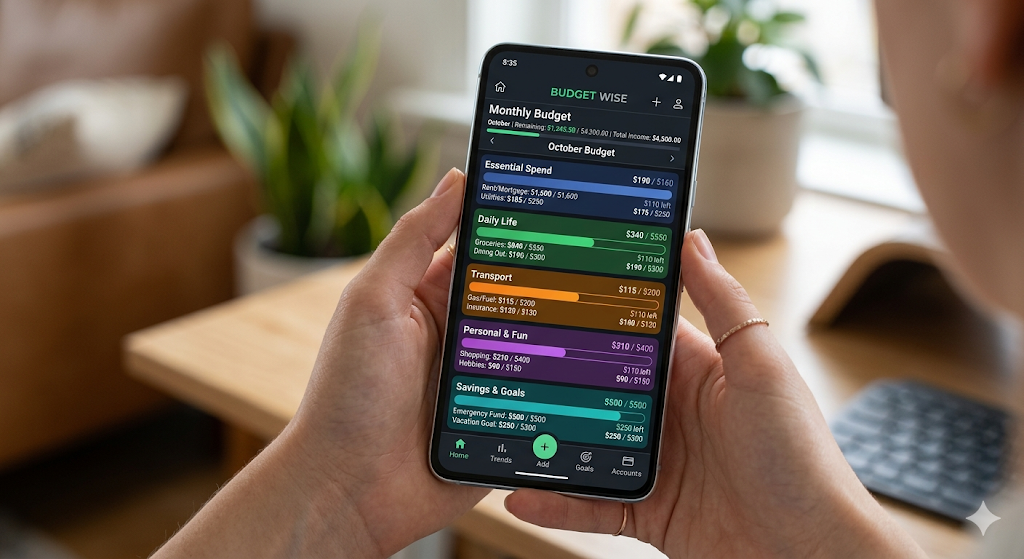
Best Apps for Zero-Based Budgeting Beginners
| App | Best For | Cost | Link |
|---|---|---|---|
| YNAB | Full zero-based methodology, best overall | ~$14.99/mo | youneedabudget.com |
| EveryDollar | Dave Ramsey’s ZBB app — clean and simple | Free / Plus | everydollar.com |
| Goodbudget | Envelope-style, no bank link required | Free / Plus | goodbudget.com |
| PocketGuard | Real-time “safe to spend” visibility | Free / Premium | pocketguard.com |
| Google Sheets | Custom control, completely free | Free | sheets.google.com |
📷Insert image: Phone screen showing a budgeting app with colorful category bars — YNAB or EveryDollar style interface, clean and modern
The Bottom Line
Zero-based budgeting isn’t the most glamorous financial strategy. There’s no hack, no shortcut, no algorithm. It’s just you, your income, and a clear plan for where every dollar goes before the month starts.
But that simplicity is exactly what makes it work. When money has direction, it stops disappearing. When categories have limits, overspending becomes visible instead of invisible. When savings and debt payoff are assigned like any other expense, they actually happen month after month, consistently, quietly building into something significant.
Your first zero-based budget won’t be perfect. Do it anyway. The second will be better. The third will feel natural. And by month six, you’ll wonder how you ever managed money any other way.
Pick an app, open a spreadsheet, or grab a notebook. Set a timer for 45 minutes. Build the budget tonight. That’s all it takes to start.
Frequently Asked Questions
What is zero-based budgeting and how does it work?
Zero-based budgeting for beginners is a method where every dollar of income is assigned to a specific category — housing, food, savings, debt until income minus all expenses equals zero. Every dollar has a job. Nothing is left unaccounted for. It’s built on intentionality: you decide in advance where every dollar goes rather than figuring it out after it’s already gone.
Does zero-based budgeting mean I spend all my money?
No — this is the most common misconception. “Zero” refers to unassigned dollars, not your account balance. If $300 is assigned to savings and $150 to an emergency fund, those dollars are “spent” in budget terms — but they’re sitting in your savings account, not gone. The goal is that no dollar is unaccounted for, not that no dollar is saved.
How do I start a zero-based budget for the first time?
The best way to start zero-based budgeting for beginners is to begin with your total monthly take-home income. List every expense category you have. Assign a realistic dollar amount to each. Subtract until you hit zero — if money remains, assign it to savings or debt. If you’re over, find cuts. Then track actual spending against the plan throughout the month and review at month end.
What categories should a beginner include in a zero-based budget?
At minimum, a zero-based budgeting for beginners category list should include: housing, utilities, groceries, transportation, phone, health costs, debt minimum payments, personal care, dining/entertainment, savings, emergency fund, and sinking funds. Most beginners underestimate the sinking fund category — plan for irregular annual costs like car registration, gifts, and subscriptions by saving a small amount monthly.
How is zero-based budgeting different from the 50/30/20 rule?
The 50/30/20 rule splits income into three broad buckets — needs, wants, and savings. It’s simple but imprecise. Zero-based budgeting assigns every dollar to a specific category, giving you much more control and visibility. ZBB takes more setup time but is significantly more effective for people with specific goals or tight finances.
What if my income changes every month?
When using zero-based budgeting for beginners with irregular income, start by budgeting from your lowest expected monthly income as a baseline. Cover all essential categories first. When income is higher than the baseline, assign every extra dollar immediately — to debt, savings, or sinking funds — before it has a chance to disappear. Irregular income actually benefits more from zero-based budgeting than from looser methods.
What expenses do beginners most commonly forget?
The expenses beginners most commonly forget in zero-based budgeting for beginners are non-monthly “stealth costs” — annual subscription renewals, car registration, holiday gifts, quarterly insurance payments, and sporadic medical copays. These don’t appear every month, so they feel like surprises. The solution is sinking funds: set aside a small amount monthly for each so the expense is fully funded when it arrive
Is zero-based budgeting too time-consuming for beginners?
Setting up zero-based budgeting for beginners takes just 45–60 minutes for the first budget. After that, monthly maintenance is about 20–30 minutes — less time than most people spend scrolling their phone on a Tuesday morning. The upfront investment is real, but the payoff in financial clarity and stress reduction is worth it many times over.
What if my expenses exceed my income in the zero-based budget?
That’s actually the most valuable thing zero-based budgeting for beginners can show you — your real deficit, not a vague sense that things are tight. Go through each category and find the cuts: subscriptions to cancel, dining to reduce, sinking fund amounts to temporarily lower. Then look at income: is there a side hustle or gig opportunity that closes the gap?
Ready to Make Every Dollar Count?
Share this with someone who’s been putting off getting their finances together. Then explore more practical money guides on our blog — real steps, no jargon, no judgment. Read More Money Tips →
© 2026 Financial Wellness Blog | Not financial advice. Consult a qualified financial professional for your specific situation.