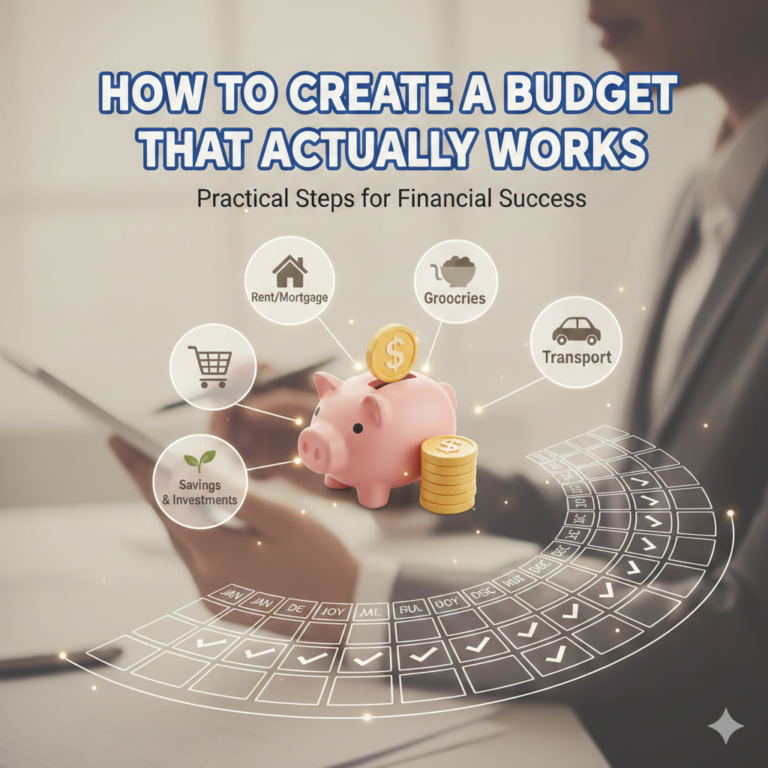

The Habits That Actually Change Your Financial Life

Let me ask you something honest: when was the last time you looked at your bank account and felt good about what you saw?
If you paused before answering, you’re not alone. Most people are flying semi-blind when it comes to their finances not because they’re careless, but because nobody really sat them down and explained how money actually works in real life. School taught you the Pythagorean theorem. It did not teach you how to stop hemorrhaging cash on subscriptions you forgot you had.
That’s where good money management comes in. And no, it’s not about becoming a spreadsheet-obsessed hermit who skips every happy hour. It’s about building smart, sustainable habits that quietly work in your favor while you’re busy living your life.
Let’s get into it.
Table of Contents
What Is Good Money Management, Really?
Good money management is the practice of intentionally controlling how you earn, spend, save, and invest your money so your financial life moves with you, not against you.
It’s not a one-time thing. It’s not downloading a budgeting app and forgetting about it in three days (we’ve all been there). It’s a mindset shift that turns your money into a tool you actually know how to use.
Think of it like going to the gym. You don’t get abs from one workout. But show up consistently, and over months? The results speak for themselves. Money works the same way slow, boring, beautiful progress.
Why Is Good Money Management Important?
Here’s a number that’ll make you sit up straight: nearly 57% of adults can’t cover a $1,000 emergency from savings alone, according to a Bankrate survey. That’s not a small slice that’s most people.
Good money management matters because:
- It reduces financial stress — one of the leading causes of anxiety worldwide.
- It helps you get out of debt faster and stop paying interest on interest
- It builds wealth over time, even on a modest income
- It gives you options the ability to quit a job, take a trip, or handle a crisis without a meltdown
The bottom line? When you manage your money well, you stop reacting to life and start planning for it. That shift alone is worth everything.
How Do I Start Good Money Management? (Especially as a Beginner)
Starting feels overwhelming. I get it. But here’s the truth: you don’t need to overhaul your entire financial life in a weekend. You need a few solid first steps.
Step 1: Know where your money is actually going. Before you can manage anything, you need a clear picture. Pull up your last three months of bank and credit card statements. You will probably find at least one subscription you forgot about. (Mine was a meditation app. I was too stressed about money to ever use it. Ironic.)
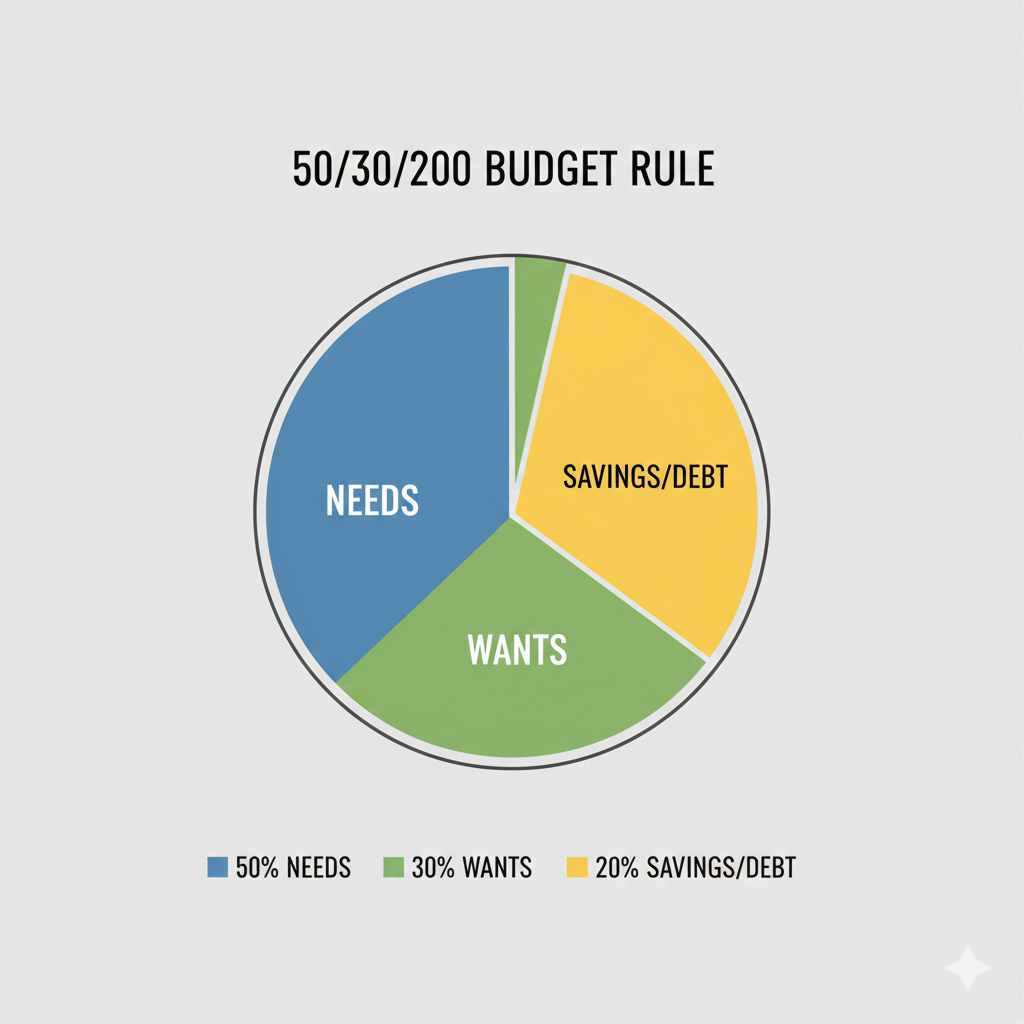
Step 2: Build a simple budget. The 50/30/20 rule is a great starting framework:
- 50% of your take-home pay goes to needs (rent, groceries, utilities)
- 30% goes to wants (dining out, streaming, weekend plans)
- 20% goes to savings and debt repayment
It’s not perfect for everyone if you’re in a high cost-of-living city, adjusting those percentages is totally fine. The point is to have a plan, not necessarily a perfect one.
Step 3: Automate what you can. Set up automatic transfers to your savings account the day after payday. What you don’t see, you don’t spend. This single habit has probably created more millionaires than any investment strategy.
Signs of Good Money Management (Are You Already Doing This?)
Sometimes you’re doing better than you think. Here are signs that your financial habits are actually on track:
- You have an emergency fund covering at least 3 months of expenses
- You pay your bills on time, every time
- You’re actively paying down debt rather than just making minimum payments
- You’re contributing to retirement even a little
- You don’t feel panic every time an unexpected expense hitsYou know, roughly, what’s in your checking account without having to check
If you’re hitting even three of these? You’re already ahead of the curve. Seriously.
What Are the Principles of Good Money Management?
There are a few universal principles that form the foundation whether you’re making $35,000 or $350,000 a year.
1. Spend less than you earn. Sounds obvious. Wildly underrated.
2. Save before you spend. Pay yourself first. Not after the bills. Not after the fun. First.
3. Avoid lifestyle inflation. Got a raise? Amazing. Resist the urge to immediately upgrade everything. Let that extra income quietly build your safety net.
4. Understand the difference between assets and liabilities. An asset puts money in your pocket. A liability takes money out. Classic Rich Dad Poor Dad principle and it’s worth tattooing on your brain.
5. Have a plan for your money. Even a rough one. A dollar without a direction is a dollar that disappears.
Good Money Management Habits That Actually Stick
Let’s talk about the daily and weekly behaviors that compound into something significant over time.
Weekly money dates. Spend 15 minutes every Sunday or Monday reviewing your spending. No judgment just awareness. You’d be amazed how quickly this changes your behavior.
The 24-hour rule on impulse buys. Want something? Wait 24 hours before buying. About 70% of the time, you won’t want it anymore.
Round up your savings. Some apps (like Acorns) automatically round up your purchases and invest the difference. It sounds tiny. It genuinely adds up.
Track your net worth monthly. Not obsessively just once a month, add up what you own minus what you owe. Watching that number grow is genuinely motivating.
How Does Good Money Management Help with Debt?
Debt is the silent saboteur. Interest charges grind away at your income month after month, and minimum payments barely scratch the surface of what you actually owe.
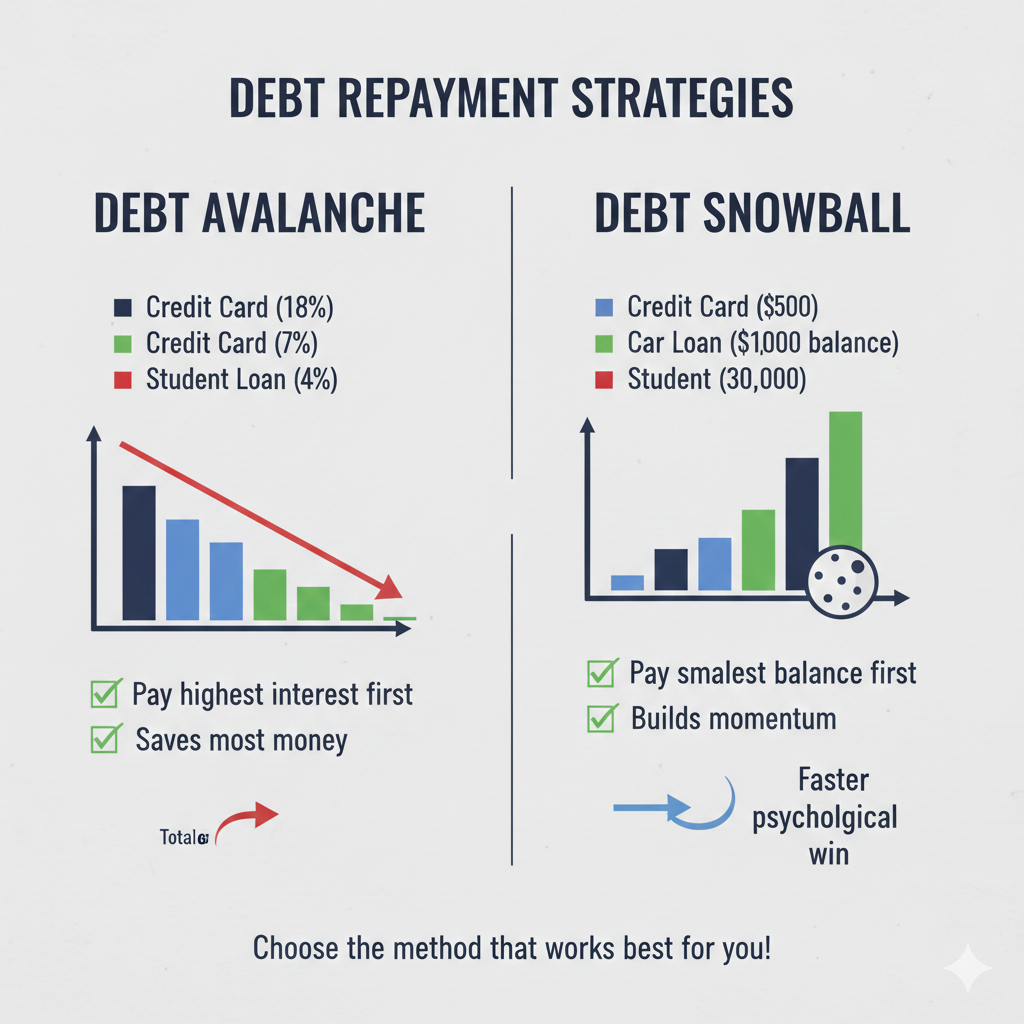
Good money management attacks debt with strategy:
| Method | How it Works | Best For |
| Avalanche Method | Pay off highest-interest debt first | Saving the most money mathematically |
| Snowball Method | Pay off smallest balance first | Building momentum and motivation |
| Debt Consolidation | Combine debts into one lower-rate loan | Simplifying multiple payments |
Whichever method you choose, the key is consistency. Pick a strategy and stick to it for at least six months before evaluating. Debt didn’t pile up overnight, and it won’t disappear overnight either.
Can Good Money Management Actually Lead to Wealth?
Short answer: absolutely yes.
Wealth isn’t usually built through lottery wins or inheritance. It’s built through boring, consistent habits practiced over decades. Compound interest is the most powerful force in personal finance, and it works for you when you’re saving, not against you when you’re in debt.
Consider this: if you invest $300/month starting at age 25, with an average 7% annual return, you’d have roughly $1 million by age 65. You didn’t need a high-paying job. You didn’t need to be a financial genius. You just needed to start early and stay consistent.
That’s the magic of good money management for long-term wealth.
Good Money Management for Families (and Low Incomes)
Managing money as a family adds layers of complexity different spending habits, different priorities, kids who somehow need expensive things constantly.
A few things that help:
- Have a shared monthly money meeting. Put everything on the table income, bills, goals. No secrets, no surprises.
- Give every family member a personal spending allowance. Even if it’s small. Having designated “no questions asked” money reduces friction enormously.
- Involve kids early. Give them a small allowance and let them manage it themselves. The mistakes they make with $10 now are lessons worth millions later.
For those managing money on a low income which is genuinely harder and deserves more credit the same principles apply, just with less margin for error. Prioritize the emergency fund above everything else. Even $500 saved changes the math on a crisis dramatically.
Top Tools for Good Money Management
You don’t need to manage money with a yellow legal pad anymore (though hey, if that works for you respect). Here are some of the best tools available right now:
| Tool | Best For | Cost |
| YNAB | Zero-based budgeting, serious habit-builders | ~$14.99/month |
| Monarch Money | Couples and families, net worth tracking | ~$14.99/month |
| Empower Dashboard | Investment + spending overview | Free |
| PocketGuard | Seeing exactly what’s “safe to spend” | Free / Premium |
| EveryDollar | Simple zero-based budgeting | Free / Plus version available |
| Goodbudget | Envelope-style budgeting, old-school mindset | Free / Plus |
Most of these offer free trials, so there’s no reason not to experiment. The best budgeting app is ultimately the one you’ll actually open.
Good Money Management Books Worth Reading
If you’re the kind of person who learns by reading (and you’re already reading a finance blog, so… hi), these books are worth every page:
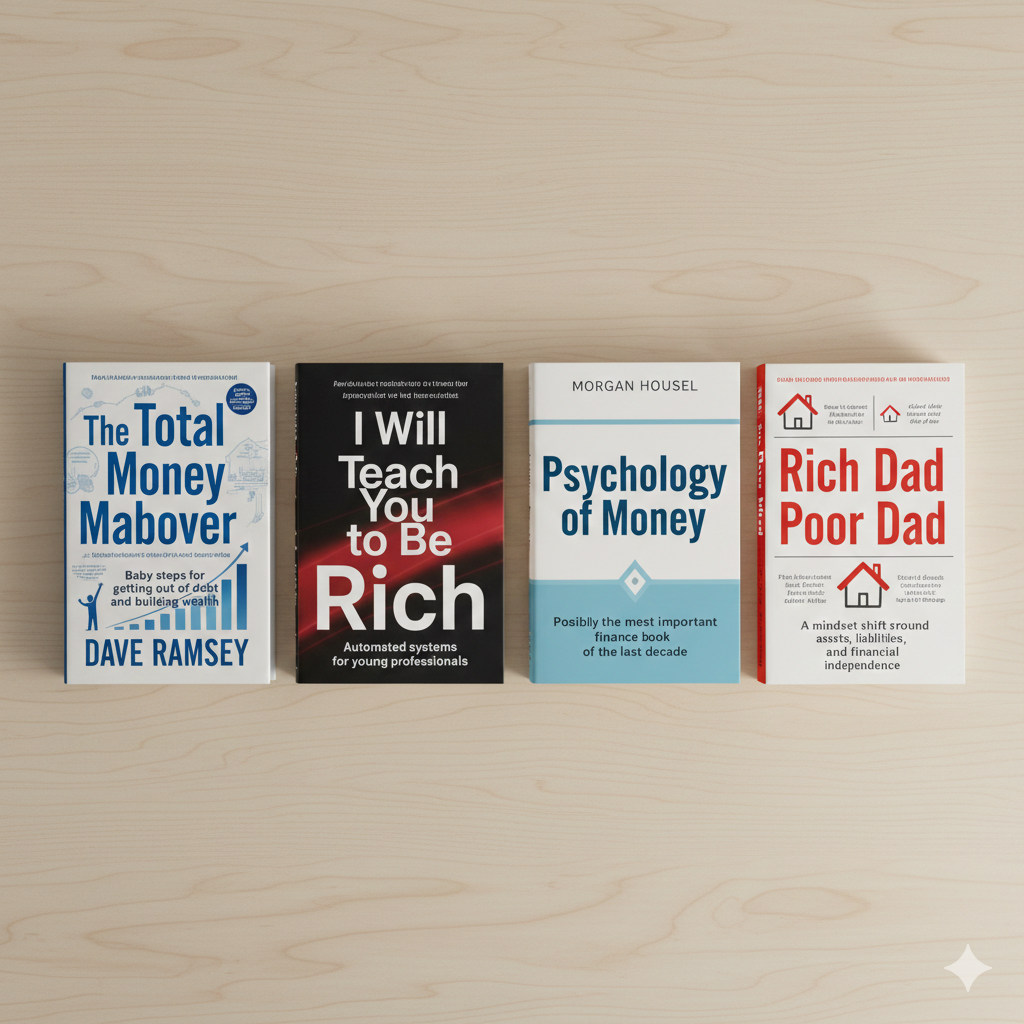
- The Total Money Makeover by Dave Ramsey — Baby steps for getting out of debt and building wealth
- I Will Teach You to Be Rich by Ramit Sethi — Automated systems for young professionals
- The Psychology of Money by Morgan Housel — Possibly the most important finance book of the last decade
- Rich Dad Poor Dad by Robert Kiyosaki — A mindset shift around assets, liabilities, and financial independence
How to Teach Good Money Management to Kids
The earlier you start, the better. Kids who learn to manage money young develop habits that stick for life.
Simple ways to start:
- Give a small weekly allowance tied (or not) to chores — there are good arguments on both sides
- Use a clear jar so they can literally see their savings grow
- Let them make mistakes — overspending their allowance and not having money for something they want is one of the best financial lessons there is
- Introduce the concept of giving early — even setting aside a small amount for charity teaches values around money beyond just accumulation

FAQs About Good Money Management
What are the best good money management apps?
YNAB, Monarch Money, and Empower Personal Dashboard are consistently rated the best for 2025–2026. Free options include PocketGuard and Goodbudget.
What are examples of good money management?
Paying yourself first, using a zero-based budget, having an emergency fund, avoiding high-interest debt, and investing consistently even small amounts are all classic examples
What are the benefits of good money management?
Less financial stress, freedom to make choices, faster debt payoff, wealth accumulation, and simply sleeping better at night.
Is there a good money management checklist?
Yes and here’s a quick one:
Emergency fund of 3–6 months of expenses
Monthly budget in place
All debt tracked with a payoff plan
Retirement contributions active
At least one financial goal set for the year
Wrapping It All Up
Here’s the thing about good money management: it’s not about being perfect. It’s about being intentional. Every dollar you direct with purpose is a dollar working for your future instead of quietly vanishing into the void.
You don’t need to start big. You don’t need to know everything. You just need to start this week, today, right now. Open that app. Create that budget. Set up that automatic transfer. Small actions, repeated consistently, are what separate people who feel financially stuck from people who feel genuinely free.
Your next step? Pick one habit from this article and commit to it for 30 days. Just one. See what happens.
And if you found this helpful share it with someone who needs it. Because good money management is even better when the people around you are practicing it too. Learn more tips on building strong financial habits on our Blog.

Sources: Bankrate 2024 Emergency Savings Report; YNAB.com; Ramsey Solutions; Morgan Housel, The Psychology of Money