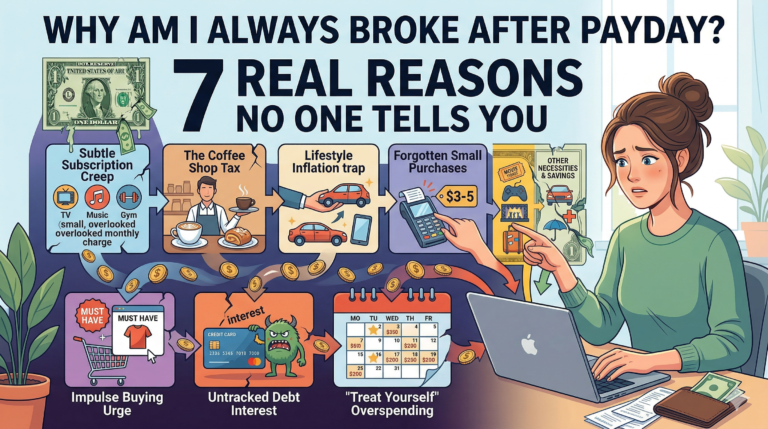

You didn’t go to Target for that. You didn’t plan to buy those shoes. You definitely did not open Instagram expecting to spend $67 on a gadget you’ll use twice. And yet here you are, package on the doorstep, wallet a little lighter, and that familiar mix of excitement and why did I do that sitting in your chest.
That’s impulse buying. And it’s not a character flaw. It’s not laziness or weak willpower. It’s a trillion-dollar industry built specifically to make you spend before you think. The stores, the apps we use, the algorithms: they’ve all been engineered to get inside your head before your rational brain can catch up.
But here’s the good news: once you understand why it happens, stopping it becomes a whole lot easier.
This Guide Is for You If:
- 🛒 You buy things in the moment and regret them by morning
- 📱 Your phone has become a shopping cart you carry everywhere
- 💸 You wonder where your money went: and the answer is “random stuff”
- 😤 You’ve tried to stop impulse spending before, but sales, stress, and TikTok keep winning
- 🧠 You suspect your emotions are driving your spending more than your bank account
Average Americans spend $314 on impulse purchases every single month That adds up to $5,400 per year quietly, invisibly, painfully 44% of buyers feel regret immediately after an impulse purchase $314 a month is not a small leak it’s a hole in the budget big enough to swallow an emergency fund, a vacation, or a year’s worth of retirement contributions Most people don’t even realize this is happening.

Understanding the Problem
What Is Impulse Buying and Why Do People Do It So Often?
Impulse buying is any unplanned purchase made in the moment, driven by emotion rather than intention. It’s the checkout candy bar, the 3 a.m. online cart, the “it was on sale” justification that somehow always appears. Simple definition. Wildly complicated psychology underneath.
Here’s the thing most financial advice gets wrong: impulse buying isn’t about wanting things. It’s about how you feel in the moment you see them. Researchers have identified that unplanned purchases are almost always triggered by one of these emotional states:
- Stress or anxiety — spending feels like control when everything else doesn’t
- Boredom — browsing fills the void, buying seals the deal
- Excitement or reward-seeking — your brain releases dopamine at the anticipation of buying, not just the purchase itself
- FOMO (Fear of Missing Out) — limited time offers, flash sales, “only 2 left in stock”
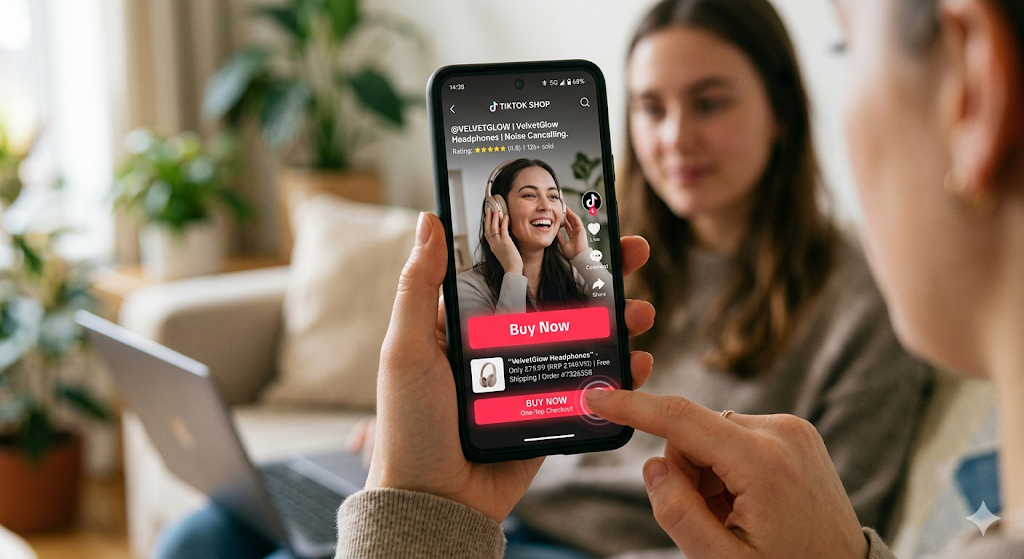
- Social influence — seeing others buy something (hello, TikTok Shop) creates peer pressure you don’t even notice
The retail industry knows all of this. Every “sale ends tonight” banner, every product recommendation algorithm, every carefully placed checkout display: it’s all designed to catch you at your most vulnerable and convert emotion into transaction before your prefrontal cortex (the rational part of your brain) can intervene.
What Are the 4 Types of Impulse Buying?
Consumer behavior researchers have categorized impulse buying into four distinct types. Knowing which one gets you is half the battle:
| Type | What It Looks Like | Common Trigger |
|---|---|---|
| Pure Impulse | Buying something completely unplanned, no prior thought at all | Eye-catching display, checkout aisle, TikTok ad |
| Reminder Impulse | Seeing a product reminds you that you “need” it | In-store displays, email marketing, retargeting ads |
| Suggestion Impulse | A product is suggested and you convince yourself it’s useful | “Frequently bought together,” upsells, influencer recommendations |
| Planned Impulse | You intended to buy something on sale — just not necessarily that | Flash sales, Black Friday, “deal hunting” mentality |
Most people have a dominant type. The Reminder Impulse buyer struggles most with retargeting ads (those shoes that follow you around the internet for two weeks). The Planned Impulse buyer thinks they’re being smart with sales but ends up spending more, not less.
The Modern Problem
How Social Media Makes Impulse Buying So Much Worse
Impulse buying isn’t new. But social media specifically TikTok, Instagram, and YouTube have turned it into a 24/7 ambient experience. 48% of social media users have made an impulse purchase after seeing an ad on TikTok or Instagram. That’s not a coincidence. That’s design.
The combination of infinite scroll, algorithmic personalization, and one-tap purchasing has collapsed the time between “I want this” and “I bought this” to under 30 seconds. Your brain’s impulse circuit fires. Your thumb moves. The package ships. Your rational brain arrives about three seconds too late.
The Dopamine Loop
Neuroscience confirms that the anticipation of a purchase activates the same dopamine pathways as the purchase itself — sometimes more. This is why browsing feels so satisfying even before you buy anything. And why “just looking” rarely stays that way.
The Deeper Question
Is Impulse Buying a Mental Health Issue?
This one deserves an honest answer. For most people, impulse buying is a habit driven by emotion and environment not a clinical disorder. But for some, compulsive buying disorder is a real, recognized condition that causes significant distress and financial harm.
Signs that impulse spending may have crossed into compulsive territory:
- You feel a rush or high when purchasing that feels uncontrollable
- Shopping is your primary coping mechanism for negative emotions
- You hide purchases from people close to you
- You feel genuine shame or panic about your spending but can’t stop
- Debt is accumulating despite genuine attempts to stop
If any of those feel familiar, speaking with a financial therapist or counselor not just a budgeting app is worth considering. The National Foundation for Credit Counseling (NFCC) offers free and low-cost counseling that addresses both the financial and behavioral sides.
For everyone else: the 9 tricks below will do the job.
The Solutions
9 Clever Tricks to Finally Stop Impulse Buying
These aren’t “just have more willpower” suggestions. These are behavioral tactics designed to work with your psychology rather than against it: because telling yourself to “try harder” has never once stopped an impulse purchase.
Use the 24-Hour Rule (Yes, It Actually Works)
Anything non-essential goes on a list. You wait 24 hours. Then you check the list. If you still genuinely want the item and it fits the budget, you buy it intentionally. If the urge is gone (and it usually is), you saved yourself the money and the regret.
The research backs this up. Most impulse urges dissolve within 20 minutes, let alone 24 hours. The rule works because it forces your rational brain to catch up with your emotional one.
Delete Saved Payment Methods from Shopping Apps
One-click purchasing is the enemy of intentional spending. When your card details are saved and checkout takes four seconds, your impulse has won before the thought even finishes forming. Delete saved cards from Amazon, Shopify stores, and any app you shop on frequently.
The 60 seconds it takes to re-enter your card details is often enough friction to make you stop and ask: Do I actually need this right now?
Unsubscribe From Every Retail Email Today
You cannot impulse-buy what you don’t see. Retail emails are engineered to manufacture urgency “48-hour sale,” “just for you,” “selling fast.” Use Unroll.me to mass-unsubscribe from all of them in under five minutes.
Out of sight genuinely is out of mind. The urge to buy something rarely appears from nowhere — it almost always starts with an external trigger. Remove the triggers.
Give Yourself a “No Questions Asked” Spending Allowance
This sounds counterintuitive, but restriction-only budgets almost always fail. When you feel completely deprived, the eventual blowout spending is far worse than a controlled allowance would have been.
Build $20–$50 of guilt-free money into your budget every week. When that’s gone, it’s gone: but while it lasts, spend it on whatever you want, no justification needed. Having designated fun money paradoxically reduces impulsive overspending everywhere else.
Shop With a List — Every Single Time
Never enter a store, physical or digital, without a predetermined list. This applies to grocery runs, Target trips, and online browsing sessions. The list is your permission slip. Anything not on it requires a deliberate, conscious decision to add — which is a completely different psychological process than an impulse.
Even writing “I’m only buying X and Y today” in your phone’s notes before opening a shopping app creates enough intentionality to cut unplanned purchases significantly.

Identify Your Personal Impulse Triggers
Your triggers are not the same as everyone else’s. Some people impulse-buy when stressed. Others when bored. Some when they’re celebrating, or procrastinating, or scrolling at midnight. You can’t interrupt a pattern you haven’t identified.
For one week, every time you make an unplanned purchase or feel the urge to write down what you were feeling right before. After seven days, the pattern becomes obvious. And obvious patterns are interruptible ones.
Use a Budgeting App That Shows Real-Time Spending
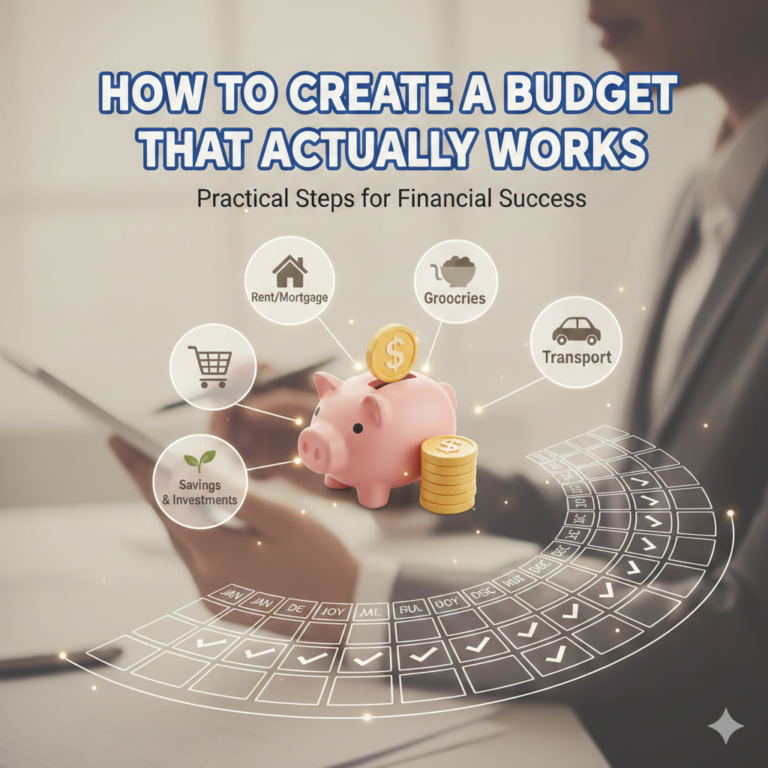
Knowing your numbers in real time changes behavior more than any motivational advice. Apps like PocketGuard show you exactly what’s “safe to spend” after bills and savings: which makes every purchase feel more concrete and less abstract.
When you can see in real time that buying a $40 item leaves you with $12 until payday, the decision calculus changes fast. Use YNAB for deeper zero-based control or Goodbudget for envelope-style limits on each spending category.
Replace the Habit, Don’t Just Remove It
Behavioral science is clear on this: you can’t eliminate a habit, only replace it. If shopping is your stress response, boredom cure, or reward system, you need a substitute behavior that delivers a similar emotional payoff without the financial damage.
Some swaps that actually work:
- Stress shopping → a 10-minute walk or a free YouTube workout
- Boredom browsing → a book, podcast, or genuinely absorbing hobby
- Reward buying → a non-purchase treat (a long bath, a meal you love cooking)
It feels awkward at first. It works within two weeks.
Calculate the Real Cost in Hours Worked
These stings — and that’s exactly the point. Before any impulse purchase, do this quick mental math: how many hours do I have to work to pay for this?
A $60 impulse buy at $15/hour take-home pay isn’t “$60.” It’s four hours of your life. A $200 splurge is an entire workday, gone. Framing purchases in time rather than money activates a completely different part of your decision-making brain and it’s one that’s much harder to rationalize away.
Check Out:
Best Apps to Help You Stop Impulse Buying
| App | How It Helps | Cost |
|---|---|---|
| PocketGuard | Shows “safe to spend” amount in real time | Free / Premium |
| YNAB | Zero-based budgeting — every dollar has a job | ~$14.99/mo |
| Goodbudget | Envelope budgeting — hard limits per category | Free / Plus |
| Unroll.me | Mass unsubscribe from retail emails instantly | Free |
| Rakuten | Cashback on intentional purchases you planned | Free |
The Bottom Line
Impulse buying isn’t your fault. But it is your problem to solve — because nobody else is going to move that $314 back into your savings account for you.
The good news is you don’t need perfect willpower. You need smarter systems. Remove the saved cards. Unsubscribe from the emails. Use the 24-hour rule. Give yourself a small guilt-free allowance. Identify your triggers. These aren’t dramatic lifestyle overhauls — they’re small structural changes that make the default behavior less impulsive and more intentional.
Pick one trick from this list and try it for seven days. Just one. The momentum from that single change is worth more than reading every budgeting article on the internet and doing nothing differently.
Your future self — the one with a working emergency fund and a credit card balance of zero — is built one un-purchased impulse at a time.
Frequently Asked Questions About Impulse Buying
What is impulse buying and why do people do it?
Impulse buying is any unplanned purchase driven by emotion rather than intention. People do it because the brain’s reward system releases dopamine at the anticipation of buying — and retailers deliberately engineer environments to trigger that response before your rational mind can object.
Why do I keep buying things I don’t need?
Usually because something emotional is driving the purchase — stress, boredom, reward-seeking, or social influence. The purchase isn’t really about the item. It’s about how you feel in the moment you see it. Identifying your specific trigger is the first step to interrupting the pattern.
How does impulse buying affect my budget and finances?
Significantly. The average American spends $314/month on impulse purchases — over $5,400 a year. Over a lifetime that’s more than $324,000. Beyond the raw numbers, impulse spending undermines savings goals, delays debt payoff, and creates a cycle where financial stress drives more emotional spending.
What are the 4 types of impulse buying?
Pure impulse (completely unplanned), reminder impulse (a product reminds you that you “need” it), suggestion impulse (a recommendation convinces you it’s useful), and planned impulse (you intended to buy something on sale — just not necessarily that specific thing).
Is impulse buying a mental health issue?
For most people, it’s a behavioral habit driven by environment and emotion — not a clinical disorder. However, compulsive buying disorder is a recognized condition. If shopping feels uncontrollable, you hide purchases, or debt is growing despite genuine attempts to stop, speaking with a financial therapist is worth considering.
How do I stop impulse buying online?
Delete saved payment methods from shopping apps, unsubscribe from retail emails, use the 24-hour rule before any non-essential purchase, and install a budgeting app that shows your real-time spending balance. Removing friction from stopping is more effective than adding friction to buying.
What triggers impulse buying the most?
The biggest triggers are stress, boredom, social media advertising, limited-time offers, and environmental cues like checkout displays or “frequently bought together” recommendations. For online shopping, one-tap purchasing and retargeting ads are especially powerful triggers.
How much money does the average American waste on impulse purchases?
Roughly $314 per month, or approximately $5,400 per year. Over a 60-year adult lifetime, that compounds to over $324,000 — money that could otherwise have been saved, invested, or used to pay off debt.
What is the 24-hour rule and does it actually work?
The 24-hour rule means waiting one full day before making any non-essential purchase. It works because most impulse urges dissolve within 20 minutes — let alone 24 hours. By the time you revisit the item the next day, the emotional trigger that created the urge has usually passed, and the purchase no longer feels necessary.
Ready to Take Back Control of Your Spending?
Share this with someone who needs it. Then explore more practical money guides on our blog — no shame, no jargon, just steps that actually work.Read More Money Tips →
© 2026 Financial Wellness Blog | Not financial advice. Consult a qualified financial professional for your specific situation.