8 Best Bedtime Snacks for Good Sleep (Science-Backed & Dietitian-Approved)
You’re tired. You’re lying in bed. And your stomach is quietly staging a revolt.
Sound familiar? Most people are stuck between two bad choices at bedtime—ignore the hunger and lie awake, or raid the kitchen and feel too full to sleep. Neither works.
Here’s the good news: the best bedtime snacks for good sleep aren’t just “safe” options that won’t wreck your waistline. They actively help you fall asleep faster, stay asleep longer, and wake up feeling like a functional human being.
The secret is knowing which foods to eat, how much, and when. Get those three things right, and your nightly snack becomes one of the smartest sleep upgrades you’ve ever made.
Why What You Eat Before Bed Actually Matters
Here’s something most people don’t realize: hunger before bed isn’t just uncomfortable — it’s genuinely bad for sleep. When your blood sugar drops too low, your body can jolt you awake in the middle of the night. On the flip side, eating too much overloads your digestive system and causes heartburn, bloating, and restless sleep.
The sweet spot? A mini meal under 200 calories that combines a little protein with some complex carbohydrates. That combination works for two reasons:
- Protein provides tryptophan—an amino acid your brain converts into serotonin and eventually melatonin, the hormone that signals your body it’s time to sleep.
- Complex carbs trigger a small insulin release—which helps tryptophan cross the blood-brain barrier more efficiently, making it easier to feel drowsy.
Think of it as giving your brain exactly what it needs to wind down naturally.
Timing tip: Eat your bedtime snack about 1 hour before sleep. This gives your body time to digest and begin the serotonin-to-melatonin conversion before you hit the pillow.
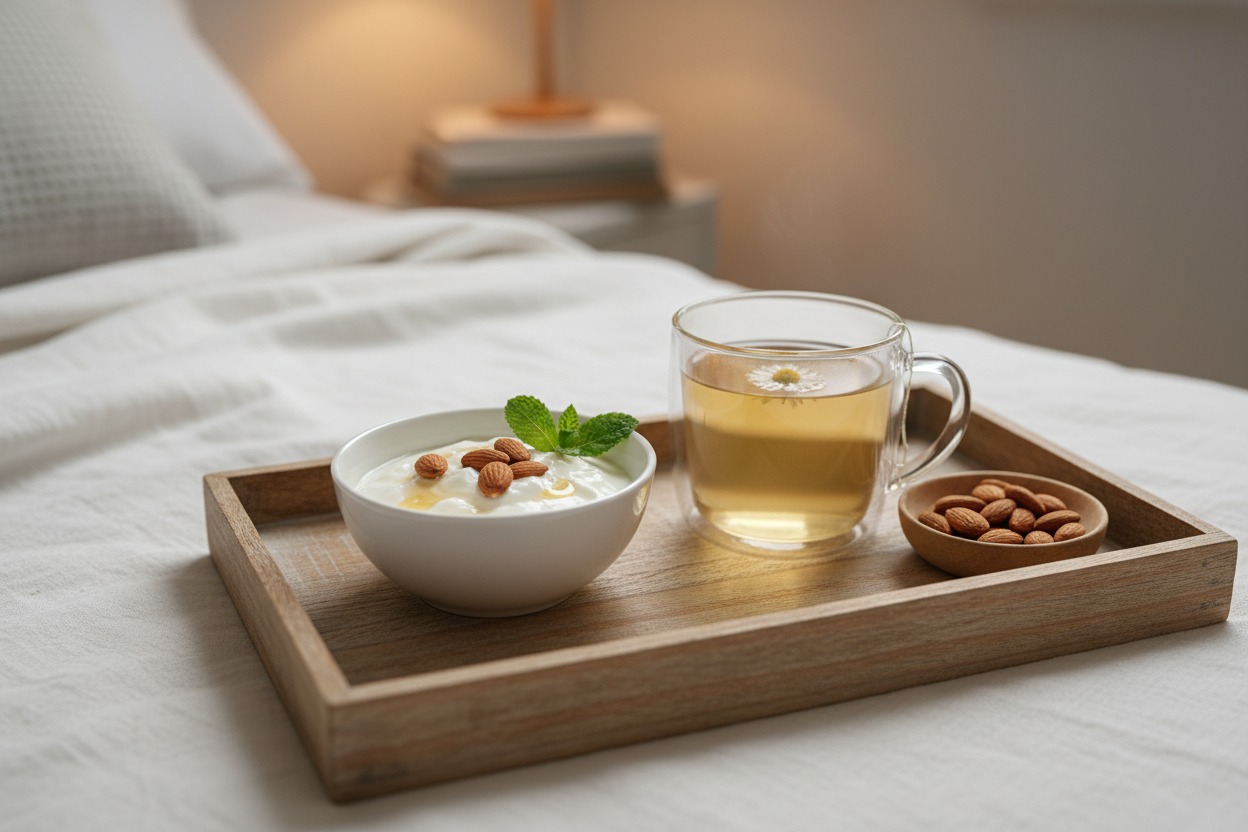
8 Best Bedtime Snacks for Good Sleep
1. Peanut Butter on Whole Grain Bread
This classic combo is one of the most effective healthy bedtime snacks for sleep—and it’s almost embarrassingly easy to make.
Why it works: Peanut butter contains healthy fats that help raise serotonin levels, the feel-good brain chemical that eases you into relaxation. The whole-grain bread keeps you satisfied without spiking your blood sugar, because your body digests whole grains slowly. No midnight sugar crash. No 3am hunger.
How to eat it:
- 1 slice of whole-grain bread
- 1–2 tablespoons of natural peanut butter
- Keep it under 200 calories total
Almond butter works just as well if peanuts aren’t your thing. The key is the whole-grain base—don’t swap it for white bread, or you’ll lose the slow-digesting benefit entirely.
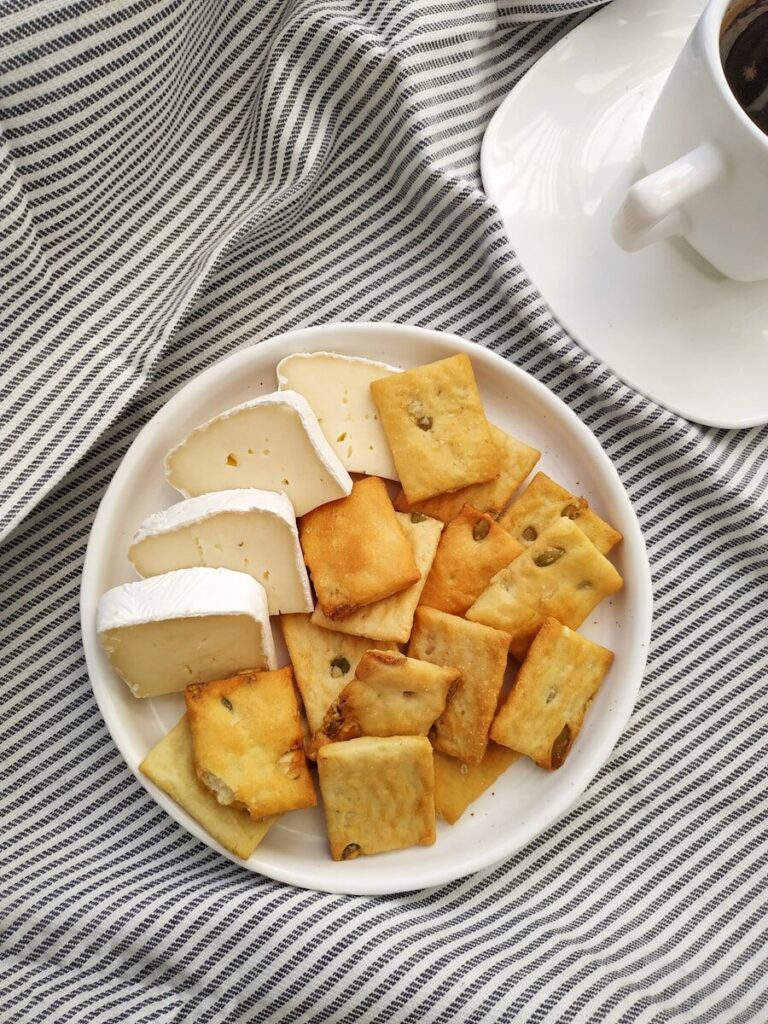
2. Cheese on Whole-Grain Crackers
Small but mighty. A few whole-grain crackers topped with a slice or two of cheese is a surprisingly powerful sleep-promoting bedtime snack.
Why it works: Cheese is rich in tryptophan, the same amino acid that makes you want to nap after Thanksgiving dinner. Pair that with whole-grain crackers (complex carbs that help tryptophan reach your brain faster), and you’ve got a snack combination that’s practically engineered for drowsiness.
How to eat it:
- 4–6 whole grain crackers
- 1–2 small slices of cheddar, Swiss, or cottage cheese
- Under 200 calories
Cottage cheese is also a stellar option on its own — it’s high in tryptophan and surprisingly filling for its calorie count.
3. Greek Yogurt with Sliced Banana
This one pulls double duty — it’s packed with sleep nutrients and genuinely delicious.
Why it works: Greek yogurt is loaded with calcium, which helps your brain use tryptophan to produce melatonin. Bananas bring magnesium and potassium to the table — two minerals that help your muscles relax and your nervous system wind down. Together, they cover multiple bases of the sleep equation simultaneously.
How to eat it:
- ½ cup plain Greek yogurt (unsweetened)
- ½ sliced banana
- Optional: a small drizzle of honey or a sprinkle of cinnamon
Avoid flavored yogurts with added sugar—they’ll spike your blood sugar right when you want it stable.
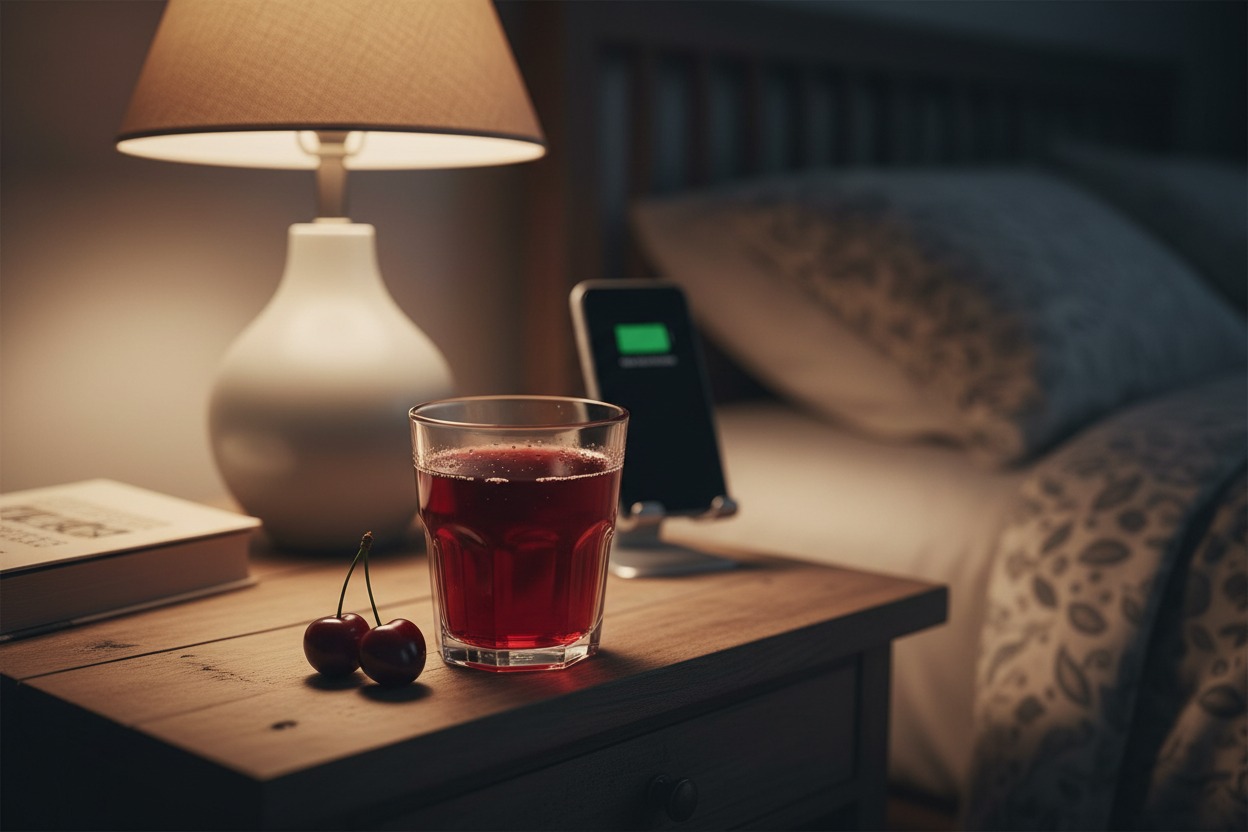
4. Unsweetened Tart Cherry Juice
This one has more research behind it than almost any other good snack before bed for sleep.
Why it works: Montmorency tart cherries are one of the richest natural dietary sources of melatonin—the hormone that tells your body it’s nighttime and time to slow down. A 2012 study published in the European Journal of Nutrition involving 20 adults found that drinking tart cherry juice concentrate increased total sleep time and improved sleep efficiency significantly.
Drinking tart cherry juice gave participants an extra 84 minutes of sleep compared to a placebo. That is not a rounding error—it is almost a full, additional sleep cycle.
How to drink it:
- 2 oz of unsweetened concentrate (not the sweetened kind)
- Mix with a splash of water if it’s too tart
- Drink it 1 hour before bed
5. A Handful of Almonds
One of the simplest, most portable healthy late-night snacks for sleep, you can keep it anywhere.
Why it works: Almonds are a rare double threat—they contain both magnesium (a mineral that helps relax your muscles and regulate sleep) and melatonin (yes, almonds have it naturally). A 2024 study from Florida State University found that replacing sugary snacks with almonds over 12 weeks led to measurable improvements in objective sleep efficiency. A 2025 study backed that up, showing almonds reduced nighttime awakening.
How to eat them:
- About 1 ounce (roughly 23 almonds) — no more
- Eat them plain or with a small piece of fruit
- Avoid salted or flavored varieties right before bed
Pistachios are another solid nut option — they’re actually one of the highest plant-based sources of melatonin available.
Read Also: CalmLean Review 2026 – Best Non-Stimulant Fat Burner for Men
6. Low-Sugar Fortified Cereal with Milk
Here’s a bedtime snack combo that’s been underestimated for years.
Why it works: Milk contains tryptophan and calcium, both of which support your brain’s natural melatonin production. Fortified cereals add vitamins and minerals that support overall sleep quality. The warm, familiar ritual of a small bowl of cereal and milk also has a genuinely calming effect that shouldn’t be underestimated.
The catch: Cereal choice matters — a lot.
Swap the Froot Loops, Frosted Flakes, or Cocoa Puffs for a low-sugar, high-fiber variety. Simple sugars before bed reduce serotonin and can disrupt sleep. Look for cereals with at least 3g of fiber and less than 6g of sugar per serving.
How to eat it:
- ¾ cup low-sugar, high-fiber cereal
- ½ cup low-fat milk (warm it up if you’d like)
- Under 200 calories total
7. Warm Milk
Drinking warm milk before bed is a timeless bedtime ritual. It leverages natural compounds and psychological comfort to help signal to your brain that it’s time to rest.
Why It Works
- Tryptophan: Milk contains this essential amino acid, which your body naturally converts into serotonin and melatonin to promote sleepiness.
- Nervous System Soothing: Warm liquids intrinsically calm the nervous system.
- The Routine Effect: Establishing a consistent pre-sleep ritual strengthens healthy sleep hygiene.
Explore More on Sleep Hygiene
To dive deeper into the science and methods behind a better night’s rest, check out the Sleep Foundation guide or read the Verywell Health overview on sleep aids.
How to drink it:
- 1 cup of low-fat or whole milk, warmed (not boiling)
- Add a pinch of cinnamon or a drop of vanilla if you want flavor
- Drink it slowly, 30–60 minutes before bed
Non-dairy options like warm oat milk or almond milk work similarly, though they’re lower in tryptophan.
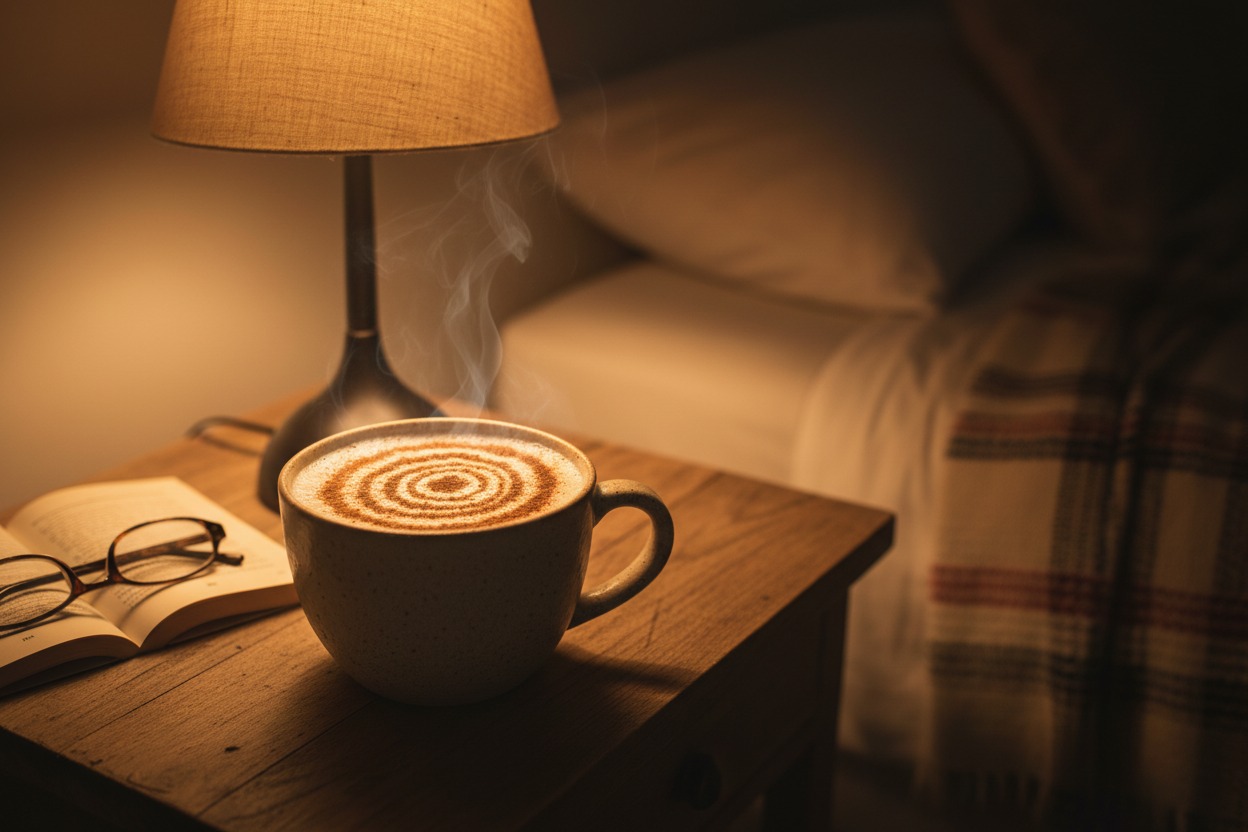
8. A Small Bowl of Oatmeal
Oatmeal isn’t just a breakfast food. It’s one of the best sleep-promoting bedtime snacks you probably aren’t eating at night.
Why it works: Oats are a natural source of melatonin—the hormone that regulates your sleep-wake cycle. They’re also rich in complex carbohydrates that trigger a steady, gentle insulin release without spiking your blood sugar. That stability matters more than most people realize—blood sugar swings in the night are a common cause of waking up at 2 or 3am for no obvious reason.
Registered dietitian Lauren Manaker, MS, RDN, has highlighted oatmeal as one of the most underrated melatonin-rich foods for better sleep.
How to make it:
- ½ cup rolled oats (not instant — too high glycemic)
- Top with ½ sliced banana or a few cherries
- Keep it plain or add a teaspoon of honey
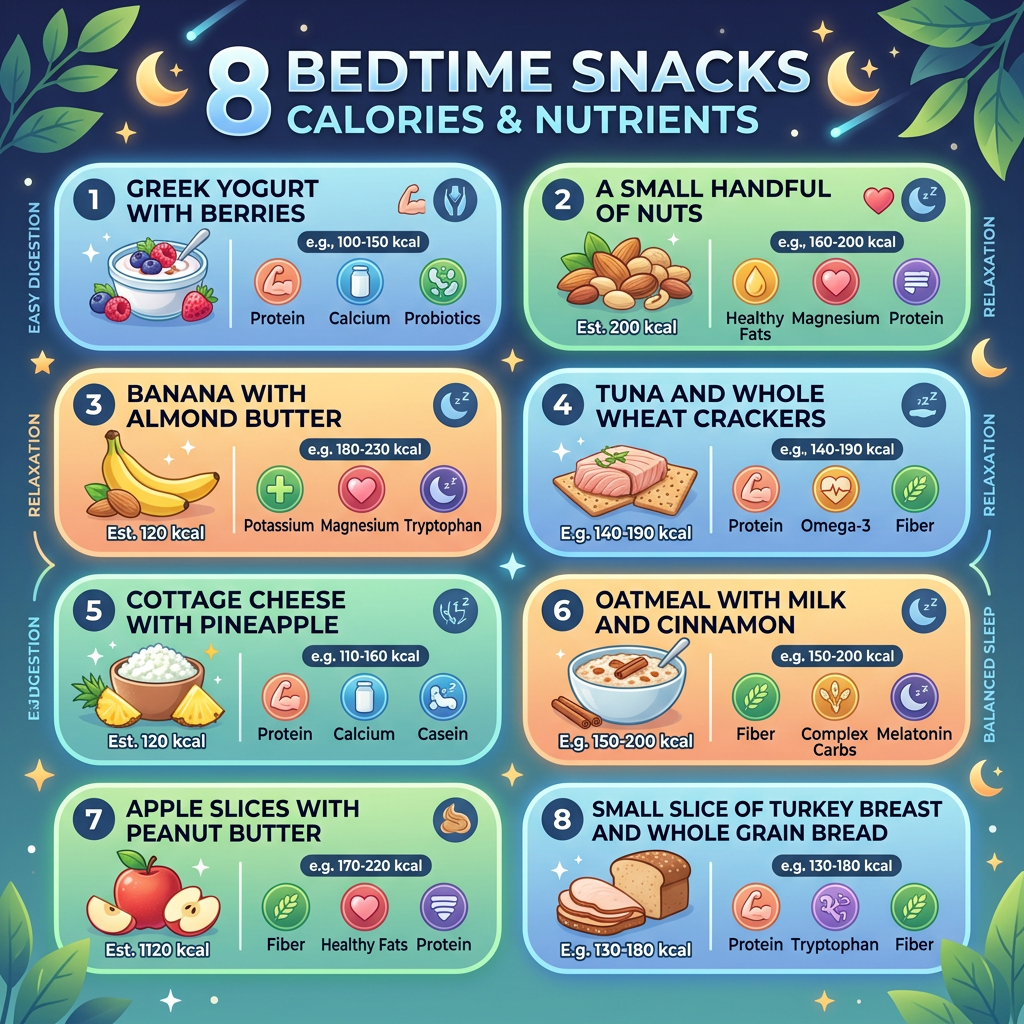
Bedtime Snack Quick-Reference Guide
| Snack | Key Sleep Nutrient | Calories (approx.) | Best For |
|---|---|---|---|
| Peanut butter on whole-grain bread | Serotonin-raising healthy fats | ~180 | Feeling full and calm |
| Cheese on whole-grain crackers | Tryptophan + complex carbs | ~150 | Quick and easy prep |
| Greek yogurt + banana | Calcium, magnesium, potassium | ~160 | Muscle relaxation |
| Tart cherry juice (2 oz) | Melatonin | ~70 | Faster sleep onset |
| Almonds (1 oz) | Magnesium + melatonin | ~165 | Reducing night awakenings |
| Low-sugar cereal + milk | Tryptophan + calcium | ~190 | Classic comfort snack |
| Warm milk | Tryptophan + calcium | ~100 | Winding-down ritual |
| Oatmeal (½ cup) | Melatonin + complex carbs | ~150 | Blood sugar stability |
The Golden Rules for Bedtime Snacking
Getting the snack right is half the battle. These rules lock in the other half:
Rule #1 — Stay Under 200 Calories Fewer than 200 calories is the safety zone. Anything heavier and your digestive system has to work harder than your brain can wind down. You’ll feel it.
Rule #2 — Eat 1 Hour Before Bed This gives your body time to digest and begin converting nutrients into sleep-supporting hormones before you’re actually trying to sleep.
Rule #3 — Always Combine Protein + Complex Carbs This is the mini-meal formula. Protein brings tryptophan. Complex carbs help deliver it to your brain. Together they’re more effective than either one alone.
Rule #4 — Cut Caffeine 6 Hours Before Bed Caffeine stays in your system much longer than most people assume. Coffee, black tea, dark chocolate, energy drinks, and most sodas all count. If you’re going to bed at 10pm, your last caffeine should be at 4pm.
Rule #5 — Don’t Skip the Snack if You’re Hungry Lying awake with a growling stomach is just as bad for sleep as eating too much. The right small snack is always better than ignoring the hunger signal.
Read Also: How to Fall Asleep Fast: 13 Proven Tips That Actually Work
Foods to Avoid Before Bed (The Sleep Wreckers)
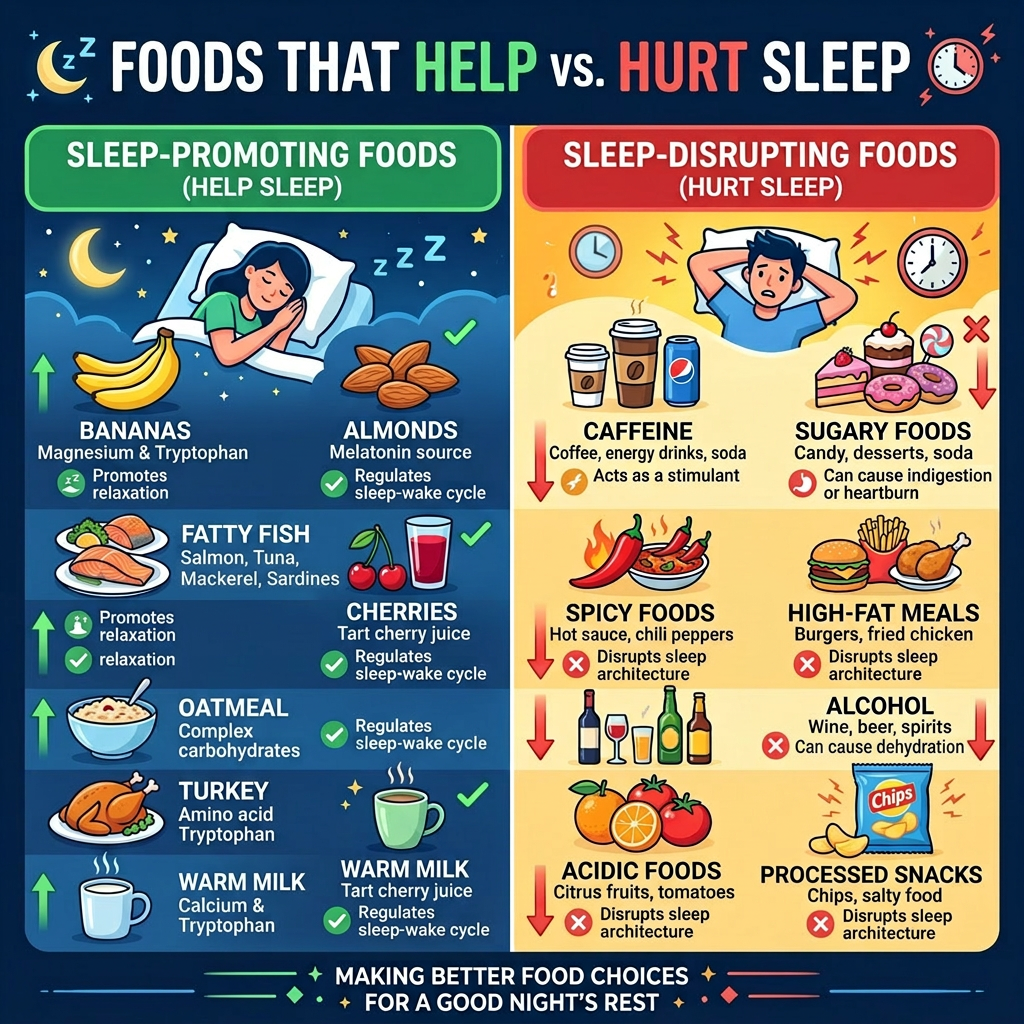
Just as important as knowing what to eat is knowing what not to. These five categories consistently disrupt sleep quality:
❌ High-Fat Foods
Burgers, pizza, chips, fries, and anything from the fast food drive-through. High-fat foods are difficult to digest and can reduce serotonin production — the opposite of what you need. They also tend to cause heartburn and bloating once you lie flat.
❌ Spicy Foods
Curry, hot peppers, wasabi, horseradish, and hot sauce might be delicious at dinner, but they’re brutal for sleep. Spicy foods can trigger acid reflux that gets worse the moment you’re horizontal.
❌ Sugary Foods
Pastries, ice cream, candy, and sugary cereals (yes, even “light” ones) are simple carbs that reduce serotonin and destabilize blood sugar. You might fall asleep fine but wake up at 3am wired.
❌ Acidic Foods
Tomatoes, citrus fruits, and raw onions can all trigger heartburn in people prone to acid reflux, especially when eaten close to bedtime.
❌ Caffeinated Items
Coffee, black and green tea, chocolate, energy drinks, cola, and even some sparkling waters. And don’t forget — alcohol might feel like it helps you fall asleep, but it fragments sleep architecture and reduces overall sleep quality significantly.
Bonus: Other Foods Worth Trying
Beyond the main eight, these options are worth keeping in your rotation:
- Chamomile tea—A 2024 meta-analysis of 10 studies involving 772 participants found that chamomile reduced nighttime awakenings. Make it caffeine-free and drink it about an hour before bed.
- Pumpkin seeds — One of the highest plant-based sources of tryptophan available.
- Turkey on whole wheat bread — The classic tryptophan delivery system.
- Avocado — Rich in both magnesium and potassium, both of which support muscle relaxation before sleep.
- Kiwi — A 2023 study showed eating 2 kiwis 1 hour before bed for 4 weeks reduced time awake by 47% and added a full extra hour of sleep.
- Air-popped popcorn — A surprisingly solid whole-grain, high-fiber option that satisfies crunch cravings without the calories.
Conclusion
Sleep is one of the most powerful tools you have for health, recovery, mood, and performance. And it turns out, what you eat in the hour before bed has more influence over your sleep quality than most people realize. The best bedtime snacks for good sleep all share the same formula: under 200 calories, protein plus complex carbs, eaten about an hour before bed. From tart cherry juice that adds 84 minutes of sleep—according to a clinical trial published on PubMed Central and detailed in the American Journal of Therapeutics—to almonds that cut nighttime awakenings, these aren’t random health recommendations. They are backed by actual research.
Start small. Tonight, swap whatever you usually reach for at 9 p.m. with one of the options recommended by sleep experts, like those outlined in the Sleep Foundation Bedtime Nutrition Guide. Give it a couple of weeks. Pay attention to how you feel in the morning. Your sleep—and your body—will thank you.
You May Also Like: 6 Powerful Mental Benefits of Running: How Every Mile Boosts Your Mood & Mental Health
Frequently Asked Questions
What are the best bedtime snacks for good sleep?
The top eight are peanut butter on whole grain bread, cheese on whole grain crackers, Greek yogurt with banana, unsweetened tart cherry juice, a handful of almonds, low-sugar fortified cereal with milk, warm milk, and a small bowl of oatmeal. All contain sleep-promoting nutrients like tryptophan, melatonin, magnesium, or calcium—and all come in under 200 calories.
How many calories should a bedtime snack have?
Fewer than 200 calories is the target. Aim for a mini meal that combines a little protein with some complex carbohydrates. That balance keeps you satisfied without overloading your digestive system or causing heartburn.
When should I eat my bedtime snack?
About 1 hour before your target sleep time. This gives your body time to digest and begin converting nutrients into serotonin and melatonin before you actually try to sleep.
Does eating before bed make you gain weight?
Not if you keep it under 200 calories and choose the right foods. A small, nutrient-dense snack doesn’t cause weight gain — chronic overeating does. A properly sized bedtime snack can actually prevent the late-night binge eating that happens when people try to ignore hunger entirely.
Is warm milk actually effective for sleep?
Yes. Milk contains tryptophan and calcium, both of which support your brain’s natural melatonin production. The warmth also has a calming effect on the nervous system. It’s not a myth — the science actually backs this one up.
What’s the best tea to drink before bed for sleep?
Chamomile is the most well-studied option. A 2024 meta-analysis of 10 studies and 772 participants found chamomile reduced nighttime awakenings. Valerian root and passionflower teas also have evidence behind them. Just make sure any tea you drink before bed is caffeine-free.