
Walking vs Cycling for Fat Loss: The Winner for Weight Loss
Here’s a question almost every gym-goer, new runner, or weekend warrior has asked at some point: should I walk or cycle to lose fat? It sounds simple, right? But the answer is actually a little more nuanced than most fitness articles let on.
You might have heard that cycling burns more calories per hour — and that’s largely true. But walking has some surprising advantages that don’t show up in a basic calorie counter. And honestly, the “best” cardio for fat loss is almost always the one you’ll actually stick with.
In this guide, we’re breaking down the walking vs cycling for fat loss debate with real numbers, research-backed insights, and practical advice for every fitness level — whether you’re a total beginner or someone who just wants to optimize their cardio routine.

1. Walking vs Cycling: The Big Picture#
Both walking and cycling are classified as low-impact cardio — meaning they’re easier on your joints than, say, running or jumping. They’re both accessible, scalable, and genuinely effective for burning fat when done consistently.
But they’re not identical. Cycling is generally more intense per unit of time, which means you burn more calories in a shorter session. Walking, on the other hand, is more accessible, free, and easier to do every single day without recovery concerns.
Think of it this way: cycling is the sports car of cardio — fast and efficient. Walking is the dependable SUV — reliable, low-maintenance, and you’ll actually use it every day.
2. Calorie Burn Comparison: Walking vs Cycling (The Numbers)#
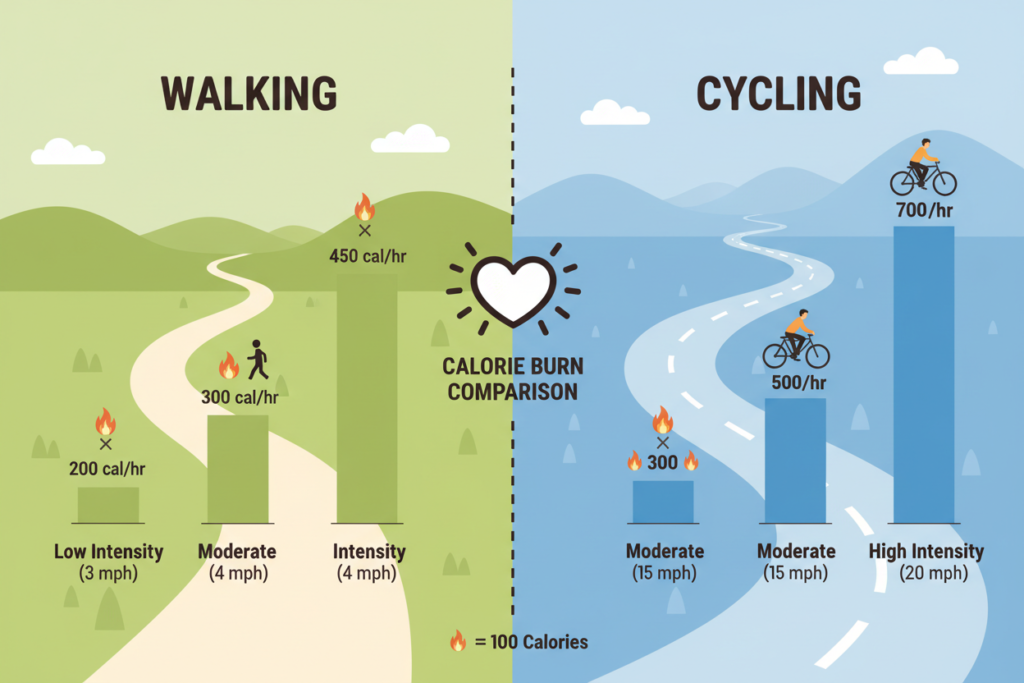
Let’s get into the data people actually want to see. Calorie burn depends on your weight, pace, duration, and terrain — but here’s a solid general estimate for a 155-pound (70 kg) person:
| Activity | 30 Minutes | 60 Minutes |
| Brisk Walking | ~150 cal | ~300 cal |
| Walking on Incline | ~180 cal | ~360 cal |
| Moderate Cycling | ~250 cal | ~500 cal |
| Vigorous Cycling | ~350 cal | ~700 cal |
| Stationary Bike (moderate) | ~210 cal | ~420 cal |
So cycling burns roughly 50–100% more calories per hour than walking at comparable intensities. That’s a significant difference if your goal is maximum fat loss in minimum time.
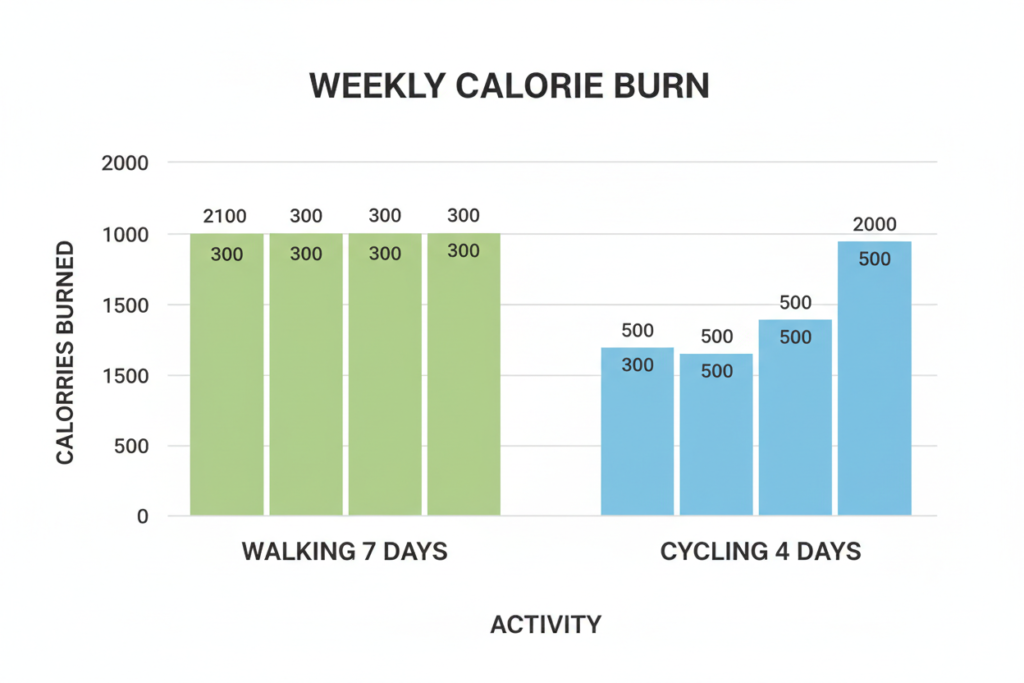
But don’t write walking off just yet. Those 300 daily calories from a 60-minute brisk walk add up to about 2,100 calories per week — more than enough to support healthy, sustainable fat loss over time.
3. Fat Loss Mechanics: What Actually Burns Body Fat?#
Here’s what most cardio comparisons miss: fat loss isn’t just about calories burned during exercise. It’s about total energy balance — calories in vs. calories out — over days and weeks.
Both walking and cycling can put you in a calorie deficit. And a calorie deficit is the non-negotiable foundation of fat loss. No cardio can outrun a poor diet.
Fat Oxidation: Does One Burn More Fat Directly?#
An interesting finding from exercise physiology research is that lower-to-moderate intensity activities often rely more heavily on fat as a fuel source. Walking typically keeps your heart rate in a more aerobic zone, where the body can derive a greater percentage of its energy from fat compared to higher-intensity exercise. Research published in the journal Metabolism found that exercise modality can influence fat oxidation rates, highlighting how the body uses different fuel sources depending on the activity and intensity level. However, it’s important to remember that total calorie expenditure and long-term consistency remain the biggest drivers of overall fat loss.
Cycling, especially at higher intensities, tends to rely more on glycogen (carbohydrates) as fuel. However, cycling burns so many more total calories that the overall fat loss per session still tends to be higher.
The takeaway? Both burn fat. Cycling burns more total fat through sheer calorie volume. Walking burns a higher percentage of fat calories per minute. Either way, you win — if you stay consistent.
You May Also Like: Healthy Morning Routine to Lose Weight: 10 Simple Habits That Actually Work
4. Walking for Fat Loss: Benefits, Pros & Cons#
Why Walking Works#
Walking gets underestimated. A lot. But the research tells a different story. Regular brisk walking is one of the most studied, most effective, and most sustainable forms of cardio out there — especially for people who are new to exercise or returning after a break.
- Burns fat at a steady, manageable intensity
- Easy on the knees, hips, and back — minimal injury risk
- Requires zero equipment (just a decent pair of shoes)
- Can be done anywhere, anytime — no gym needed
- Boosts mood, reduces cortisol, and supports gut health
- Sustainable as a daily habit — you can walk 7 days a week without burnout
If you’re going to walk for fat loss, invest in a good quality walking shoe with arch support and consider a fitness tracker or pedometer to monitor your daily step count. Hitting 8,000–10,000 steps per day has been linked to improved metabolic health and steady weight loss.
The Downside of Walking#
- Slower calorie burn than cycling — you need more time for the same results
- Less muscle engagement than cycling, especially in the quads and glutes
- High volumes (long daily walks) can cause foot and knee fatigue over time
5. Cycling for Fat Loss: Benefits, Pros & Cons#
Why Cycling Wins on Efficiency#
If your main goal is maximum fat loss in the least amount of time, cycling has a clear edge. A 30-minute moderate ride can burn the same calories as a 45–60 minute brisk walk. For busy professionals or parents with limited workout windows, that matters.
- Higher calorie burn per session compared to walking
- Builds lower body muscle (quads, hamstrings, glutes, calves) while burning fat
- Low-impact — great for people with joint issues or recovering from injury
- Stationary bikes allow year-round training regardless of weather
- Can be done indoors with streaming fitness apps for motivation
A solid stationary exercise bike is one of the best investments for home fat loss training. Brands like Schwinn, Sunny Health, and Peloton offer great options at various price points. For outdoor cycling, a comfortable hybrid bike works well for both fitness and casual riding.
Looking to accelerate your results? Some cyclists also use thermogenic fat burners from trusted brands available through SellHealth — always choose products with clean, evidence-backed formulas and consult your doctor first.
The Downside of Cycling#
- Requires equipment — a bike or gym membership, which has a cost
- Outdoor cycling depends on weather and safe terrain
- Less upper body engagement (if fat loss is a full-body goal, you may need to supplement with strength training)
- Saddle discomfort is a real issue for beginners — can take time to adjust

6. Walking vs Cycling for Fat Loss: Full Comparison Table#
| Category | Walking | Cycling |
| Calories/hour (moderate) | 250–350 kcal | 400–600 kcal |
| Joint Impact | Low | Very Low |
| Equipment Needed | None (just shoes) | Bike or stationary bike |
| Cost | Free | Moderate–High |
| Beginner Friendly | ✅ Very Easy | ✅ Easy |
| Fat Burn Per Session | Moderate | High |
| Belly Fat Reduction | Good | Excellent |
| Good for Bad Knees | Fair | ✅ Excellent |
| Can Do Daily | ✅ Yes | ✅ Yes |
| Muscle Activation | Lower body + core | Quads, hamstrings, glutes |
| Mental Health Benefit | High (outdoors) | High (outdoors/gym) |
7. Walking vs Cycling for Belly Fat Loss#
Belly fat — specifically visceral fat around your midsection — is one of the most stubborn types of fat to lose. And it’s also the most metabolically dangerous. Reducing it requires sustained cardio, a clean diet, and patience.
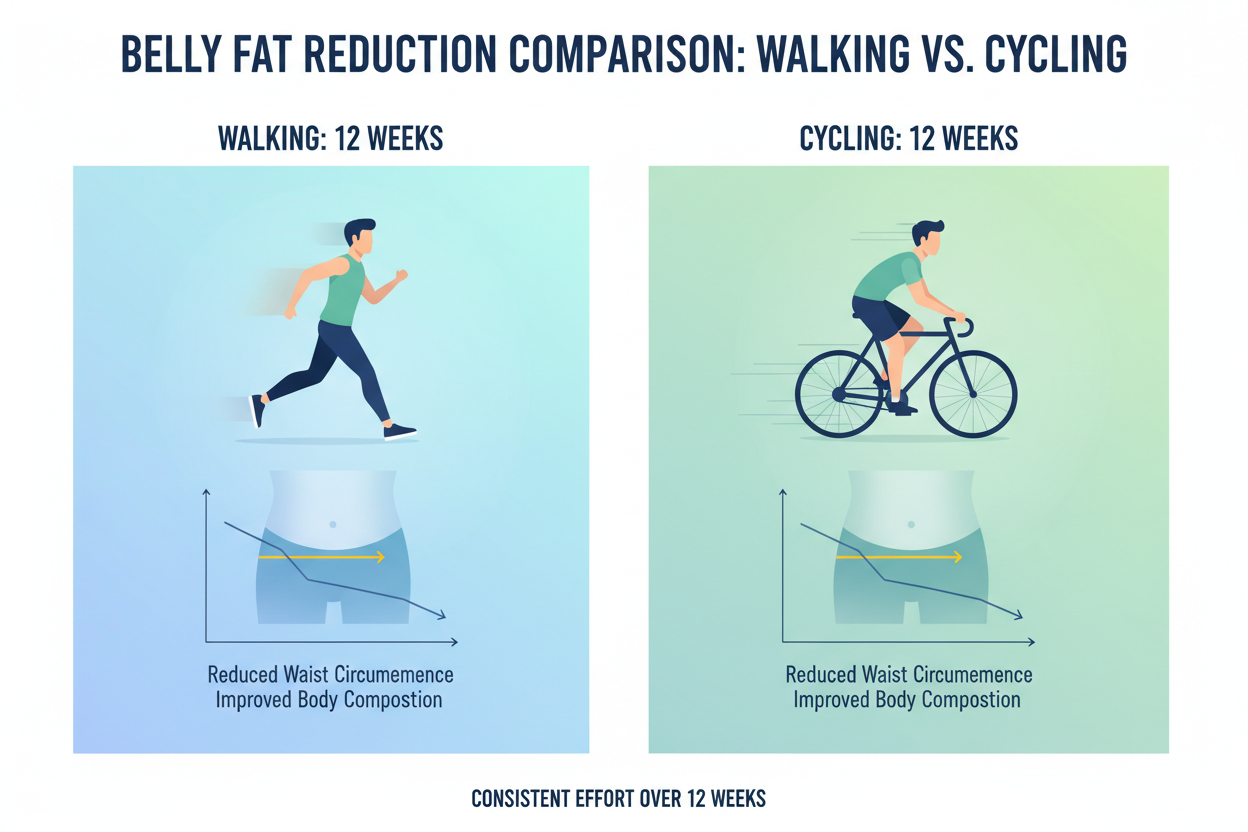
Both walking and cycling reduce visceral fat over time. But research suggests cycling may have a slight edge for targeting belly fat because it elevates heart rate more consistently and burns more total calories per session.
A 2021 study in the Journal of Physiology found that regular aerobic exercise — including cycling — significantly reduced abdominal fat in overweight adults over 12 weeks.
That said, you cannot spot-reduce fat. You can’t tell your body to burn belly fat first. What you can do is create a consistent calorie deficit through cardio + diet, and your body will gradually reduce fat stores across your entire body, including your belly.
For targeted belly fat support, some people add a high-quality CLA supplement or a green tea extract to their routine — both have some research behind them for supporting abdominal fat reduction alongside regular exercise.
8. Which Is Better for Beginners: Walking or Cycling?#
This is one of the most common questions — and the honest answer is: it depends on your starting point.
Start with Walking If:#
- You haven’t exercised regularly in months or years
- You have zero equipment and no gym budget
- You want something you can do immediately with no learning curve
- You’re focused on building a daily movement habit before ramping up intensity
Start with Cycling If:#
- You have access to a bike or stationary bike
- You want faster initial calorie burn with less time commitment
- You have joint issues that make even light walking uncomfortable
- You enjoy a slightly more intense challenge from day one
For true beginners, walking is the lower barrier to entry. Start with 20–30 minutes of brisk walking 4–5 times per week, then gradually increase duration or add cycling sessions as your fitness improves.
A beginner-friendly fitness tracker like Fitbit makes it easy to monitor your heart rate, steps, and calorie burn during both activities — super helpful for staying motivated when you’re just starting out.

Check This Out: 10 Best Low Impact Cardio Workouts for Beginners at Home
9. Joint Health: Walking vs Cycling for Bad Knees#
Joint pain — especially knee pain — is a major reason people avoid cardio entirely. Both walking and cycling are considered low-impact, but there are key differences.
Cycling Is Generally Gentler on Knees#
Cycling is a non-weight-bearing activity. Your body weight is supported by the seat, which removes most of the stress on your knee joints. This makes it ideal for people with:
- Osteoarthritis
- Runner’s knee or patellar tendinitis
- Post-surgery rehabilitation (consult a doctor first)
- General knee discomfort from previous injuries
Walking Is Still Okay for Most Knee Issues#
Brisk walking on flat, even surfaces is generally safe for most people with mild knee problems. However, avoid:
- Walking on steep inclines or hills
- Walking on uneven terrain
- Long-duration walks without adequate footwear or support
If you have knee pain and want to cycle, consider a recumbent stationary bike— the reclined position distributes weight more evenly and puts even less stress on knee joints than an upright bike.
10. The Best Strategy: Combining Walking and Cycling#
Here’s something the walking-vs-cycling debate often misses: you don’t have to pick one.
Combining both is actually the smartest approach for most people. Here’s why:
- Variety prevents boredom — rotating activities keeps your routine fresh and sustainable
- Different muscle activation — walking uses your hip flexors and stabilizers more; cycling hammers the quads and glutes
- Recovery balance — cycling gives your joints a rest from the impact of walking; walking gives you a lower-intensity active recovery day after harder rides
- Flexibility — bad weather? Jump on a stationary bike. Beautiful day outside? Go for a walk or outdoor ride
Most fitness professionals recommend mixing cardio modalities rather than doing the same workout every day. Your body adapts quickly to repetitive stimuli — mixing it up keeps fat burning elevated and helps you avoid plateaus.
You May Also Like: 6 Powerful Mental Benefits of Running: How Every Mile Boosts Your Mood & Mental Health
11. Gear and Tools to Maximize Your Fat Loss Results#
You don’t need a lot to get started — but the right tools can meaningfully improve your results and consistency.
For Walkers:#
- Supportive walking or running shoes — protects joints, reduces fatigue
- Fitness tracker / smartwatch — monitor steps, heart rate, and calories burned.
- Resistance bands — add strength training on rest days for full-body fat loss
- Electrolyte supplements — stay hydrated and maintain energy during longer walks
For Cyclists:#
- Stationary exercise bike — best for all-weather, home-based fat loss training
- Padded cycling shorts — reduces saddle discomfort for longer rides
- Heart rate monitor chest strap — more accurate than wrist trackers for interval training
- Pre-workout supplement — boosts energy and endurance for cycling sessions.
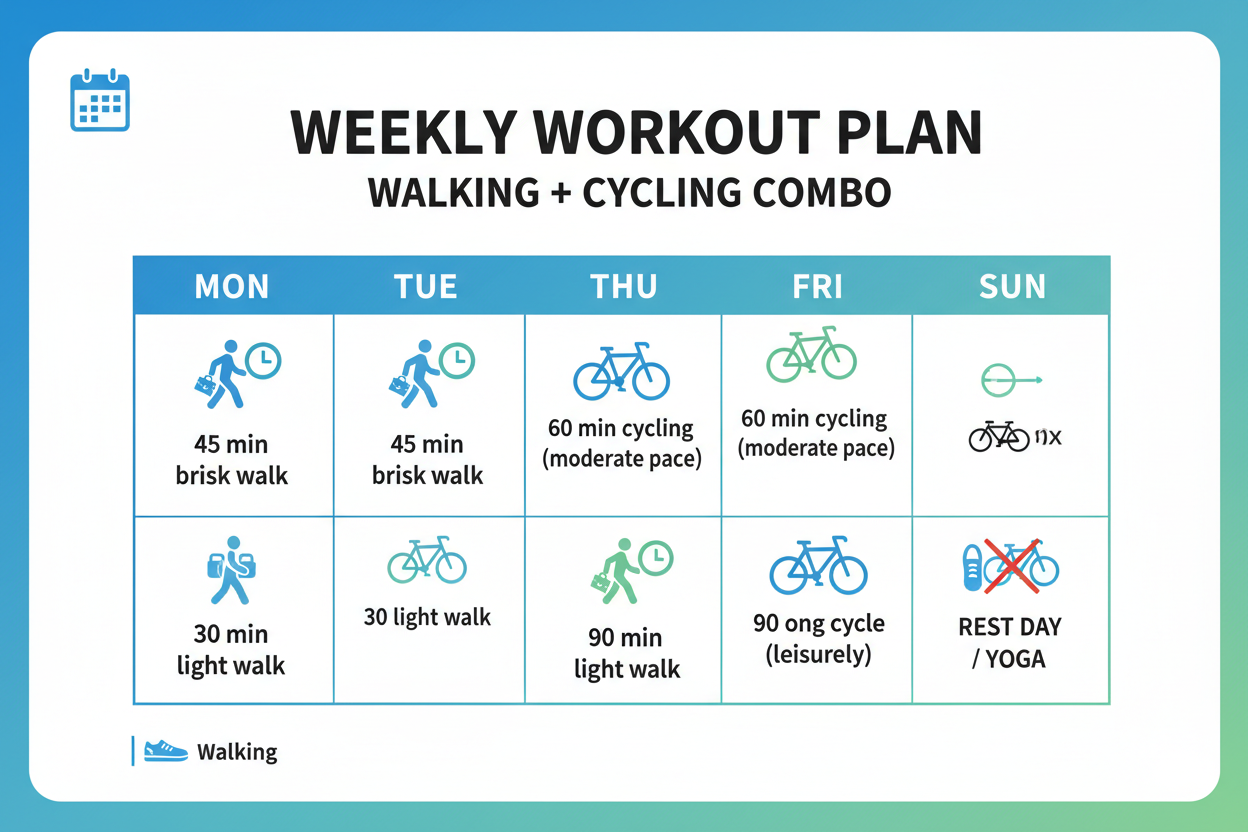
12. Sample 7-Day Walking + Cycling Fat Loss Plan#
Here’s a beginner-to-intermediate weekly plan that combines both activities for maximum fat loss results:
| Day | Activity | Duration | Notes |
| Monday | Brisk Walk | 40 min | Flat or slight incline, steady pace |
| Tuesday | Cycling (moderate) | 30 min | Stationary or outdoor, Zone 2 HR |
| Wednesday | Rest or light walk | 20 min | Active recovery |
| Thursday | Cycling (intervals) | 25 min | Alternate fast/slow intervals |
| Friday | Brisk Walk | 45 min | Use a fitness tracker to hit 5,000+ steps |
| Saturday | Cycling | 40 min | Longer, steady ride for endurance |
| Sunday | Rest | — | Stretch, hydrate, recover |
Total estimated weekly calorie burn: 1,200–1,800 calories from cardio alone.
Pair with a 200–400 calorie daily deficit through diet, and you’re looking at 0.5–1 lb of fat loss per week — the gold standard for sustainable weight loss.
Walking vs Cycling: Pros & Cons at a Glance#
| Walking | Cycling | |
| ✅ Pros | Free, no equipment needed Easy to start anytime Great for mental health outdoors Burns fat at low intensity Sustainable long-term | Burns more calories per hour Low-impact on joints Builds lower body strength Excellent for belly fat loss Stationary option for bad weather |
| ❌ Cons | Slower calorie burn Needs more time for same results Fewer muscle gains | Requires a bike or gym membership Steeper learning curve Setup takes longer |
Conclusion: So, Who Actually Wins?#
Here’s the honest answer: cycling edges out walking for pure calorie burn and time efficiency. If your goal is maximum fat loss in minimum time, cycling is technically the winner.
But walking has its own quiet superpowers — it’s free, infinitely accessible, easier to make a daily habit, and arguably easier to sustain for life. And long-term consistency always beats short-term intensity.
The real winner? Whatever you’ll actually do. Five days a week of brisk walking beats two days of reluctant cycling every time.
If you’re new to exercise, start walking. If you want faster results or have access to a bike, lean into cycling. And if you want the best possible outcome, do both — alternate between them, track your progress, and pair your cardio with a solid nutrition strategy. For additional physical activity guidelines, the World Health Organization (WHO) Physical Activity Recommendations provide evidence-based advice for adults of all fitness levels.
Ready to get started? Pick up a quality fitness tracker, choose your cardio weapon of choice, and get moving. The only bad workout is the one you didn’t do.
Have a question about walking vs cycling for fat loss? Drop it in the comments below — we’d love to help you find the right approach for your goals.
Read Also: 15 Effective Low Impact Workouts for Seniors: Safe, Easy, and Joint-Friendly
Frequently Asked Questions (FAQ)#
Which is better for fat loss: walking or cycling?#
Cycling generally burns more calories per hour and is more time-efficient for fat loss, but walking is easier to sustain long-term. The best choice is the one you can do consistently and stick with week after week.
How many calories does walking burn vs cycling?#
Cycling at moderate intensity burns about 400–600 calories per hour, while brisk walking burns around 250–350 calories per hour. Walking faster or on an incline increases calorie burn, but cycling typically still comes out ahead.
Can I lose weight by walking only?#
Yes. Walking can absolutely help you lose weight, especially if you walk briskly for 30+ minutes daily and maintain a calorie deficit through your diet. Adding a daily 30-minute brisk walk can burn roughly 150 extra calories — that’s over 1,000 per week.
Can I lose weight by cycling only?#
Yes. Cycling is highly effective for weight loss since it burns more calories in less time. A 155-pound person can burn around 500–600 calories cycling for an hour — nearly double what walking produces in the same timeframe.
Which burns more fat: walking or cycling?#
Cycling burns more total calories and fat per session, but some research suggests walking may increase fat metabolism more at a cellular level. Either way, maintaining a consistent calorie deficit is the key driver of fat loss.
Which is better for beginners: walking or cycling?#
Walking is often better for complete beginners — no equipment, no learning curve, totally free. Cycling (especially on a stationary bike) is also beginner-friendly and low-impact, and it gives you a faster calorie burn from day one.
Is walking or cycling better for joint health?#
Both are low-impact, but cycling is gentler on the joints — especially the knees, hips, and ankles. This makes it ideal for those with joint pain or previous injuries. Walking is also safe for most joint conditions on flat, even terrain.
Should I walk or cycle for fat loss if I have bad knees?#
Cycling is typically the better option for bad knees since it’s non-weight-bearing and lets you control resistance. A recumbent stationary bike is especially kind on knee joints. Walking on flat surfaces is also generally okay — just avoid hills and uneven terrain.
What’s the best time to walk or cycle for fat loss?#
There’s no magic fat-burning window. The best time to exercise is whenever you can do it consistently. That said, fasted morning cardio (before breakfast) may slightly increase fat oxidation — but the overall impact is minor compared to total daily calorie burn.