9 Best Fruits to Eat at Night for Sleep (Backed by Science)
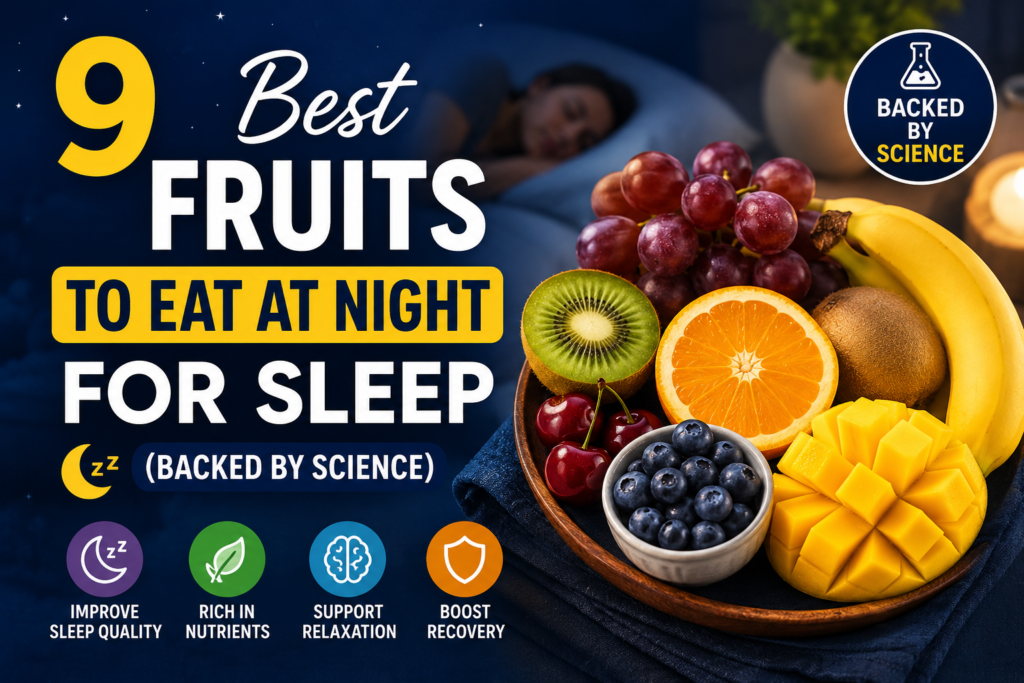
If you’re staring at the fruit bowl at 9 p.m. wondering whether an apple will help or hurt your sleep, you’re asking the right question. The best fruits to eat at night for sleep are kiwi, tart cherries, bananas, pineapple, oranges, grapes, avocado, passion fruit, and berries — each offers a slightly different mix of melatonin, tryptophan, magnesium, or antioxidants that may support your body’s wind-down process. None of them are a cure for insomnia, but the research behind a few (especially kiwi and tart cherries) is genuinely interesting.
Below, we’ll break down what the science actually says, how much to eat, when to eat it, and which fruits might work against you if you eat them too close to bedtime.
Table of Contents
How Fruit Affects Sleep: The Science in Brief
Fruit doesn’t knock you out the way a sedative would. Instead, certain fruits contain compounds that interact with your body’s natural sleep machinery.
Melatonin, tryptophan, and serotonin
Melatonin is the hormone that signals to your brain that it’s time to sleep, and your body produces it naturally as darkness falls. Some fruits — including kiwi, tart cherries, and grapes — contain small amounts of melatonin or plant compounds that may support its production. Others, like bananas and pineapple, contain tryptophan, an amino acid your body converts into serotonin and eventually melatonin.
The catch: the amount of melatonin in food is tiny compared to a supplement, and most of the research on “melatonin-boosting” fruits comes from small studies. That doesn’t mean the effect is fake — it means it’s modest and still being studied.
Blood sugar, magnesium, and potassium
Staying asleep is just as important as falling asleep, and this is where minerals matter. Magnesium supports muscle relaxation and nervous system regulation, while potassium is linked to fewer nighttime awakenings. Fruits that digest slowly and don’t spike blood sugar (like berries and apples) are also less likely to trigger the energy crash and cortisol response that can jolt you awake at 3 a.m.
Read Also: Best Drinks Before Bed for Better Sleep: 12 Science-Backed Options
The 9 Best Fruits to Eat at Night for Sleep
1. Kiwi
Kiwi has the strongest research behind it of any fruit on this list. In a small 2011 study published in the Asia Pacific Journal of Clinical Nutrition, 24 adults with self-reported sleep problems ate two kiwis one hour before bed nightly for four weeks. Researchers observed improvements in how quickly participants fell asleep, how long they stayed asleep, and overall sleep efficiency. A later randomized controlled trial in university students with chronic insomnia symptoms found similar patterns compared to a control fruit.
Kiwi contains serotonin, folate, and antioxidants like vitamin C, which researchers believe may work together rather than through any single “sleep nutrient.” The sample sizes in these studies are small, so think of kiwi as promising rather than proven.
Try it: Two kiwis, eaten about an hour before bed.
Read Also: Is Kiwi Good Before Bed? 7 Surprising Benefits for Deep Sleep
2. Tart Cherries
Tart cherries (and tart cherry juice) are one of the few fruits with melatonin content high enough that researchers have measured its effect on blood melatonin levels. A 2012 study in the European Journal of Nutrition found that drinking tart cherry juice was associated with increased melatonin levels and modestly longer sleep time in healthy adults. Other small trials have looked at tart cherry juice in older adults with insomnia, with encouraging but not definitive results.
Try it: A small glass (about 1 cup) of tart cherry juice in the evening, or a handful of fresh tart cherries if you can find them.
3. Bananas
Bananas are a favorite bedtime snack for good reason: they combine magnesium, potassium, vitamin B6, and tryptophan — a nutrient lineup that supports both muscle relaxation and the serotonin-to-melatonin pathway. They’re also easy to digest and gentle on the stomach late at night.
Try it: One medium banana, optionally paired with a small spoonful of nut butter for staying power.
Read Also: Banana Before Bed Good for Sleep? 5 Proven Expert Facts!
4. Pineapple
Pineapple contains bromelain, an enzyme that aids digestion, along with modest amounts of serotonin. You’ll see the claim that pineapple raises melatonin levels by over 250% circulating widely online; this comes from limited early research and shouldn’t be taken as a guarantee of a dramatic effect. Still, pineapple is low in fat, hydrating, and unlikely to weigh you down before bed.
Try it: A small cup of fresh pineapple chunks, ideally an hour or more before lying down (its acidity can bother sensitive stomachs right at bedtime).
5. Oranges and Other Citrus
Citrus fruits are rich in vitamin C, which plays a role in managing physical stress and supporting the nervous system. Some research also associates higher vitamin C intake with better sleep quality. The downside: citrus acidity can trigger heartburn or reflux in people who are prone to it, which is counterproductive right before bed.
Try it: A small orange as an early-evening snack rather than a last-thing-at-night one, especially if you have acid reflux.
6. Grapes
Grapes — particularly darker varieties — contain trace amounts of melatonin, along with resveratrol, an antioxidant studied for its role in reducing inflammation. They’re low-calorie, hydrating, and easy to portion out.
Try it: A small handful (about 1 cup) of grapes as a light snack.
7. Avocado
Botanically a fruit, avocado is rich in magnesium, potassium, and heart-healthy monounsaturated fats. Its potassium content is notably high — roughly three times that of a banana per fruit — which may help reduce nighttime muscle cramping and awakenings. Because it’s calorie-dense, portion control matters here more than with other fruits.
Try it: A quarter to half an avocado, perhaps mashed on a small piece of whole-grain toast.
8. Passion Fruit
Passion fruit contains a compound called passiflora, along with vitamins A and C. Some traditional and preliminary research has looked at passionflower (a related but distinct plant) for relaxation and anxiety, though this evidence is stronger for passionflower extract/tea than for eating the fruit itself. Passion fruit is also a good source of fiber, which supports steady digestion overnight.
Try it: One passion fruit, spooned straight from the shell, or added to plain yogurt.
9. Berries (Blueberries, Raspberries, Blackberries)
Berries are among the most antioxidant-dense fruits available, and chronic physical stress (oxidative stress) is associated with poorer sleep quality. Berries are also low on the glycemic index, meaning they’re less likely to cause the blood sugar swings that can disrupt sleep in the middle of the night.
Try it: A cup of mixed berries, on their own or with a small serving of low-sugar Greek yogurt.
You may Also Like: Improve Sleep Quality: Evidence-Based Tips That Work
Fruit Comparison Table
| Fruit | Key Sleep-Supporting Nutrient | Best Time to Eat | Watch-Outs |
|---|---|---|---|
| Kiwi | Serotonin, folate, antioxidants | 1 hour before bed | Generally well tolerated |
| Tart cherries | Natural melatonin | Evening or before bed | Tart cherry juice can be high in sugar — check labels |
| Banana | Magnesium, potassium, tryptophan | Early evening | High in carbs — moderate portions |
| Pineapple | Bromelain, serotonin | Early evening | Acidity may bother sensitive stomachs |
| Oranges/citrus | Vitamin C | Early evening, not right before bed | Can trigger heartburn/reflux |
| Grapes | Melatonin, resveratrol | Evening snack | Easy to overeat — watch portions |
| Avocado | Magnesium, potassium, healthy fats | Early evening | Calorie-dense — keep portions small |
| Passion fruit | Passiflora, vitamin C, fiber | Evening snack | Seeds may bother sensitive digestion |
| Berries | Antioxidants, low glycemic index | Anytime evening | Minimal — a solid low-risk choice |
How Much Fruit — and When — Should You Eat Before Bed?
Timing matters almost as much as the fruit itself.
- Aim for 1 to 2 hours before bed. This gives your digestive system time to work before you lie down, reducing the risk of reflux or bloating.
- Keep portions modest. One piece of fruit or about a cup of chopped fruit is plenty — the goal is a light snack, not a second dinner.
- Pair with a slow-digesting protein like plain Greek yogurt, cottage cheese, or a small amount of nut butter. This can help stabilize blood sugar overnight and extend satiety.
- Skip fruit juice as a substitute for whole fruit where possible. Juice concentrates sugar and strips out fiber, which can work against stable blood sugar levels.
Fruits to Limit or Avoid at Night
Not every fruit is a great bedtime choice. Consider limiting:
- Highly acidic citrus (grapefruit, lemon, lime) if you’re prone to acid reflux or GERD
- Very high-sugar dried fruits (dates, raisins, dried mango), which pack a lot of sugar into a small portion
- Large portions of any fruit right before lying down, since overeating close to bedtime can cause discomfort regardless of what you eat
- Fruit with added sugar — canned fruit in syrup or sweetened fruit cups offer little of the benefit and more of the blood-sugar downside
You May Also Like: Sleepmaxxing Tips and Tricks That Actually Work
Beyond Fruit: Other Evidence-Based Sleep Habits
Fruit can be one small piece of a better sleep routine, but it works best alongside fundamentals that sleep researchers consistently point to: a consistent sleep and wake schedule, limiting caffeine after early afternoon, dimming bright light in the evening, and keeping your bedroom cool and dark. The American Academy of Sleep Medicine and the CDC both emphasize that sleep hygiene habits like these have a bigger overall impact on sleep quality than any single food. If you’re building out a full nighttime routine, our guide to creating a better bedtime routine and our breakdown of Simple techniques to improve sleep quality are good next stops.
Key Takeaways
- Kiwi and tart cherries have the most research behind them for sleep-specific benefits, though studies are small.
- Bananas, avocado, and berries offer magnesium, potassium, and antioxidants that support relaxation and stable blood sugar overnight.
- Eat fruit 1–2 hours before bed in modest portions, ideally paired with a slow-digesting protein.
- Avoid high-acid citrus, sugary dried fruit, and large portions right before lying down.
- Fruit works best as one part of a broader sleep routine — not a replacement for consistent sleep habits or medical care.
The Bottom Line
There’s no single “magic” fruit that will fix a bad night’s sleep, but the evidence around kiwi and tart cherries is genuinely worth paying attention to, and the broader nutrient profile in fruits like bananas, avocado, and berries makes them a smart, low-risk addition to your evening routine. Start with one or two options from this list, watch how your body responds, and pair them with the sleep habits that matter most — a consistent schedule, dim lighting, and a cool, quiet bedroom.
If sleep problems persist despite these changes, it’s worth checking in with a doctor to rule out an underlying sleep disorder.
This article is for informational purposes only and is not a substitute for professional medical advice. If you have chronic sleep issues, consult a healthcare provider or board-certified sleep specialist.
Frequently Asked Questions
What fruit is best to eat before bed for sleep?
Kiwi currently has the most research support, with small studies linking it to faster sleep onset and fewer nighttime awakenings. Tart cherries are a close second, thanks to their natural melatonin content.
Can eating fruit at night help with insomnia?
Fruit may support better sleep as part of a broader routine, but it isn’t a treatment for insomnia. If you have ongoing trouble sleeping, talk to a doctor or a sleep specialist rather than relying on diet alone.
Is banana or kiwi better for sleep?
Both offer benefits, but they work differently. Kiwi has more direct research behind it for sleep quality specifically, while bananas offer a broader mineral profile (magnesium and potassium) that supports relaxation. Many people rotate between the two.
What fruits should you avoid before bed?
Highly acidic fruits like grapefruit and lemon can worsen reflux for some people, and heavily sweetened dried fruits or fruit in syrup can spike blood sugar without much nutritional upside.
Does fruit have enough melatonin to make a difference?
Melatonin levels in fruit are far lower than in a supplement, so any effect is likely modest. The benefit may come more from the combination of antioxidants, minerals, and small amounts of melatonin-supporting compounds working together.
How long before bed should I eat fruit?
Most research on kiwi and tart cherries uses a window of about one hour before bed, though eating fruit up to two hours before sleep is generally fine and may be gentler on digestion.
Is fruit a better bedtime snack than melatonin supplements?
They serve different purposes. Fruit is a whole-food snack with modest, long-term benefits, while melatonin supplements deliver a concentrated dose intended for short-term use. Neither is a substitute for good sleep hygiene, and it’s worth discussing supplement use with a healthcare provider first.