Does Peanut Butter Before Bed Help You Sleep? What the Science Actually Says
If you are standing in front of the pantry at 10 p.m., peanut butter jar in hand, you are likely asking yourself: Does Peanut Butter Before Bed Help You Sleep? You might wonder if this is a good idea or a bad habit in disguise. Here’s the honest answer: peanut butter isn’t a proven sleep remedy, but it does contain several nutrients that support the biological processes behind falling and staying asleep — and it may be a smarter late-night choice than most people realize.
This article breaks down exactly what’s in peanut butter that could matter for sleep, what the research does and doesn’t actually show, and how to eat it before bed the right way.
Table of Contents
Does Peanut Butter Before Bed Help You Sleep?(The Short Answer)
Peanut butter can support better sleep for some people because it contains tryptophan, magnesium, and healthy fats that play roles in melatonin production and blood sugar stability. However, no studies have tested peanut butter specifically for sleep — the evidence comes from broader research on its individual nutrients. A modest serving (1–2 tablespoons) about 30–60 minutes before bed is generally considered a reasonable choice for most healthy adults.
Read Also: Banana Before Bed Good for Sleep? 5 Proven Expert Facts!
What’s Actually in Peanut Butter That Could Affect Sleep?
Tryptophan — Small but Real
Peanut butter contains tryptophan, an amino acid your body converts into serotonin and, eventually, melatonin, the hormone most directly tied to your sleep-wake cycle. Two tablespoons contain a modest amount of tryptophan — not as much as a turkey dinner, but enough to be part of a sleep-supportive eating pattern when combined with other tryptophan sources throughout the day.
Magnesium and Muscle Relaxation
A two-tablespoon serving provides a meaningful amount of magnesium, a mineral involved in muscle relaxation and in supporting GABA activity, the neurotransmitter system responsible for calming brain activity. Low magnesium intake has been associated with poorer sleep quality in some research, though supplementation studies show mixed results.
Healthy Fats and Nutrient Absorption
Peanut butter’s unsaturated fats, including oleic acid, may help the body absorb and transport tryptophan more effectively. These fats also slow digestion, which is part of why peanut butter feels satisfying rather than immediately triggering hunger again.
Vitamin B6 and Niacin’s Supporting Role
Peanut butter contains vitamin B6 and niacin, both of which play supporting roles in helping the body convert tryptophan into serotonin. Neither nutrient works in isolation — they’re part of a broader metabolic pathway that also depends on adequate overall nutrition.
You May Also Like: Is Kiwi Good Before Bed? 7 Surprising Benefits for Deep Sleep
The Blood Sugar Connection (The Most Underrated Mechanism)
Why Blood Sugar Dips Wake You Up at Night
Your body continues regulating blood glucose while you sleep. If levels drop too low overnight — a phenomenon sometimes called nocturnal hypoglycemia — your body responds by releasing cortisol and adrenaline to bring glucose back up. Both hormones are stimulating, which can pull you out of deep sleep or wake you outright, often in the early hours of the morning.
How Peanut Butter’s Protein-Fat Combo Helps
Because peanut butter combines protein and fat with very little sugar, it digests slowly and doesn’t spike blood glucose the way a sugary snack would. This slower release may help prevent the overnight blood sugar dip that leads to those stress-hormone-driven wake-ups, making it a more strategic choice than, say, a cookie or a bowl of cereal before bed.
What the Research Actually Shows (and Doesn’t)
It’s worth being upfront here: there is no clinical study that has tested “eating peanut butter before bed” as its own intervention and measured sleep outcomes directly. What exists is research on the individual components — how tryptophan-rich foods impact sleep, the connection between magnesium and sleep quality, and the relationship between blood sugar stability and nighttime awakenings — that researchers and dietitians extrapolate to foods like peanut butter.
That distinction matters. It means peanut butter is a reasonable, evidence-informed choice, not a scientifically proven sleep aid. Anyone promising peanut butter will “fix” your sleep is overstating the evidence. Used thoughtfully, though, it’s a food whose nutritional profile lines up well with what we know about sleep-supportive eating
Read Also: Best Drinks Before Bed for Better Sleep: 12 Science-Backed options
How Much Peanut Butter Should You Eat Before Bed?
The Ideal Serving Size
One to two tablespoons is the sweet spot. This provides meaningful amounts of tryptophan, magnesium, and healthy fat without the roughly 190–200 calories per two tablespoons becoming excessive, especially if you’re eating it in addition to dinner rather than instead of a proper meal.
Best Timing
Eating your snack 30 to 60 minutes before bed gives your body a head start on digestion. If you’re prone to reflux or heartburn, the fat content can slow stomach emptying enough to cause discomfort when lying down — in that case, eat closer to 60–90 minutes before bed and stay upright a bit longer.
Natural vs. Regular Peanut Butter — Does It Matter?
Natural peanut butter (ideally just peanuts, maybe salt) is generally the better choice. Many conventional brands add sugar, which works against the blood-sugar-stabilizing benefit that makes peanut butter a smart late-night option in the first place. Check the label — if sugar appears in the first few ingredients, it’s worth switching brands.
Does Peanut Butter Before Bed Cause Weight Gain?
Weight gain comes down to total daily calorie intake, not the specific timing of when you eat peanut butter. A tablespoon or two before bed, factored into your overall daily calories, is unlikely to cause weight gain on its own. Where people run into trouble is treating “before bed” as a free pass to eat several tablespoons on top of an already-complete day of eating. If weight management is a priority, keep portions to the 1–2 tablespoon range and be mindful of what else you’ve eaten that day.

Who Should Be Cautious About a Bedtime Peanut Butter Snack?
- People with acid reflux or GERD — the fat content can worsen nighttime symptoms for some people
- Anyone with a peanut allergy — consider almond or sunflower seed butter as an alternative
- People managing calorie intake closely — peanut butter is calorie-dense, so portion control matters more than with lower-calorie snacks
- Anyone with a diagnosed sleep disorder — a snack can be a helpful piece of a routine, but it isn’t a substitute for medical evaluation and treatment
Read Also: 9 Foods That Keep You Awake at Night (And Why They Disrupt Sleep)
Peanut Butter vs. Other Popular Bedtime Snacks
| Snack | Protein | Sleep-Related Nutrient | Best For | Watch Out For |
|---|---|---|---|---|
| Peanut butter (2 tbsp) | 7–8g | Tryptophan, magnesium | Blood sugar stability, convenience | Calorie density, added sugar in some brands |
| Almond butter (2 tbsp) | 7g | Magnesium (higher than peanut butter) | Slightly more magnesium | Similar calorie density |
| Greek yogurt | 15–18g | Casein protein | Overnight muscle recovery | Added sugar in flavored varieties |
| Banana | 1g | Magnesium, potassium | Light, low-calorie option | Lower protein/fat, less blood sugar stability alone |
| Tart cherries | <1g | Natural melatonin | Sleep-hormone support | Not filling on its own |
| Warm milk | 8g | Tryptophan | Traditional comfort choice | Less effective for lactose-sensitive people |
Simple Ways to Eat Peanut Butter Before Bed
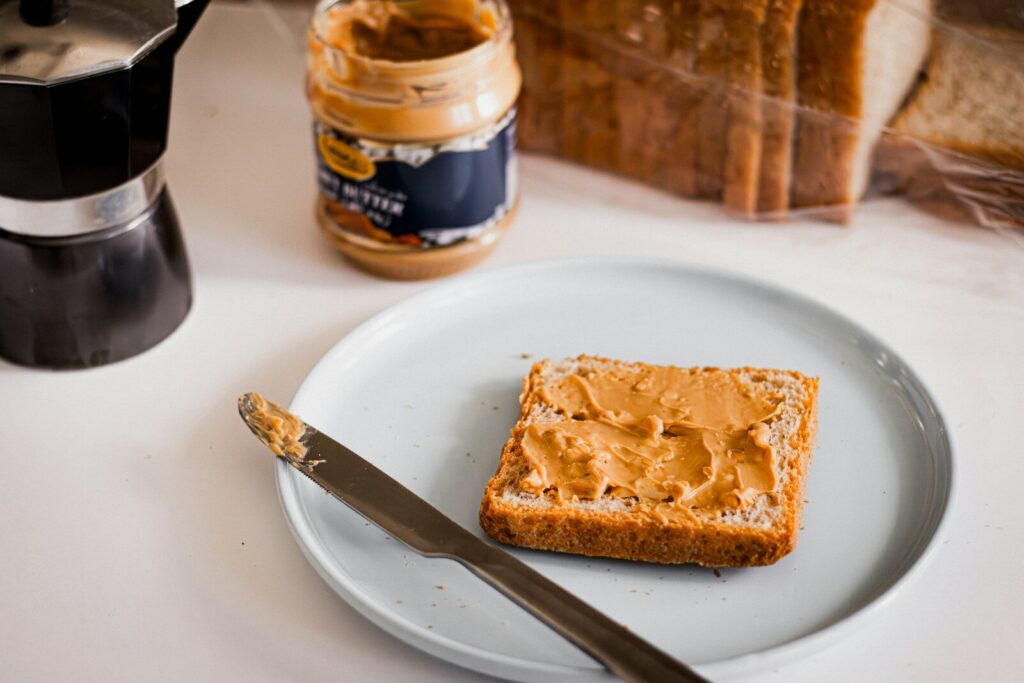
- A tablespoon of natural peanut butter on a few whole-grain crackers
- Peanut butter spread on half a banana
- A small apple with a tablespoon of peanut butter
- Straight off the spoon (simplest, and portion-controlled if you measure first)
Key Takeaways
- Peanut butter contains tryptophan, magnesium, and healthy fats that align with what’s known about sleep-supportive nutrition, but it hasn’t been directly studied for sleep.
- Its protein-fat combination may help stabilize blood sugar overnight, potentially reducing the stress-hormone-driven wake-ups linked to nighttime blood sugar dips.
- Stick to 1–2 tablespoons, eaten 30–60 minutes before bed, and choose natural peanut butter without added sugar.
- It’s unlikely to cause weight gain in reasonable portions, but calorie density means portion control matters.
- It works best as one piece of a broader, consistent sleep routine — not a standalone fix.
Conclusion
Peanut butter isn’t a miracle sleep aid, but it’s a genuinely sensible choice for a bedtime snack, backed by real (if indirect) nutritional science. If you’re looking for other evidence-based options to rotate in, check out our full guide to high-protein bedtime snacks for more ideas that fit the same sleep-supportive profile. As always, if you’re dealing with ongoing sleep issues, a snack is a nice addition to your routine, not a replacement for talking to a healthcare provider.
You May Also Like: 15 Foods That Help You Sleep Naturally (Backed by Sleep Science)
This article is for general informational purposes and isn’t a substitute for personalized medical or nutritional advice.
Frequently Asked Questions
Does peanut butter really help you sleep?
It may support sleep indirectly through tryptophan, magnesium, and blood sugar stability, but no research has tested peanut butter specifically as a sleep intervention. It’s a reasonable, evidence-informed choice rather than a proven remedy.
How much peanut butter should I eat before bed?
One to two tablespoons is generally recommended — enough to provide beneficial nutrients without adding excessive calories or causing digestive discomfort.
What time should I eat peanut butter before bed?
Around 30 to 60 minutes before bed is typical. If you experience reflux or heartburn, eat 60–90 minutes before lying down instead.
Does peanut butter before bed cause weight gain?
Not on its own. Weight gain depends on total daily calorie intake, not the timing of a single snack. Keeping portions to 1–2 tablespoons helps keep it in check.
Is natural peanut butter better than regular for sleep?
Yes, generally. Natural peanut butter without added sugar better supports the blood-sugar-stabilizing benefit that makes it a smart bedtime choice.
Can peanut butter before bed cause heartburn?
For some people, yes. Its fat content can slow digestion and worsen reflux symptoms if eaten too close to lying down. Eating earlier and staying upright afterward can help.
What’s better before bed — peanut butter or almond butter?
Nutritionally, they’re similar, though almond butter contains slightly more magnesium. Either can work well; choice often comes down to personal taste and any allergies.