Improve Sleep Quality: Evidence-Based Tips That Work
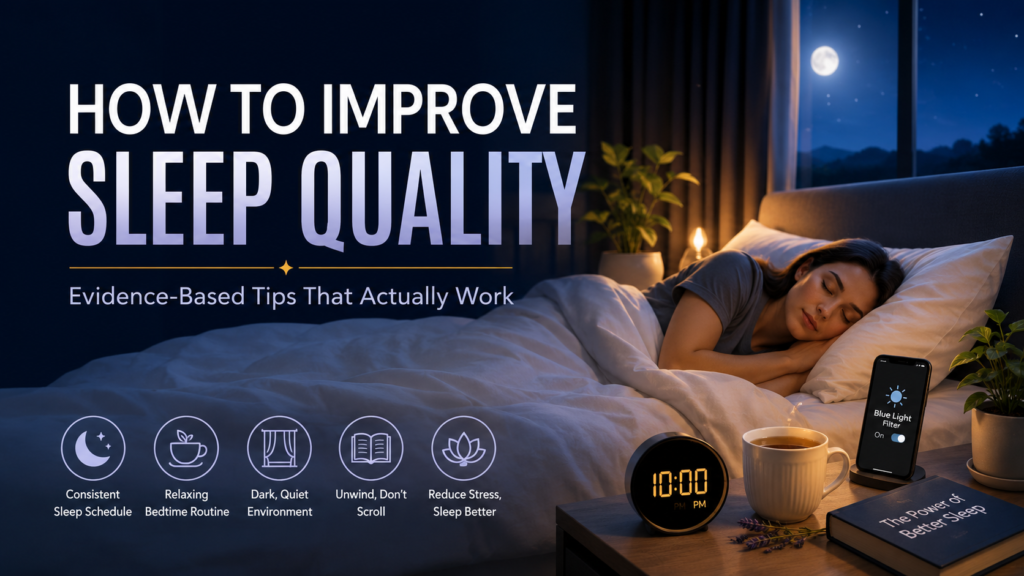
Improve sleep quality naturally and consistently with evidence-based strategies that address the root causes of poor sleep—not just the symptoms.
You’ve done everything “right.” You went to bed at a reasonable hour. You even put your phone down. But here you are — wide awake at 2 a.m., staring at the ceiling, mentally rehearsing tomorrow’s to-do list.
Poor sleep is one of the most frustrating health problems because it quietly damages everything else. Your focus slips. Your mood tanks. Your immune system weakens. And the more you worry about not sleeping, the worse it gets.
The good news is that most sleep problems are fixable without prescription medication. If you’re looking to improve sleep quality, small evidence-based changes to your daily habits, sleep environment, and evening routine can make a significant difference.
This guide covers what actually moves the needle on sleep quality, backed by research from the CDC, Mayo Clinic, Harvard Medical School, and the National Sleep Foundation. Whether you struggle to fall asleep, wake up constantly, or feel exhausted no matter how many hours you log, you’ll leave with a clear, actionable plan.
Why Sleep Quality Matters More Than Sleep Quantity#
Most people focus on hours slept. But you can spend nine hours in bed and still wake up feeling wrecked if your sleep architecture is broken — meaning you’re not cycling properly through the deep and REM sleep stages your body needs.
The CDC recommends that adults get at least 7 hours of sleep per night. Research from Harvard Division of Sleep Medicine confirms adults average closer to 7.5–8 hours for optimal function. Yet between 33–50% of adults report difficulty falling or staying asleep, and 7–18% meet the clinical criteria for an insomnia disorder.
The stakes go beyond feeling groggy. Poor sleep quality has been linked to increased risk of heart disease, obesity, type 2 diabetes, depression, and weakened immune response. The American Heart Association now considers sleep a core pillar of cardiovascular health — right alongside diet and exercise.
Signs Your Sleep Quality Is Poor #
Before diving into solutions, it helps to identify the problem. You may have poor sleep quality if you:
- Take longer than 20 minutes to fall asleep most nights
- Wake up multiple times and struggle to get back to sleep
- Feel unrested in the morning despite sleeping 7+ hours
- Rely on caffeine to function before noon
- Feel irritable, foggy, or emotionally reactive during the day
- Doze off unintentionally during low-stimulation activities
If several of these sound familiar, your sleep quality — not just duration — needs attention.
1. Set a Consistent Sleep Schedule #
Pro Tip: Go to bed and wake up at the same time every day — including weekends. This single habit is one of the most powerful things you can do to improve sleep quality because it anchors your body’s circadian rhythm.
Your circadian rhythm is your internal 24-hour biological clock. It regulates when your body releases melatonin (the hormone that signals it’s time to sleep), when your core body temperature drops, and when you feel naturally alert. Irregular sleep times confuse this system.
The Mayo Clinic’s six-step sleep guide lists consistent timing as step one. Even if you go to bed late, waking up at the same time every morning helps recalibrate your rhythm faster than anything else.
Practical tip: Pick a wake time that works for your schedule and commit to it seven days a week for two to three weeks. Most people notice a shift in natural sleepiness within 10–14 days.
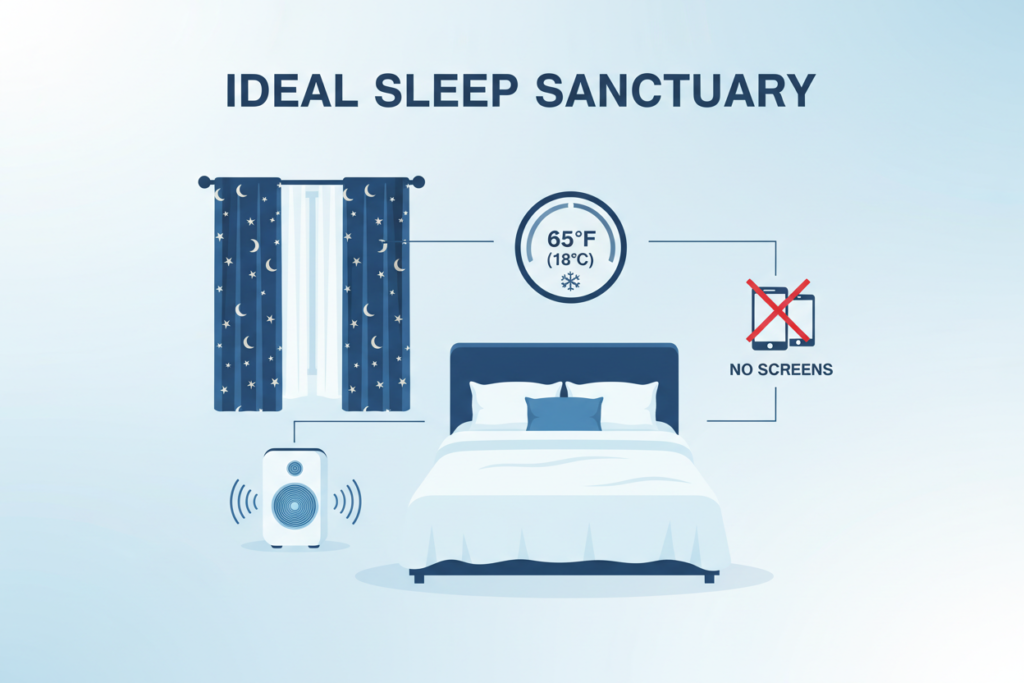
2. Optimize Your Bedroom Environment#
Your bedroom sends signals to your brain. If those signals say “alert and stimulated,” you’ll struggle to sleep — even when you’re exhausted.
Temperature#
Pro Tip : The optimal bedroom temperature for sleep is between 60–67°F (15–19°C). Your body naturally lowers its core temperature to initiate sleep, and a cool room supports that process.
UC Davis sleep psychiatrist Dr. Jesse Koskey recommends keeping the room around 68°F. Anything significantly warmer disrupts sleep architecture, particularly deep slow-wave sleep.
Light#
Darkness triggers melatonin release. Even small amounts of light — a streetlight through thin curtains, the standby light on a TV — can suppress this process. Blackout curtains or a sleep mask are practical, low-cost fixes that many people underestimate.
Noise#
Noise doesn’t have to wake you to harm your sleep. Research shows that environmental sounds — traffic, a snoring partner, a neighbor’s TV — cause brief micro-arousals that reduce sleep efficiency without you ever fully waking. White noise machines work by masking these irregular sounds with consistent ambient sound, smoothing over those disruptions.
3. What You Eat and Drink Before Bed #
Caffeine: The 8-Hour Rule#
Pro Tip: Avoid caffeine at least 8 hours before bedtime. Caffeine has a half-life of about 5–6 hours, meaning half of it is still circulating in your system hours after that afternoon coffee.
Caffeine is found not just in coffee, but in tea, chocolate, energy drinks, some sodas, and even certain pain relievers. Most people know to skip the evening espresso — fewer realize the 3 p.m. latte is still affecting their 11 p.m. sleep.
Alcohol#
Alcohol is a sedative, so it feels like it helps you sleep. But it fragments sleep in the second half of the night by suppressing REM sleep and increasing nighttime awakenings. The CDC recommends avoiding alcohol before bed as a core sleep hygiene practice.
Food Timing#
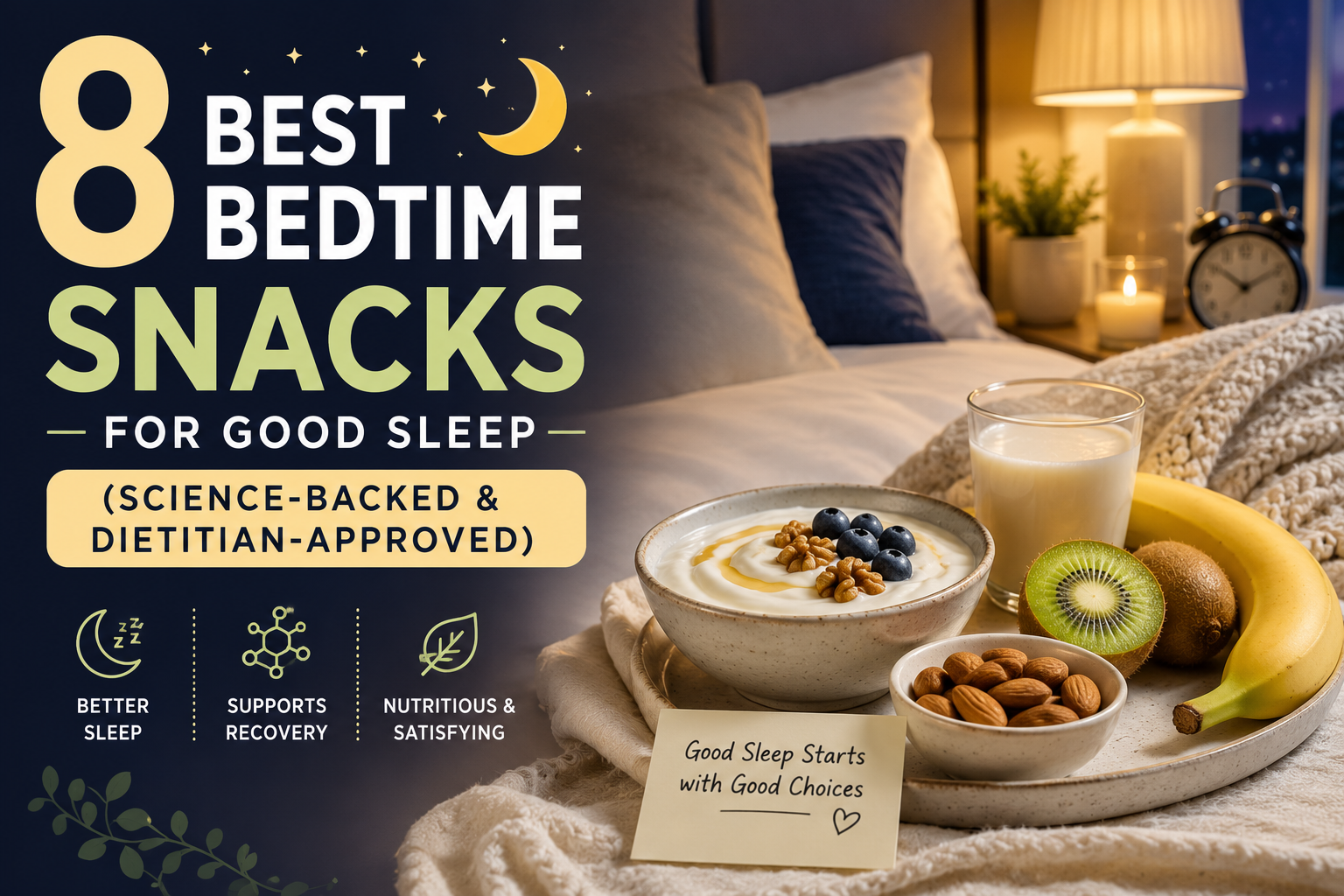
Finish large meals at least 2–3 hours before bedtime. Heavy, greasy foods sitting in your stomach compete with your body’s sleep preparation process. Going to bed too hungry is equally disruptive — a small, light snack is fine if needed.
4. Exercise and Sleep: Timing Is Everything #
Regular physical activity is one of the most well-supported strategies for improving sleep quality. It increases sleepiness at night, promotes deeper slow-wave sleep, and reduces the time it takes to fall asleep.
Harvard Division of Sleep Medicine recommends finishing vigorous exercise at least 2–3 hours before bedtime. High-intensity exercise raises core body temperature and elevates cortisol — both of which can delay sleep onset if the timing is too close to bed.
For most adults, moderate aerobic activity — like 30 minutes of brisk walking, three to five times per week — produces measurable improvements in sleep quality within a few weeks. A warm shower after a workout further promotes deep sleep by causing a rapid drop in body temperature afterward.

Read Also: CalmLean Review 2026 – Best Non Stimulant Fat Burner for Men
5. Screen Time, Blue Light, and Melatonin #
Screens are arguably the single biggest modern disruptor of sleep quality — and the mechanism is biological, not just behavioral.
Pro Tip: Blue light emitted by phones, tablets, and computer screens suppresses melatonin production. Avoid screens without a blue-light filter for at least 2 hours before bed to protect your body’s natural sleep signals.
The retinal cells sensitive to blue light send direct signals to the brain’s suprachiasmatic nucleus — your master circadian clock. Evening exposure tells your brain it’s still daytime, delaying melatonin release by 1–3 hours.
Your options:
- Power down devices 60–90 minutes before bed
- Enable built-in night mode (shifts screen to warmer tones)
- Use blue-light blocking glasses in the evening
- Dim screen brightness after sunset
Dr. Koskey at UC Davis specifically recommends 15 minutes of morning sunlight within the first hour of waking — this anchors the circadian rhythm and creates a natural “phase advance” that makes you genuinely sleepy at an earlier hour.
6. Build a Wind-Down Routine That Works #
Think of the hour before bed as a transition zone — from active, stimulated, problem-solving mode to quiet, parasympathetic, sleep-ready mode. Your nervous system can’t make that switch instantly, and most sleep problems happen when we try to force it.
Harvard Sleep Medicine’s recommended pre-sleep routine includes:
- Listening to calming music
- Light reading (physical book, not tablet)
- A warm bath or shower 1–2 hours before bed
- Light stretching or gentle yoga
- Journaling or making a “worry list” to offload mental clutter
The warm bath technique works through thermoregulation: soaking raises your surface temperature, and the subsequent cool-down mimics the natural body temperature drop that triggers sleepiness. Studies show this can cut sleep onset time by 10–15 minutes.
If you’re not asleep within 20 minutes of lying down, don’t stay in bed. Get up, go to another room, and do something calm in dim light until you feel genuinely sleepy. This is a cornerstone technique of CBT-I — conditioning your brain to associate bed with sleep, not wakefulness.
You May Also Like: Walking vs Cycling for Fat Loss: The Winner for Weight Loss
7. When to Consider Sleep Supplements #
Supplements can play a supporting role, but they work best on top of strong sleep hygiene — not as a substitute for it.
Melatonin#
Most useful for jet lag, circadian rhythm disruption, and sleep-onset insomnia. According to the NIH’s National Center for Complementary and Integrative Health, low doses (0.5–1 mg) taken 30–60 minutes before the desired sleep time are often more effective than higher doses. It is not recommended for people with depression, seizure disorders, or bleeding conditions.
Magnesium#
Magnesium glycinate or magnesium threonate may help extend sleep duration and reduce nighttime awakenings, particularly in older adults. A 2024 study published on Lusophone University’s research platform found improved Pittsburgh Sleep Quality Index (PSQI) scores in participants using a combined melatonin-magnesium supplement. Minor GI side effects are the main concern; avoid in those with kidney impairment.
L-Theanine#
An amino acid found naturally in green tea, L-theanine promotes relaxation without sedation by increasing alpha brain waves. It stacks well with low-dose melatonin.
Vitamin D#
A large meta-analysis covering 9,397 participants found that vitamin D deficiency increases the likelihood of poor sleep quality by 1.5-fold and short sleep duration by 1.75-fold. Correcting a confirmed deficiency may meaningfully improve sleep — but supplementing without a deficiency shows limited benefit.

Important: Always consult a healthcare provider before starting supplements, especially if you take medications or have underlying conditions.
8. CBT-I: The Gold Standard for Chronic Insomnia#
If you’ve tried sleep hygiene improvements for several weeks with limited results, Cognitive Behavioral Therapy for Insomnia (CBT-I) is the most evidence-supported next step.
Pro Tip: CBT-I is a structured, short-term therapy that addresses the thoughts and behaviors that maintain insomnia. It is recognized as the first-line treatment for chronic insomnia by sleep medicine authorities — more effective than sleep medication, with benefits that persist up to 6 months after treatment ends.
A 2024 systematic review published in PubMed confirmed CBT-I significantly improves sleep quality and reduces insomnia severity, with particularly strong results in menopausal women experiencing night sweats and sleep disruption.
CBT-I includes techniques like:
- Sleep restriction therapy — temporarily compressing time in bed to build sleep pressure
- Stimulus control — breaking the mental association between bed and wakefulness
- Cognitive restructuring — challenging unhelpful beliefs about sleep (e.g., “If I don’t sleep 8 hours I can’t function”)
- Relaxation training — progressive muscle relaxation, diaphragmatic breathing
CBT-I is available through licensed therapists, digital programs (like Sleepio), and some primary care providers.
Key Takeaways#
- Consistency beats perfection. A regular sleep schedule is the single most powerful habit you can build. Same wake time, every day.
- Your bedroom environment is controllable. Keep it cool (60–67°F), dark, and quiet. Small changes here have outsized effects.
- The 8-hour caffeine rule is real. That afternoon coffee may be your biggest sleep enemy.
- Screens before bed disrupt melatonin. Use blue-light filters or power down 60–90 minutes before sleep.
- Exercise consistently, but not too close to bed. Finish vigorous workouts at least 2–3 hours before bedtime.
- A wind-down routine signals sleep. One hour of calm before bed — no screens, no news, no problem-solving.
- Supplements help some people. Magnesium, melatonin, and L-theanine have evidence behind them, but work best alongside solid sleep hygiene.
- CBT-I works better than medication for chronic insomnia. If lifestyle changes aren’t enough after 4+ weeks, ask your doctor about a referral.
Conclusion#
Improving sleep quality isn’t about finding one magic trick — it’s about creating the right conditions for your brain and body to do what they’re designed to do. The research is remarkably consistent: a stable schedule, a sleep-friendly environment, smart eating and exercise habits, and an intentional wind-down routine will solve most sleep problems for most people.
Start with the two highest-leverage changes for your situation. For most people, that’s fixing screen time and locking in a consistent wake time. Give those two weeks before adding more changes. Sleep responds to consistency, not intensity.
If you’ve dialed in your sleep hygiene and still struggle after a month, talk to your primary care provider about CBT-I. It’s the most effective treatment available for chronic insomnia — and unlike medication, the benefits don’t stop when the treatment ends.
Your best sleep isn’t behind you. It’s a few consistent habits away.
Sources: CDC Sleep Health | Mayo Clinic Sleep Tips | Harvard Division of Sleep Medicine | National Sleep Foundation | NIH NCCIH – Melatonin | Johns Hopkins Medicine | American Heart Association | PubMed – CBT-I Review 2024
You May Also Like: 7 Signs Your Cortisol Levels Are Too High (And What to Do About It)
Frequently Asked Questions#
How long does it take to improve sleep quality? #
Most people notice changes within 2–4 weeks of consistent sleep hygiene improvements. CBT-I typically shows results within 4–8 sessions.
What is the best bedroom temperature for sleep? #
Between 60–67°F (15–19°C). This supports the natural drop in core body temperature that initiates sleep.
How many hours of sleep do adults actually need?#
The CDC recommends at least 7 hours. Research suggests 7.5–8 hours is the average need for adults, though individual variation exists.
Can I improve sleep quality without supplements?#
Yes. Sleep hygiene — consistent schedule, optimized environment, limiting caffeine/alcohol/screens — produces the most durable improvements. Supplements are optional additions.
Does napping hurt sleep quality at night?#
It can. Limit naps to no more than 60 minutes and avoid napping after 3 p.m. Long or late naps reduce sleep pressure and can push back your nighttime sleep onset.
Why do I keep waking up at 3 a.m.?#
Common culprits include alcohol (which fragments the second half of sleep), caffeine consumed too late, an overly warm room, or conditioned arousal — your brain has learned to wake at that time. If you wake and can’t return to sleep within 20 minutes, get out of bed and do something relaxing until sleepy.
Does exercise improve sleep quality?#
Yes — consistently and significantly. Even moderate exercise like walking 30 minutes most days improves sleep efficiency, deepens slow-wave sleep, and reduces time to fall asleep.
What does CBT-I involve?#
CBT-I is a structured therapy typically delivered over 6–8 sessions. It includes sleep restriction, stimulus control, and cognitive restructuring. It is more effective than sleep medications for chronic insomnia, with benefits that outlast the treatment period.