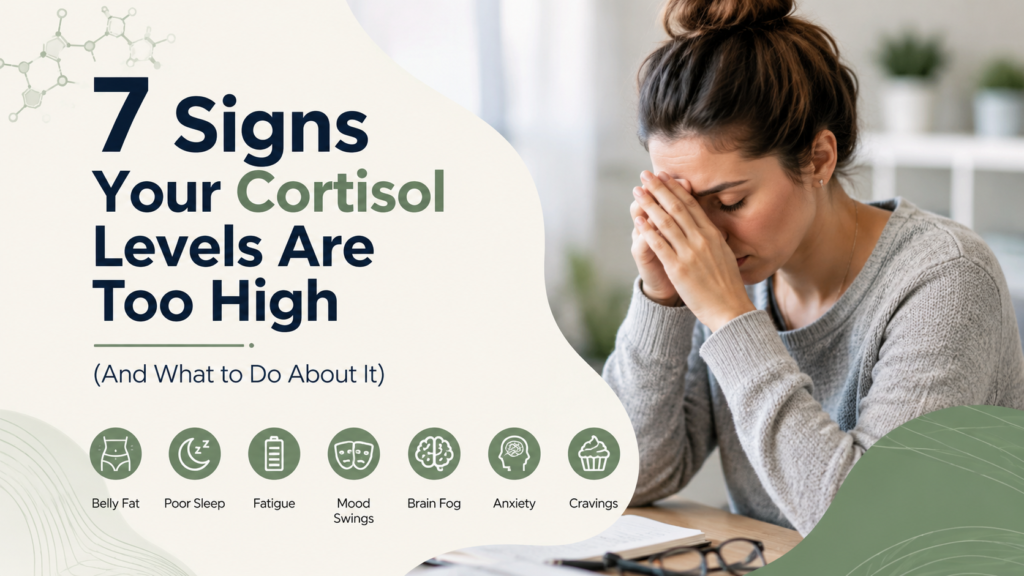
7 Signs Your Cortisol Levels Are Too High (And What to Do About It)
Disclosure: This post contains affiliate links. If you click and purchase, I may earn a small commission at no extra cost to you. I only recommend products I’ve thoroughly researched. Full disclosure policy →
Belly fat you can’t shift. Sleep that never feels restorative. A mood that’s always one bad email away from the edge. Your stress hormone might be the culprit.
Here’s a question worth sitting with: when was the last time you felt genuinely calm? Not just distracted-from-stress calm, but actually settled, clear-headed, and rested? If you’re struggling to remember, there’s a good chance your body has been running on a cortisol drip for longer than you realize.
Cortisol is your primary stress hormone — and under normal circumstances, it’s actually your friend. It gets you out of bed in the morning, sharpens your focus in a crisis, and helps regulate inflammation. The trouble starts when it stops responding to the actual threat level and just… stays elevated. That’s when the signs your cortisol levels are too high start showing up in ways that feel weirdly disconnected from any single stressor.
Unexplained belly fat. Poor sleep even when you’re exhausted. Anxiety that feels baked in. Sound familiar? In this guide, we’re breaking down the seven most telling high cortisol symptoms — and what you can actually do to bring your levels back to a functional range without losing your mind in the process.
💊 Quick Note on CortiSync Throughout this article, I’ll reference CortiSync — a clinically developed supplement formulated specifically to support healthy cortisol balance using adaptogenic ingredients. If you want to skip ahead, check out CortiSync on the official site here →
At a Glance: 7 Signs Your Cortisol Levels Are Too High
- Unexplained belly fat and weight gain around the midsection
- Persistent fatigue — especially “wired but tired” exhaustion
- Sleep problems, insomnia, or unrefreshing sleep
- Intense sugar cravings and appetite spikes
- Anxiety, irritability, and emotional reactivity
- Muscle weakness and slow physical recovery
- Skin changes — thinning, acne, easy bruising

What Is Cortisol and Why Does It Go Too High?
Before we get into the symptoms, a quick reset on what’s actually happening inside your body. Cortisol is produced by your adrenal glands (two small glands that sit on top of your kidneys) and released in response to stress — physical, emotional, or environmental. In healthy cycles, cortisol peaks in the morning to get you moving and tapers off by evening so you can wind down and sleep.
The problem is that modern life doesn’t really respect that rhythm. Chronic work pressure, poor sleep, constant digital stimulation, high caffeine intake, and even over-exercising can all keep cortisol elevated well past when it should be dropping. Over time, this becomes your new baseline — and that’s when cortisol imbalance signs start stacking up.
Medical conditions can also be responsible. Cushing’s syndrome, for instance, is a clinical condition characterized by prolonged exposure to excessively high cortisol levels, either from the body overproducing it or from long-term corticosteroid medication use. While Cushing’s is relatively rare, subclinical cortisol excess — where levels are elevated but not at clinical thresholds — is far more common and far less talked about.
7 Signs Your Cortisol Levels Are Too High
Unexplained Belly Fat and Weight Gain
This is probably the most documented — and most frustrating — consequence of chronically elevated cortisol. When cortisol stays high, it directly stimulates fat storage in visceral adipose tissue, which is the fat that accumulates deep in your abdomen around your organs. This is distinct from the subcutaneous fat just under your skin; visceral fat is metabolically active in the worst way, linked to insulin resistance, cardiovascular risk, and systemic inflammation.
What makes this particularly maddening is that the fat tends to resist normal diet and exercise efforts. You can be eating reasonably well and training consistently and still carry stubborn belly fat — because the cortisol signal telling your body to hold onto that tissue is louder than any caloric deficit. The cortisol and belly fat connection is well-supported by research, and if your waistline keeps creeping despite your best efforts, elevated cortisol is a legitimate suspect.
The “Wired But Tired” Feeling That Won’t Quit
If you’ve ever laid in bed exhausted but completely unable to switch off — mind racing, body tense — you’ve experienced what many call the “wired but tired” cortisol state. It’s one of the most telling and least understood symptoms of cortisol excess.
Under normal conditions, cortisol should be low in the evening to allow melatonin to rise and prepare your body for sleep. When cortisol is chronically elevated, it blunts melatonin production and keeps your nervous system in a state of low-grade alert. You feel drained but your brain won’t stop. You fall asleep but wake at 2 or 3am with your thoughts already running. The result is sleep that never truly restores, creating a fatigue debt that compounds daily.
Sleep Problems and Insomnia
Separate from the wired-but-tired phenomenon, high cortisol levels frequently cause broader cortisol and sleep problems — difficulty falling asleep, fragmented sleep, early morning waking, and a pervasive sense that however much you sleep, it’s never enough. Cortisol follows a diurnal rhythm: ideally highest around 8am and lowest around midnight. Chronic stress dysregulates this rhythm, sometimes causing cortisol to spike in the evening or night rather than dropping appropriately.
This dysregulation is compounded by the fact that poor sleep itself raises cortisol the following day — creating a loop that becomes harder to break the longer it goes on. If you’ve been dismissing chronic sleep issues as just “bad luck” or “getting older,” cortisol is worth investigating.
Struggling With Any of These Symptoms?
CortiSync is formulated with clinically studied adaptogens specifically targeting cortisol balance — including ashwagandha, rhodiola, and holy basil. No prescription needed. Ships fast across the US.→ Try CortiSync — Official Site
Intense Sugar Cravings and Appetite Spikes
High cortisol hijacks your appetite regulation in a specific way: it drives cortisol and sugar cravings by raising blood glucose levels (part of the “prepare for danger” stress response) and then blunting insulin sensitivity, causing blood sugar to crash. Your body interprets that crash as an emergency and demands rapid-energy foods — i.e., anything sweet, starchy, or ultra-processed.
This isn’t a willpower failure. It’s a hormonal cascade that makes resisting certain foods genuinely harder when cortisol is chronically elevated. If you find yourself raiding the kitchen at night despite not being physically hungry, or if you have cravings that feel compulsive rather than normal hunger, elevated stress hormones deserve serious consideration.

Anxiety, Irritability, and Emotional Volatility
The psychological symptoms of high cortisol are often the most debilitating — and the easiest to misattribute to personality or “just being stressed.” Chronically elevated cortisol alters neurotransmitter balance, particularly affecting serotonin and GABA — the calming, stabilizing brain chemicals. The result is a baseline mood that’s anxious, reactive, and hair-trigger.
Concentration suffers too. Brain fog is a commonly reported cortisol excess symptom — that frustrating inability to hold a thought, complete a task, or feel mentally sharp despite being technically rested. For women in particular, high cortisol levels symptoms often manifest as mood dysregulation that’s mistakenly attributed to hormonal cycles when the cortisol piece isn’t being considered.
Muscle Weakness and Poor Recovery
Cortisol is catabolic — meaning in high amounts it breaks down tissue. This includes muscle tissue. Chronically elevated cortisol activates protein breakdown and suppresses muscle protein synthesis, which means your muscles are essentially working against a headwind: you train, but the recovery signal is blunted by the stress signal running concurrently.
This explains why athletes who overtrain often regress despite increasing volume: cortisol and muscle weakness create a situation where more training actually produces worse results. If you’re training consistently but your strength isn’t progressing and your recovery feels perpetually incomplete, overtraining-driven cortisol excess is a real possibility worth addressing before adding more work.

Skin Changes — Thinning, Acne, and Easy Bruising
Cortisol’s effect on skin is often surprising to people who haven’t connected those dots. Elevated cortisol suppresses collagen production and impairs skin barrier function, leading to thinning skin that bruises easily, slow wound healing, and increased susceptibility to breakouts. The cortisol-acne connection is mediated partly through elevated androgen production that cortisol can trigger, and partly through its pro-inflammatory effects.
In clinical cases of Cushing’s syndrome — the most extreme form of cortisol excess — purple stretch marks (striae) and very easy bruising are hallmark signs. Milder but chronic cortisol elevation tends to produce subtler skin deterioration: dryness, accelerated aging, and hormonal acne that cycles with stress rather than the menstrual cycle.
You May Also Like: 7 Powerful Daily Fitness Routine for Beginners at Home to Lose Weight Fast
High Cortisol vs. Low Cortisol: How to Tell the Difference
One thing worth addressing directly: cortisol imbalance can go in either direction, and the symptoms are quite different. Here’s a quick side-by-side that can help you identify which you might be dealing with before seeking testing.
| Symptom Area | High Cortisol (Excess) | Low Cortisol (Insufficiency) |
|---|---|---|
| Energy | Wired, anxious, can’t wind down | Profound fatigue, barely functional |
| Weight | Belly fat gain, bloating | Unexplained weight loss |
| Blood pressure | Elevated / high | Low — dizziness on standing |
| Mood | Anxious, irritable, reactive | Depressed, apathetic, flat |
| Sleep | Insomnia, night waking | Excessive sleepiness |
| Cravings | Sugar, carbs, processed foods | Salt cravings |
| Stress response | Overreactive, on edge | Unable to cope, crashes easily |
⚠️ Important: If you suspect significantly elevated or low cortisol, proper testing (salivary cortisol, 24-hour urinary free cortisol, or blood cortisol) is the right next step. This is especially true if you’re experiencing severe symptoms, as conditions like Cushing’s syndrome require medical management, not just lifestyle changes.
What Causes Cortisol Levels to Go Too High?
Understanding the root cause is half the battle. The most common triggers for chronically elevated cortisol signs in otherwise healthy adults include:
- Chronic psychological stress — Work pressure, relationship conflict, financial anxiety, and general life overwhelm are the leading drivers of sustained cortisol elevation in modern adults.
- Poor or insufficient sleep — Even a few nights of shortened sleep measurably elevates next-day cortisol. Chronic sleep debt creates a self-reinforcing cortisol problem.
- Excessive caffeine consumption — Caffeine directly stimulates cortisol release. Multiple coffees throughout the day can keep levels elevated well past their natural peak.
- Overtraining — High-volume or high-intensity training without adequate recovery is a well-known cortisol driver. More is not always more.
- High sugar and refined carb diet — Blood sugar swings trigger cortisol as part of the stabilization response.
- Alcohol and tobacco use — Both acutely raise cortisol and chronically impair the body’s ability to regulate it.
- Corticosteroid medications — Long-term use of prednisone and similar drugs can suppress the body’s natural cortisol regulation.
- Medical conditions — Cushing’s syndrome, pituitary tumors (Cushing’s disease), and adrenal tumors can cause pathological cortisol excess.
Check This Out: Best Foods for Gut Health: 20 Science-Backed Picks for a Happier Microbiome
How to Lower Your Cortisol Naturally (Budget-Friendly Approaches)
The good news: lifestyle modifications alone can produce meaningful cortisol reduction within weeks. These don’t require expensive supplements or programs — though targeted supplementation can accelerate results.
1. Prioritize Sleep Like It’s Your Part-Time Job
Getting 7–8 hours of quality sleep is the single highest-leverage thing you can do for cortisol and sleep problems. Set a consistent bedtime, keep your room cool and dark, and cut screens 60 minutes before bed. This one change measurably reduces morning cortisol output within two weeks for most people.
2. Practice Daily Stress-Reduction Techniques
Deep diaphragmatic breathing activates the parasympathetic nervous system and directly suppresses cortisol release. Even five minutes of slow breathing (4 counts in, 6 counts out) twice a day has documented effects. Mindfulness meditation, yoga, and nature walks all produce similar results — the mechanism is the same.
3. Eat to Support Cortisol Balance
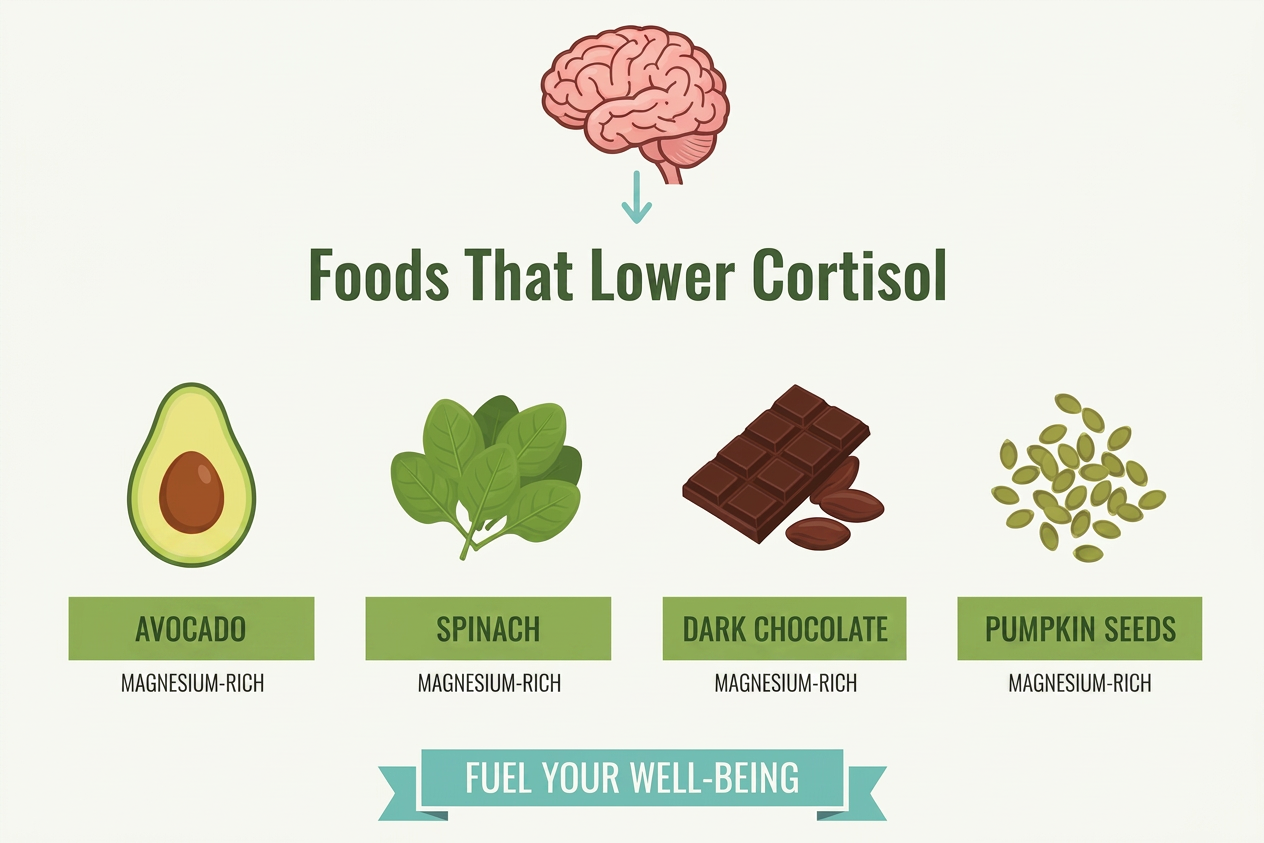
Focus on magnesium for cortisol reduction — magnesium is directly involved in HPA axis regulation and most adults don’t get enough. Good sources include spinach, pumpkin seeds, avocados, black beans, and dark chocolate. Stabilizing blood sugar with protein and fiber at each meal also reduces the cortisol spikes triggered by glucose crashes.
4. Moderate Your Exercise Intensity
Walking 30–45 minutes daily reduces cortisol reliably. Intense cardio sessions, on the other hand, can temporarily spike cortisol and, if poorly timed or excessive in volume, contribute to chronic elevation. Think movement over punishment — particularly while you’re working to bring elevated levels down.
5. Cut Back on Caffeine and Alcohol
Shifting your first coffee later (9:30–10am, after your natural cortisol peak) and limiting total intake to one or two cups reduces the stimulant-driven cortisol burden significantly. Alcohol, despite its reputation as a relaxant, increases cortisol and disrupts sleep architecture — a double hit.
6. Consider Adaptogenic Supplementation
Ashwagandha for cortisol is one of the most well-researched natural interventions. A 2019 randomized controlled trial published in Medicine found that ashwagandha root extract significantly reduced cortisol levels and stress scores versus placebo over 60 days. Rhodiola rosea and holy basil are other adaptogens with meaningful clinical backing for cortisol support.
If you want a well-formulated option that combines these ingredients at clinically relevant doses, CortiSync is one of the most thoughtfully put-together products in this category. It’s formulated specifically for cortisol regulation — not just general stress support — and is available without a prescription through SellHealth.
CortiSync — Targeted Cortisol Support
Clinically studied adaptogens. No stimulants. No prescription. Designed specifically to help your body regulate elevated cortisol levels naturally.→ Learn More About CortiSync
Realistic Timeline: How Long Does It Take to Lower Cortisol?
| Timeframe | What to Expect | Key Actions |
|---|---|---|
| Week 1–2 | Reduced sleep latency; slight mood stabilization | Sleep hygiene, breathing exercises, reduce caffeine |
| Week 3–4 | Fewer sugar cravings; daytime energy more stable | Add magnesium-rich foods, consistent walking |
| Week 6–8 | Noticeable anxiety reduction; sleep quality improving | Adaptogen supplementation (ashwagandha/CortiSync) |
| Week 10–12 | Measurable reduction in belly fat; mood baseline shifts | All strategies compounding; stress testing resilience |
Conclusion: Don’t Ignore the Signs Your Cortisol Levels Are Too High
Chronic stress is so normalized in modern life that its physiological consequences fly under the radar for years. But your body keeps the score — and the signs your cortisol levels are too high are often right there in front of you: the belly fat that won’t budge, the sleep that never satisfies, the anxiety that feels like background noise, the cravings you can’t control, the moods that keep you (and everyone around you) walking on eggshells.
The encouraging news is that cortisol is genuinely responsive to lifestyle change. Sleep, breathwork, movement, nutrition, and targeted supplementation all have meaningful scientific backing for cortisol reduction. You don’t need an expensive protocol or a dramatic overhaul — you need consistency with a handful of high-leverage habits.
If you want supplemental support while you’re building those habits, CortiSync is a solid, evidence-informed option formulated specifically for this purpose — no stimulants, no prescription, and available directly from SellHealth with a satisfaction guarantee.
Ready to take action on your cortisol levels? Start with sleep and stress management tonight. If you want a supplement boost, try CortiSync — check current pricing and availability on the official site →
Read Also: CalmLean Review 2026: The Best Non Stimulant Fat Burner for Men?
⚕️ Medical Disclaimer: This article is for informational purposes only and does not constitute medical advice. If you’re experiencing severe or worsening symptoms, please consult a licensed healthcare professional. Cortisol disorders like Cushing’s syndrome require medical diagnosis and treatment.
Frequently Asked Questions About High Cortisol Symptoms
What are the main signs your cortisol levels are too high?
The most common high cortisol symptoms include unexplained belly fat and weight gain, persistent fatigue (especially the “wired but tired” feeling), insomnia or unrefreshing sleep, intense sugar cravings, anxiety and irritability, muscle weakness, and skin changes like acne, easy bruising, or thinning skin.
How do I know if my cortisol is high or low?
High cortisol tends to cause belly fat, anxiety, insomnia, and elevated blood pressure. Low cortisol typically presents with profound fatigue, low blood pressure, dizziness, and difficulty coping with even minor stress. Salivary cortisol testing (at home or through a lab), 24-hour urine testing, or blood cortisol testing can confirm which direction you’re dealing with.
Can high cortisol cause weight gain?
Yes — this is one of the most consistent findings in cortisol research. The cortisol and weight gain connection works through multiple mechanisms: increased appetite, intensified sugar and carb cravings, impaired insulin sensitivity, and direct promotion of visceral fat storage around the abdomen. Belly fat that resists normal diet and exercise efforts is a particularly telling sign.
What causes cortisol levels to be too high?
The most common causes in otherwise healthy adults are chronic psychological stress, poor sleep quality, high caffeine intake, overtraining without adequate recovery, excessive alcohol use, and a diet high in refined sugars and processed foods. Medical causes include Cushing’s syndrome, pituitary tumors, and long-term corticosteroid medication use.
What are the psychological symptoms of high cortisol?
The main psychological signs include anxiety, restlessness, irritability, emotional reactivity, brain fog, poor concentration, and the distinctive “wired but tired” state where you feel exhausted but unable to mentally switch off. These cortisol disorder symptoms are often misattributed to personality traits or clinical anxiety when cortisol imbalance is the underlying driver.
How can I lower my cortisol naturally?
Natural ways to lower cortisol include: getting 7–8 hours of quality sleep consistently, practicing daily deep breathing or mindfulness, eating magnesium-rich foods (spinach, avocado, pumpkin seeds), doing moderate exercise (particularly walking), reducing caffeine and alcohol intake, and using adaptogenic supplements like ashwagandha or a formulated product like CortiSync. Results are most reliable when multiple strategies are combined rather than relying on one change alone.