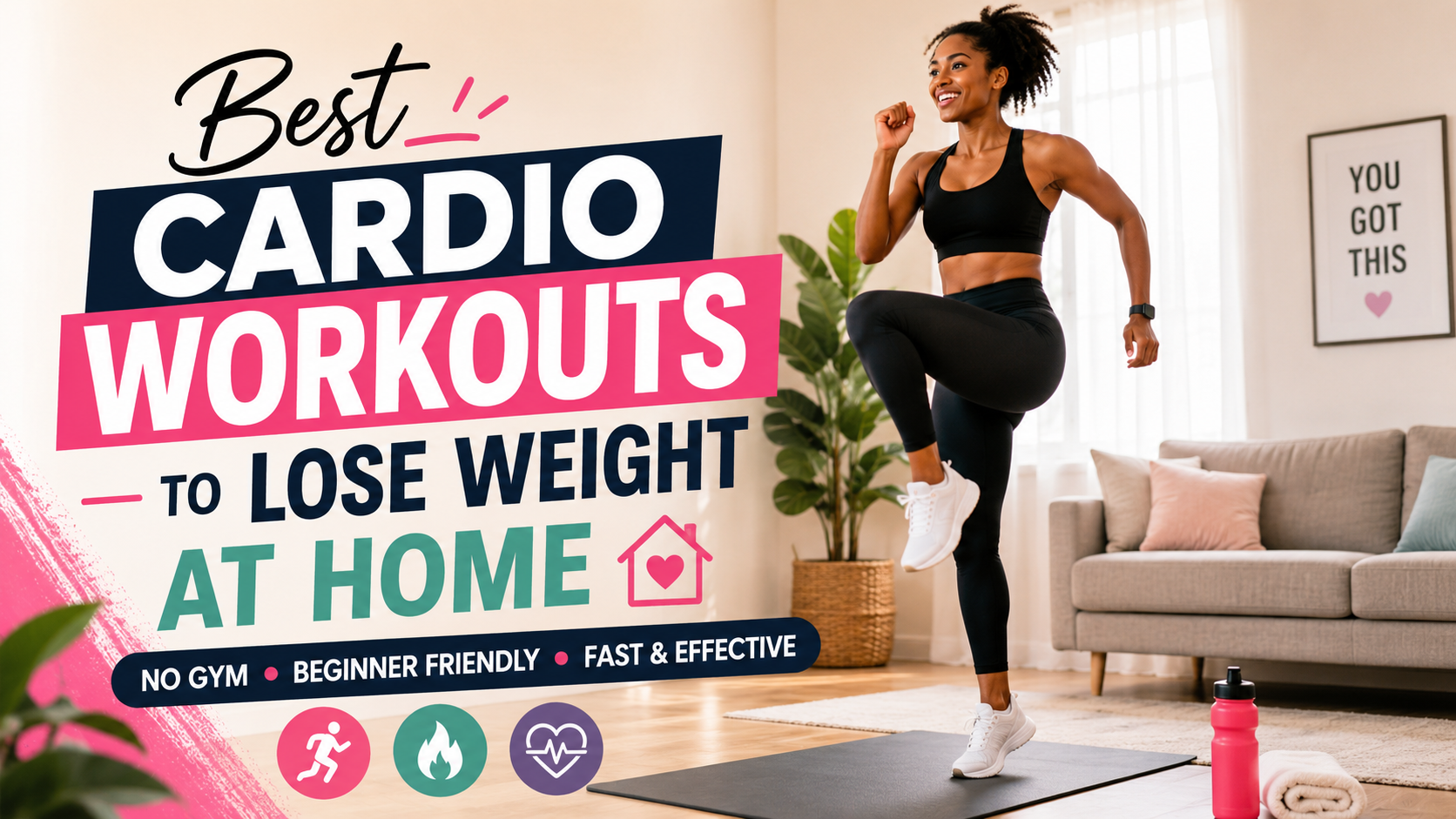
7 Best Cardio Workouts to Lose Weight at Home (No Gym)
What if you could burn serious calories, lose stubborn fat, and actually enjoy the process — all without a gym membership or a single piece of equipment?
Here’s a number that might surprise you: research published in the journal Obesity Reviews found that cardio exercise consistently outperforms diet alone for long-term fat loss when combined with a calorie deficit. In other words, moving your body matters — a lot.
The good news? You don’t need a treadmill, a spin bike, or a fancy CrossFit box to make it happen. The best cardio workouts to lose weight at home are right here, and most of them require nothing more than your body, a little floor space, and the willingness to break a sweat.
Whether you’re completely new to fitness or just tired of paying for a gym you never visit, this guide breaks down exactly what to do, how to do it, and how to structure your week for maximum fat burn. Let’s get into it.
Why Home Cardio Actually Works for Weight Loss#
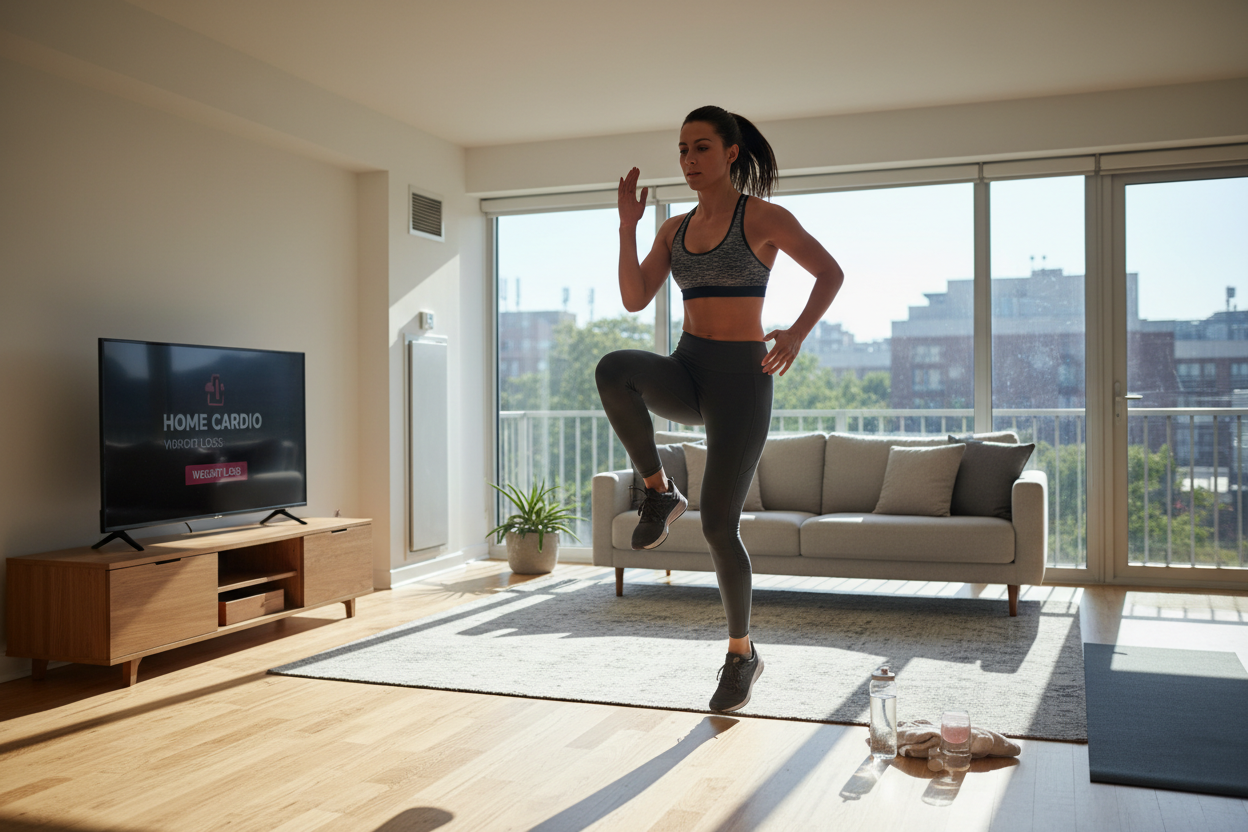
Let’s clear something up: working out at home isn’t a consolation prize. For many people, it’s actually more effective than going to the gym.
Think about it. When your “gym” is 10 feet from your couch, the barrier to showing up is basically zero. No commute. No waiting for equipment. No self-consciousness. You just do the work.
Cardio accelerates weight loss by creating a calorie deficit — you burn more energy than you consume. High-intensity cardio can torch anywhere from 400 to 700+ calories per hour depending on your body weight and effort level. Even moderate, consistent cardio 4–5 days a week builds real, lasting results over time.
Add in the metabolic after-burn effect (known as EPOC — excess post-exercise oxygen consumption), and your body continues burning calories for hours after a tough session. That’s not marketing fluff; that’s exercise physiology.
7 Best Cardio workouts to Lose weight at Home#
These workouts are ranked by accessibility, calorie burn, and overall effectiveness. No equipment needed unless noted.
1. High-Intensity Interval Training (HIIT)#
Calories Burned: 400–600 per 30 minutes
Best For: Maximum fat burn in minimum time
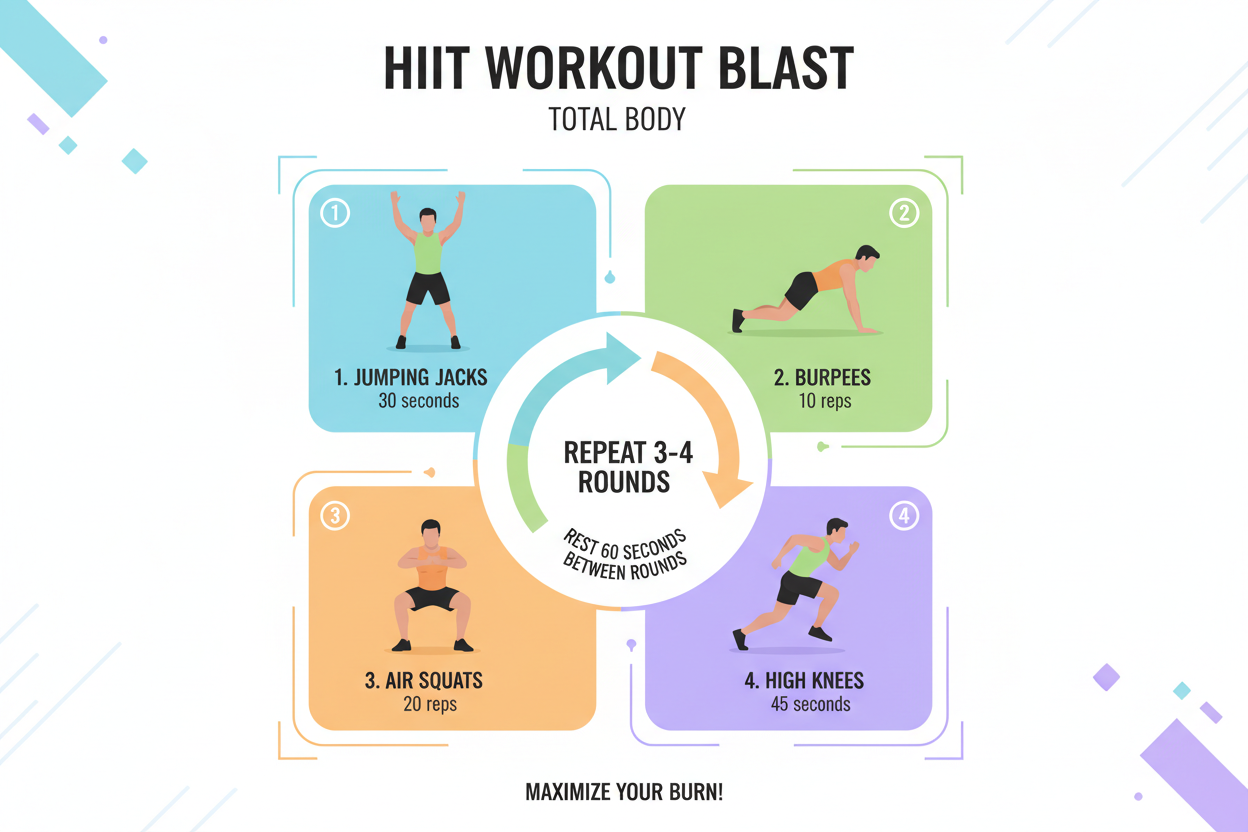
If you only have 20–30 minutes and want to lose weight fast, HIIT is your best friend. You alternate between short bursts of all-out effort and brief recovery periods, keeping your heart rate elevated and your metabolism fired up long after you’re done.
A simple beginner HIIT circuit at home:
- 30 seconds jumping jacks → 15 seconds rest
- 30 seconds high knees → 15 seconds rest
- 30 seconds burpees → 15 seconds rest
- 30 seconds mountain climbers → 15 seconds rest
- Repeat 4–5 rounds
Studies published in the Journal of Obesity show HIIT reduces body fat more effectively than steady-state cardio in shorter time windows. For busy schedules, this is a game-changer.
2. Jump Rope#
Calories Burned: 600–800 per hour
Equipment: A jump rope (~$10–$30)
Jump rope isn’t just for elementary school playgrounds. It’s one of the most efficient calorie-burning tools on the planet. A 150-pound person can burn around 300 calories in just 30 minutes of moderate jumping — more than jogging at the same duration.
It also works your calves, shoulders, core, and coordination simultaneously. Start with 30-second intervals and build up as your endurance improves. It’s low cost, takes up no space, and travels with you anywhere.
3. Dance Cardio / Zumba-Style Workouts#
Calories Burned: 300–500 per hour
Best For: People who hate “working out” but love moving
Here’s a hot take: the best workout is the one you actually enjoy doing. Dance cardio doesn’t feel like exercise — until you check your heart rate. YouTube is packed with free, high-energy dance cardio routines that torch fat while actually being fun.
This is particularly effective for people who dread traditional workouts. Consistency beats intensity every time, and dance cardio makes consistency easy.
4. Bodyweight Cardio Circuits#
Calories Burned: 350–550 per 45 minutes
Best For: Building strength while burning fat
A bodyweight cardio circuit combines fat-burning movement with muscle building — the ultimate two-for-one. You move continuously through exercises with minimal rest, keeping your heart rate in the fat-burning zone.
Sample circuit (repeat 3–4 rounds):
- 15 squat jumps
- 20 push-ups
- 30 seconds plank hold
- 20 reverse lunges (10 each leg)
- 15 burpees
- 30 seconds rest between rounds
This type of training also builds lean muscle, which increases your resting metabolic rate — meaning you burn more calories even when you’re sitting still. That’s a long-term win.
5. Stair Climbing#
Calories Burned: 400–600 per hour
Equipment: A staircase (literally just stairs)
If you have stairs in your home, you have one of the most underrated cardio machines on the planet. Stair climbing elevates your heart rate quickly, targets your glutes, quads, hamstrings, and calves, and burns fat at an impressive rate.
You can do simple up-and-down stair intervals, skip a step for added intensity, or even use the bottom step for box jumps or step-ups. A 20-minute stair session is deceptively challenging.
6. Shadow Boxing#
Calories Burned: 350–500 per hour
Best For: Stress relief + fat loss combo
Shadow boxing is low-impact, accessible to all fitness levels, and genuinely cathartic after a rough day. You’re throwing punches, incorporating footwork, and keeping your whole body moving — all without leaving your bedroom.
It engages your core, shoulders, arms, and legs simultaneously, and when you dial up the intensity, your heart rate spikes quickly. Add in combinations, duck-and-weave movements, and timed rounds for a full-body cardio experience.
7. Power Walking (Especially on an Incline)#
Calories Burned: 250–400 per hour
Best For: Beginners, recovery days, low-impact fat burn
Don’t sleep on walking. It’s low impact, sustainable, and surprisingly effective for fat loss — especially when you add an incline. If you don’t have a treadmill, simply walking briskly around your neighborhood or marching in place while doing incline variations works just as well.
The 12-3-30 method (12% incline, 3 mph, 30 minutes on a treadmill) went massively viral for a reason — it’s simple, effective, and easy to stick to. Modify it for home by doing steep hill walks or stair intervals.
You May Also Like: 6 Powerful Mental Benefits of Running: How Every Mile Boosts Your Mood & Mental Health
Sample Weekly Cardio Schedule for Weight Loss#
Consistency is everything. Here’s a balanced weekly plan that mixes intensity levels to avoid burnout while maximizing fat burn:
| Day | Workout | Duration | Intensity |
| Monday | HIIT Circuit | 25–30 min | High |
| Tuesday | Power Walking / Stair Climb | 30–40 min | Low–Moderate |
| Wednesday | Bodyweight Cardio Circuit | 40–45 min | Moderate–High |
| Thursday | Rest or Light Stretching | 20–30 min | Low |
| Friday | Jump Rope + Shadow Boxing | 30 min | High |
| Saturday | Dance Cardio | 45 min | Moderate |
| Sunday | Active Rest / Walk Outside | 30–45 min | Low |
Tips to Maximize Fat Burn During Home Cardio workouts#
- Work in heart rate zones. Aim for 70–85% of your maximum heart rate (roughly 220 minus your age) for fat-burning. A cheap fitness tracker helps here.
- Don’t skip the warm-up. Five minutes of light movement preps your joints and boosts performance. Skipping it also increases injury risk.
- Train fasted (optionally). Some research supports light fasted cardio in the morning for enhanced fat oxidation — though it’s not mandatory and isn’t for everyone.
- Progressive overload applies to cardio too. Gradually increase duration, intensity, or complexity over time so your body keeps adapting.
- Pair cardio with a slight calorie deficit. Exercise alone rarely creates enough of a deficit. Track what you eat, even roughly, to see better results.
- Stay hydrated. Even mild dehydration tanks workout performance. Drink water before, during, and after every session.
Common Mistakes That Slow Down Weight Loss#
Even the best intentions can go sideways. Watch out for these pitfalls:
- Doing the same workout every day. Your body adapts. Mix up modalities, intensities, and durations to keep your metabolism guessing.
- Going too hard, too soon. Overtraining leads to fatigue, injury, and burnout. Build up intensity gradually over weeks.
- Eating back all your burned calories. It’s easy to overestimate how much you burned. Track both sides of the equation.
- Ignoring strength training. Cardio alone can cause muscle loss over time. Incorporate at least 2 bodyweight strength sessions per week.
- Being inconsistent. Three perfect weeks then two weeks off won’t get you there. Boring, steady consistency is the real secret.
Read Also: 10 Surprising Benefits of Exercising Every Day (Most People Miss #7)
Conclusion: Start Where You Are, Build From There#
Here’s the honest truth: there’s no magic workout. There’s no fat-burning shortcut. What there is, however, is a collection of proven, accessible, genuinely effective cardio workouts that you can do in your living room, your garage, or your backyard — starting today.
According to the American Heart Association, regular cardiovascular exercise can help improve heart health, support healthy weight management, boost energy levels, and enhance overall well-being over time. The key is consistency, not perfection.
The best cardio workouts to lose weight at home are the ones you’ll actually show up for, consistently, week after week. Whether that’s 25 minutes of HIIT, a jump rope session, or a fun dance cardio video on YouTube — it all counts. It all compounds. It all moves you forward.
Which of these workouts are you trying first? Drop a comment below or share this with someone who’s been looking for a sign to start.
You May Also Like: 10-Minute Easy Home Workout Routine for Beginners Without Equipment to Burn Fat Fast and Stay Active
Frequently Asked Questions#
How much cardio should I do per week to lose weight at home?#
Most fitness experts recommend 150–300 minutes of moderate-intensity cardio per week for weight loss, or 75–150 minutes of vigorous-intensity cardio. For most people, that translates to 4–5 sessions of 30–45 minutes. Quality matters more than quantity — a focused 25-minute HIIT session can outperform an hour of slow walking.
Can I lose weight doing cardio at home without equipment?#
Absolutely. Bodyweight movements like jumping jacks, burpees, mountain climbers, squat jumps, and high knees can elevate your heart rate just as effectively as any machine. Plenty of people have transformed their bodies with zero equipment. The key is intensity and consistency, not gear.
How long does it take to see results from home cardio workouts?#
Most people notice improved energy and mood within 1–2 weeks. Visible fat loss typically starts showing around weeks 4–8, depending on diet, starting fitness level, and workout intensity. Don’t judge results only by the scale — how your clothes fit and how you feel are equally valid metrics.
Is HIIT or steady-state cardio better for fat loss at home?#
Both work. HIIT burns more calories in less time and creates a stronger metabolic after-burn effect. Steady-state cardio is easier to sustain, gentler on the joints, and better for beginners or recovery days. The ideal approach is to combine both throughout your week, as shown in the schedule above.
What’s the best time of day to do cardio at home?#
The best time is whenever you’ll actually do it. That said, morning cardio is associated with better adherence and lower cortisol disruption throughout the day. Evening workouts can interfere with sleep for some people — but not all. Experiment and find your window.
Do I need to warm up before home cardio workouts?#
Yes — always. A 5-minute dynamic warm-up (leg swings, arm circles, light marching) increases blood flow, reduces injury risk, and actually improves your workout performance. Skip it and you’re leaving results on the table.