15 Effective Low Impact Workouts for Seniors: Safe & Easy

Low impact workouts for seniors routines are one of the safest and most effective ways to stay active, improve mobility, and maintain independence as you age.
Getting older doesn’t mean slowing down — it means training smarter.
Here’s a stat that might surprise you: according to the CDC, only 28% of Americans aged 50 and older meet the recommended physical activity guidelines. And yet regular exercise is one of the single most powerful tools for living longer, moving better, and feeling good well into your 60s, 70s, and beyond.
The challenge isn’t motivation. For most older adults, it’s finding the right kind of exercise — one that builds strength, balance, and cardiovascular fitness without putting excessive stress on the joints. That’s exactly where a low impact workouts for seniors can make a significant difference.
In this guide, you’ll discover the 15 best low impact exercises for older adults, a practical weekly workout plan, essential safety tips, and simple strategies to help you stay active with confidence — whether you’re a complete beginner or returning to exercise after a long break.
Why Low Impact Exercise Matters for Seniors
Low impact workouts are exercises where at least one foot stays on the ground (or the body is supported by water), which dramatically reduces the stress on your knees, hips, ankles, and spine. There’s no jumping, pounding, or sudden force — just effective, controlled movement.
For older adults, this matters more than most people realize.
After age 60, the cartilage in your joints becomes thinner and less resilient. Bone density naturally declines. Balance and proprioception (your body’s sense of position) start to diminish. High impact activities like running or jumping can accelerate joint wear and increase injury risk — not because exercise is bad, but because the type of exercise matters.
Low impact senior fitness delivers all the major health benefits of regular exercise, including:
- Improved cardiovascular health and blood pressure
- Stronger muscles and better bone density
- Improved balance and a significantly lower risk of falls
- Greater flexibility and joint mobility
- Better mood, sharper cognition, and improved sleep
- More energy for daily activities — climbing stairs, carrying groceries, playing with grandchildren
The World Health Organization recommends that adults aged 65 and older get at least 150–300 minutes of moderate-intensity activity per week, plus muscle-strengthening activities on 2 or more days. Low impact exercise is one of the safest, most sustainable ways to hit those targets.
Read Also: 10 Surprising Benefits of Exercising Every Day (Most People Miss #7)
What Seniors Should Know Before Starting
Before jumping into any new exercise program — even a gentle one — there are a few important things to keep in mind.
Talk to your doctor first. If you have heart disease, high blood pressure, arthritis, osteoporosis, or diabetes, a quick conversation with your physician can help you understand any modifications you need and give you the confidence to train safely.
Start slow. Even if you used to be active years ago, your body needs time to adapt. Begin with shorter sessions (10–15 minutes) and build up gradually over several weeks.
Use support when needed. A sturdy chair, a wall, or countertop support makes many exercises safer and more accessible, especially if balance is a concern.
Dress the part. Comfortable, supportive shoes with non-slip soles make a real difference. Skip the flip-flops.
Stop if something hurts. Mild muscle fatigue is normal. Sharp pain, dizziness, chest tightness, or shortness of breath is not — stop immediately and seek medical advice if needed.
15 Best Low Impact Workouts for Seniors
1. Walking
If there’s one exercise that deserves to be called a senior fitness essential, it’s walking. It’s free, requires no equipment, can be done anywhere, and the research backing it is extraordinary. A landmark 2022 study published in Nature Medicine found that 8,200 steps per day was associated with lower risk of obesity, depression, diabetes, and several chronic diseases.
For seniors, brisk walking is one of the most effective forms of easy low impact cardio available. Start with a flat, even surface. Aim for 20–30 minutes, three to five times per week. As your fitness improves, try adding a gentle incline. The National Institute on Aging recommends walking as a simple and effective way for older adults to improve endurance, maintain mobility, and support overall health.
Tip: Walking poles can improve stability and reduce knee strain if terrain is uneven.

2. Swimming and Water Aerobics
Water is one of the most forgiving exercise environments your body can be in. The buoyancy of water reduces effective body weight by up to 90%, which means your joints are working with almost zero impact. Swimming and water aerobics are among the very best low impact workouts for seniors with arthritis or significant joint pain.
Water aerobics classes, widely available at community centers and YMCAs, are especially popular — and for good reason. They combine cardio, resistance, and social connection in one 45-minute session. You don’t even need to know how to swim.
3. Stationary Cycling
Cycling on a stationary bike delivers genuine cardiovascular conditioning without putting stress on your knees, hips, or spine. It’s one of the top low impact leg exercises for seniors because it strengthens the quads, hamstrings, and glutes through a controlled, circular motion rather than impact.
Recumbent bikes (where you sit in a reclined position) offer additional back support and are often more comfortable for seniors with lower back issues. Start at low resistance and build up over several weeks.
4. Elliptical Training
The elliptical machine mimics a running or striding motion without any of the ground impact. It’s an excellent choice for seniors who want to work at a slightly higher intensity — it engages both the upper and lower body — without the joint stress of a treadmill.
Most ellipticals have handrails for added stability, which makes them particularly well-suited for older adults who are working on balance and confidence.
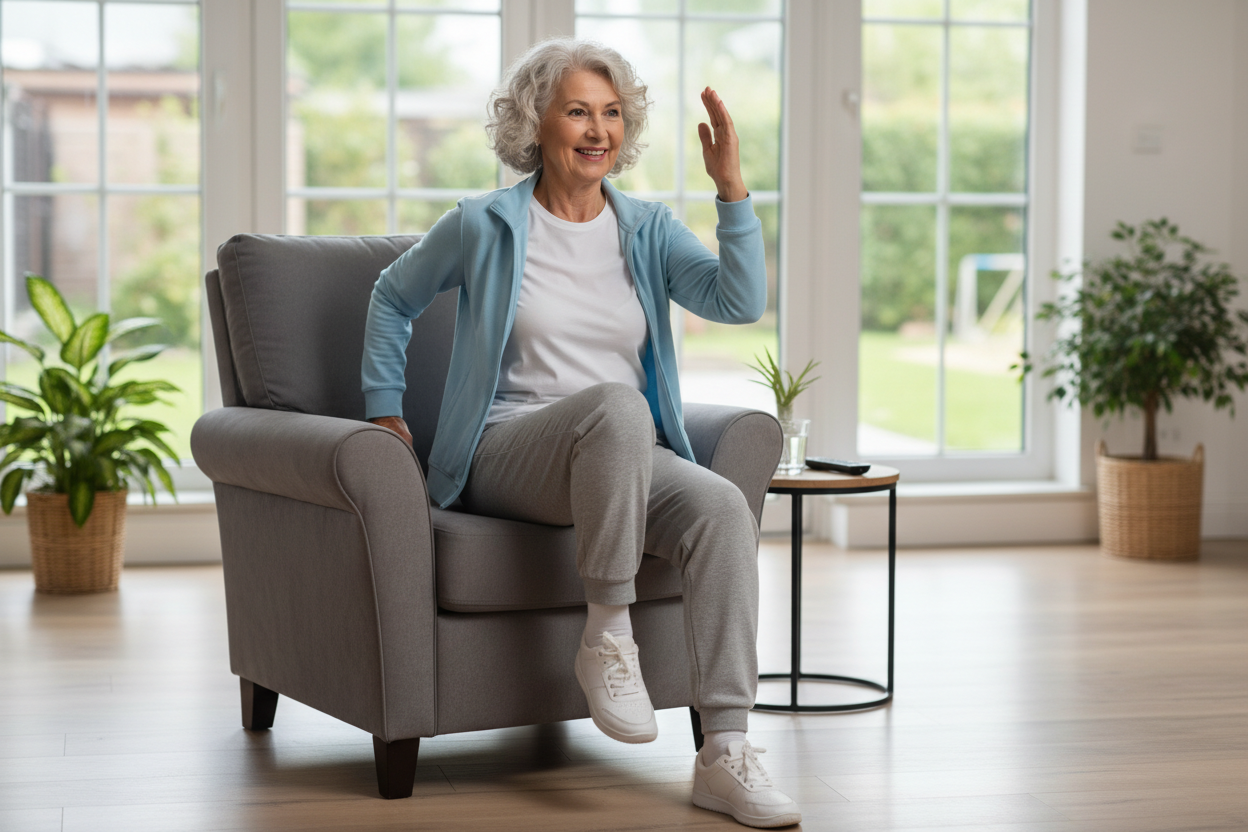
5. Chair Marching (Seated Cardio)
Don’t underestimate what you can accomplish sitting down. Chair marching — lifting your knees alternately while seated — gets your heart rate up, improves hip flexor strength, and is completely safe for seniors with limited mobility or balance concerns.
It’s a cornerstone of seated low impact exercises for seniors and a great starting point for anyone who hasn’t been active in a while.
How to do it: Sit tall in a sturdy chair, feet flat. Alternate lifting each knee toward your chest in a marching rhythm. Aim for 1–2 minutes continuously. Add arm swings to increase intensity.
6. Sit-to-Stand (Chair Squats)
This is one of the most functionally important exercises a senior can do. The sit-to-stand movement — standing up from a chair and lowering back down with control — directly trains the muscles you use every single day. It builds quad strength, improves balance, and helps prevent the falls that lead to serious injuries.
It’s also a beginner low impact workout for seniors that requires no equipment beyond a chair.
How to do it: Sit at the edge of a sturdy chair, feet hip-width apart. Lean slightly forward, press through your heels, and stand up fully. Lower back down slowly. Aim for 10–15 reps, 2–3 sets.
7. Wall Push-Ups
Wall push-ups are a joint-friendly modification of the classic push-up that build upper body strength — chest, shoulders, and triceps — without putting pressure on the wrists or shoulders the way floor push-ups can.
How to do it: Stand arm’s length from a wall, place your palms flat against it at shoulder height. Bend your elbows and bring your chest toward the wall, then push back. Keep your body in a straight line throughout. Aim for 10–15 reps.
Read Also: Best Adjustable Dumbbells for Small Hands in 2026 (Perfect Grip & Comfort Picks)
8. Calf Raises
Calf raises are deceptively powerful. They strengthen the lower legs, improve ankle stability, and — crucially — support circulation, which becomes increasingly important as we age. They also contribute meaningfully to balance.
How to do it: Stand behind a chair, holding the back for support. Rise up onto your toes slowly, hold for a second, then lower back down. Aim for 15–20 reps.
9. Seated Leg Extensions
This is one of the best low impact core and leg exercises for seniors that can be done entirely in a chair — no equipment required.
How to do it: Sit tall, grip the sides of the chair. Slowly extend one leg out straight, hold for 2–3 seconds, then lower. Alternate legs. Aim for 10–12 reps each side. To increase difficulty, add a light ankle weight.
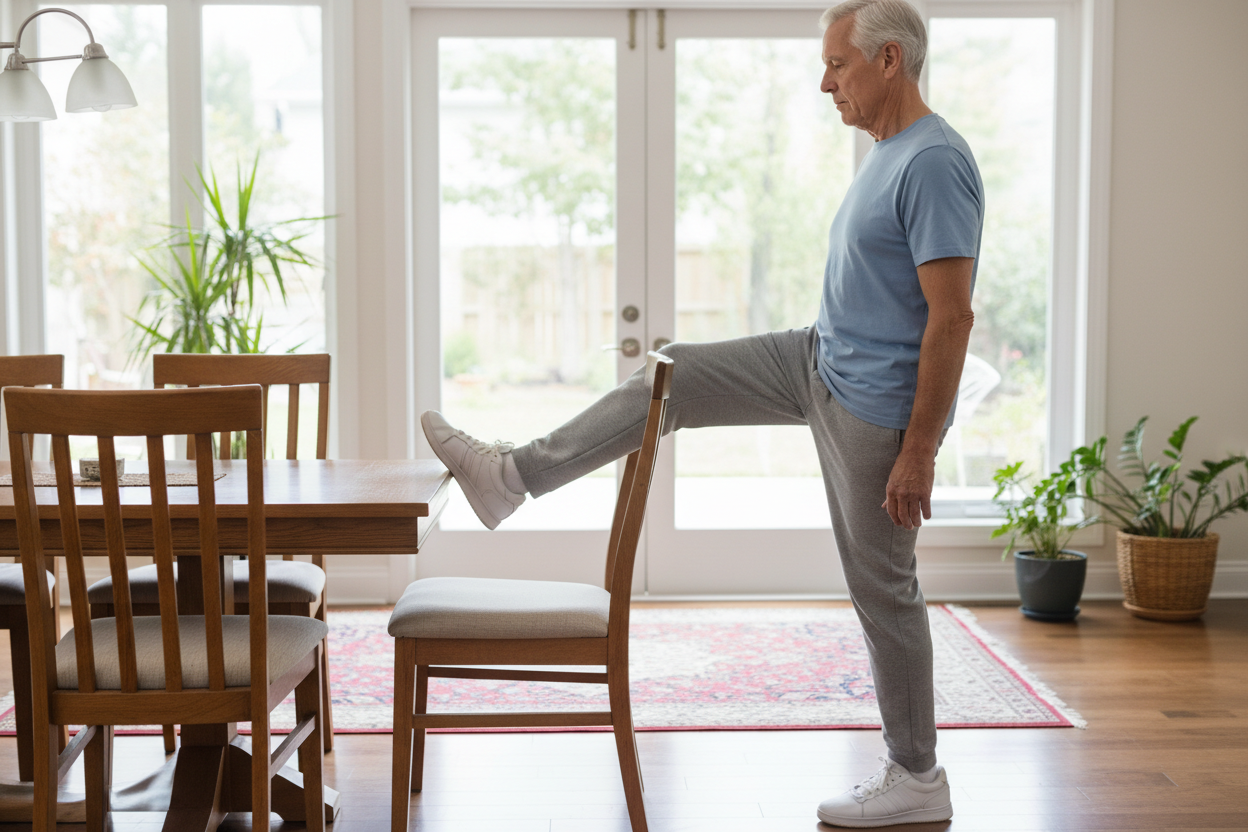
10. Standing Side Leg Lifts
Standing side leg lifts target the hip abductors and glutes — muscles that are critically important for stability and balance. Weak hip muscles are a major contributing factor to falls in older adults.
How to do it: Stand behind a chair, holding the back for support. Slowly lift one leg out to the side, keeping it straight. Hold briefly, then lower. Aim for 12–15 reps each side.
11. Glute Bridges
Glute bridges strengthen the posterior chain — glutes, hamstrings, and lower back — while being completely joint-friendly. Strong glutes directly support your ability to walk, stand up from chairs, and climb stairs with confidence.
How to do it: Lie on your back, knees bent, feet flat on the floor. Press through your heels and lift your hips toward the ceiling. Squeeze your glutes at the top, hold for 2 seconds, then lower slowly. Aim for 12–15 reps.
12. Resistance Band Exercises
Resistance bands are one of the most versatile and affordable pieces of equipment for low impact strength training for older adults. They allow you to build muscle across every major muscle group — arms, back, legs, shoulders — with controlled, adjustable resistance that’s gentle on joints.
Key resistance band exercises for seniors include:
- Seated row (back and biceps)
- Bicep curl (arms)
- Lateral band walk (hips and glutes)
- Shoulder press (upper body)
- Clamshells (hip stability)
Light-resistance bands (yellow or green color in most sets) are the right starting point for beginners.
13. Tai Chi
Tai chi might look like slow-motion ballet, but don’t let the gentle pace fool you. It’s one of the most evidence-backed exercise modalities for senior health. A meta-analysis published in the British Journal of Sports Medicine found that tai chi significantly reduces fall risk — one of the most serious health threats for adults over 65 — and improves balance, flexibility, and psychological wellbeing.
It’s also one of the most accessible low impact workouts for seniors with arthritis, since the slow, controlled movements are easy on inflamed joints.
14. Gentle Yoga
Yoga builds strength, flexibility, and body awareness in a way few other exercises can match. For seniors, gentler styles like Hatha yoga, Chair yoga, or Restorative yoga are ideal starting points. They improve joint mobility, reduce stiffness, and have a strong evidence base for reducing chronic pain and improving sleep quality.
Chair yoga specifically — where poses are modified to be done sitting or with chair support — is excellent for seniors with mobility limitations.
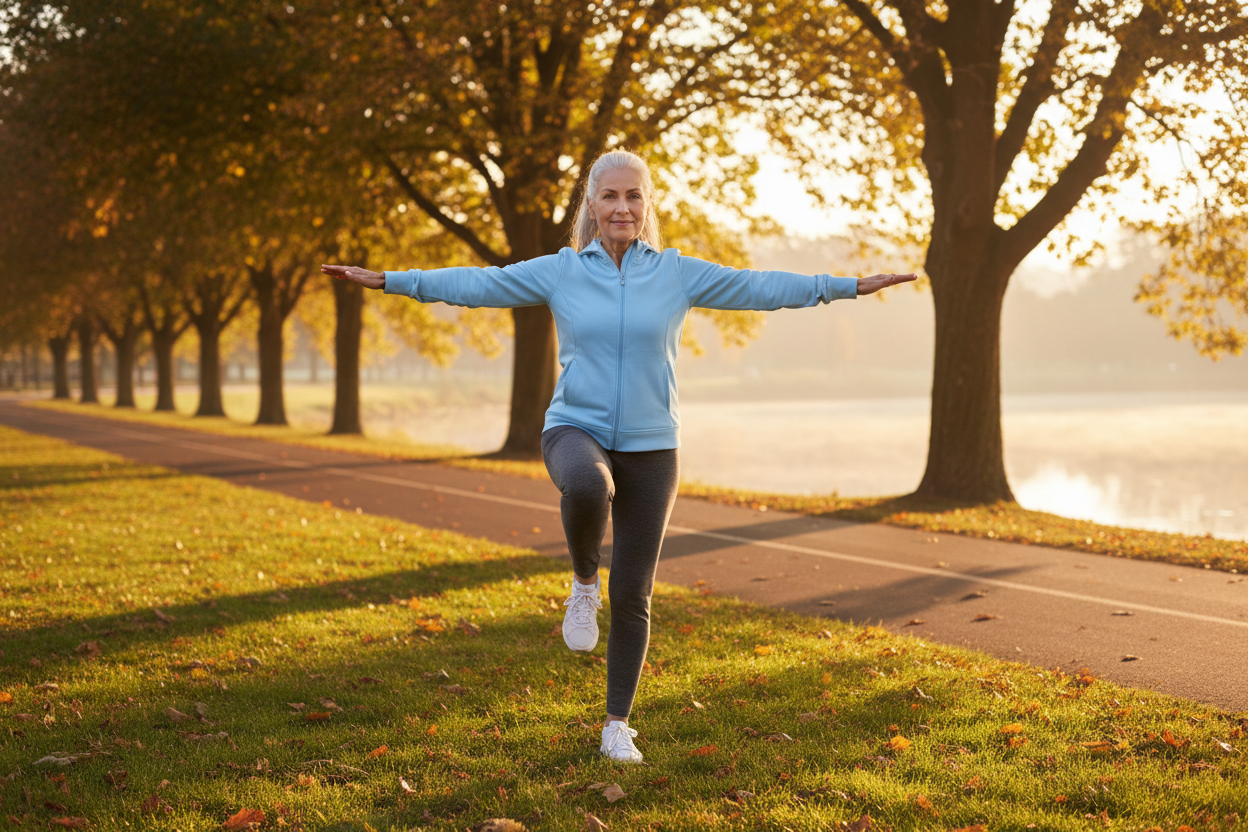
15. Balance Exercises
Falls are the leading cause of injury-related death among Americans aged 65 and older, according to the CDC. Targeted balance training is one of the most important things older adults can do — and it’s completely low impact.
Two highly effective low impact balance exercises for seniors:
Heel-to-Toe Walk: Walk in a straight line placing one foot directly in front of the other, heel to toe. Move along a wall for support. Aim for 20 steps.
Single-Leg Stand: Stand behind a chair, holding the back. Lift one foot slightly off the floor and hold for 10–30 seconds. Switch sides. As balance improves, try it with fingertip support only.
Sample Weekly Low Impact Routine for Seniors
Here’s a practical, beginner-friendly low impact exercise routine for elderly adults that covers cardio, strength, and balance across the week.
| Day | Activity | Duration |
|---|---|---|
| Monday | Brisk walking + calf raises | 30 min walk + 2 sets |
| Tuesday | Chair exercises (marching, leg extensions, sit-to-stands) | 25–30 min |
| Wednesday | Gentle yoga or stretching | 30 min |
| Thursday | Stationary cycling or water aerobics | 30 min |
| Friday | Resistance bands + glute bridges + wall push-ups | 25–30 min |
| Saturday | Walking + balance exercises (heel-to-toe, single-leg stand) | 30 min |
| Sunday | Rest or very gentle stretching | 15–20 min |
This routine meets the WHO’s 150-minute weekly recommendation and includes both cardiovascular and low impact strength training for seniors on alternating days. Adjust duration and intensity based on your current fitness level — less is perfectly fine when you’re starting out.
Read Also: Healthy Morning Routine to Lose Weight: 10 Simple Habits That Actually Work
How to Make Low Impact Workouts More Challenging Over Time
Progress matters, even in gentle exercise. Here’s how to increase the difficulty of a low impact senior workout routine without switching to high impact activities:
- Add light resistance — resistance bands, light dumbbells (1–3 lbs to start), or ankle weights
- Increase duration — extend a 20-minute walk to 30, then 40 minutes
- Add incline — walking uphill significantly increases cardiovascular demand
- Slow down movements — a 4-second lowering phase in sit-to-stands is much harder than a fast rep
- Extend balance holds — go from 10-second to 30-second single-leg stands
- Add intervals — 1–2 minutes of faster walking, then return to normal pace
The principle is called progressive overload — consistently asking a little more of your body over time. It works at any age.
Conclusion: Move More, Feel Better, Live Longer
Age is not a reason to stop moving — it’s a reason to move with more intention.
The 15 exercises in this guide are gentle enough for beginners and seniors with joint pain, and varied enough to keep you engaged week after week. You don’t need a gym membership, expensive equipment, or a complicated program. You just need a sturdy chair, a bit of floor space, and the decision to start.
The research is unambiguous: regular physical activity is one of the most powerful things you can do for your health after 60. It reduces fall risk, strengthens your heart, sharpens your mind, and makes daily life easier in ways you’ll notice within a few weeks. According to the National Institute on Aging’s guide to exercise and physical activity for older adults, regular movement helps older adults maintain independence, improve balance and strength, and support overall physical and mental well-being.
Pick two or three exercises from this list and try them today. Your joints, your balance, and your future self will thank you.
Have a question about any of these exercises, or want help building a custom routine? Drop a comment below — we’d love to help.
You May Also Like: Low Impact Workouts for Weight Loss: The Complete Guide to Joint-Friendly Fitness
Frequently Asked Questions
What is a low impact workout for seniors?
It’s a form of exercise where at least one foot stays on the ground (or you’re in water), minimizing joint stress. It avoids jumping and pounding while still improving strength, cardio, and balance.
Are low impact workouts safe for seniors?
Yes — they’re generally the safest exercise option for older adults, particularly those with arthritis, joint pain, balance issues, or chronic conditions. Always check with your doctor before starting a new routine.
How often should seniors exercise?
The CDC and WHO recommend at least 150 minutes of moderate activity per week, spread across most days. Low impact workouts can be done daily when intensity is varied appropriately.
Can low impact exercise help seniors lose weight?
Yes. Walking, cycling, swimming, and strength training all burn calories and support weight management. Consistency matters more than intensity, especially when combined with a balanced diet.
What are the best chair exercises for seniors at home?
Chair marching, seated leg extensions, sit-to-stands, seated resistance band rows, and chair yoga are all excellent, equipment-free options for seniors who prefer to exercise while seated.
Are low impact workouts good for seniors with bad knees?
Absolutely. Swimming, water aerobics, cycling, and seated exercises all minimize knee stress while still building the leg strength that supports and protects the knee joint over time.